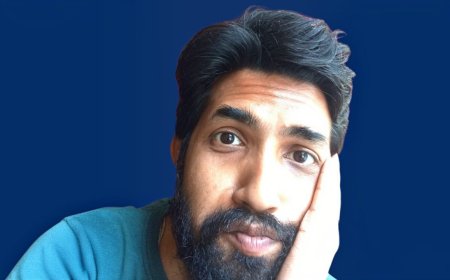
Before the daring characters and the standing ovations, there was a first set, a first line, a first take. For Manik Anand, everything began with Khwaabon Ki Zamin Par. He wasn’t just stepping into character—he was stepping into an entirely new world. Cast as music composer Mohit Mishra in what would become both his screen debut and the very first audition he ever gave, Manik entered the industry on pure instinct and raw ambition.
“It was my first time on a professional set,” he remembers. “I had no reference point—just this deep desire to prove I belonged. I won’t lie, I was terrified during the first few takes. But then something shifted. The nerves gave way to presence, and suddenly, I wasn’t trying anymore. I was Mohit.”
That project wasn’t just a job—it was ignition. Amid the clamor of “action” and “cut,” the hours of waiting, the chaotic choreography of camera and crew, Manik found something steady: himself. “That set was where I first discovered how to surrender to a moment—how to trust silence, breath, and impulse. It changed everything.”
“Being my first gig, there were moments I genuinely surprised myself. I’d finish a take and think, How did I just do that? Once I found ease, ideas began flooding in—instinctual, unplanned, inspired by the world around me. I started making bold, unconventional choices and just rolled with them. As they say, ‘You’re not going there to ask—you’re going to show them how it’s done.’”
From that initial spark, the path widened—and with it, the stakes.
In Who Killed Taniya?, a searing short film based on true events, Manik Anand took on the role of Taniya, a Bangladeshi Muslim drag performer navigating identity, religion, and queerness in a world that refuses to make space. The transformation required more than physical commitment—two hours in the makeup chair each day—it demanded emotional excavation.
“It was harrowing,” he admits. “Not just portraying Taniya, but letting her live through me. There were nights I couldn’t sleep. The story haunted me—and I knew it had to. That discomfort—that was the point.”
The role didn’t just stretch his craft—it pierced through his own armor. “It broke me open in the best way,” he says. “I came out of that process a different person—more empathetic, more curious, more awake.”
And then came the stage—live, electric, alive. In Mira Nair’s Monsoon Wedding: The Musical, Manik stepped into the role of Vikram with joy and abandon. At Brooklyn’s iconic St. Ann’s Warehouse, under a downpour of rain and a canopy of color, he found yet another layer of expression.
“Working with Mira ma’am was a dream,” he says. “Even with a knee injury during previews, I wouldn’t have missed it for anything. I limped through the final performance—but the magic of that stage, that story, that ensemble—it was unforgettable.”
From a quiet first take to a roaring stage finale, Manik Anand’s journey is not just one of performance—it’s one of discovery. Every role, whether on screen or on stage, becomes a vessel for truth, challenge, and growth.
What began as a single audition has evolved into something far greater: a calling to tell stories that resonate, disrupt, and heal.
“There are some amazing projects I’ve been working on that I’ll be announcing soon,” he adds. “And I’m keeping my fingers crossed for Broadway—it’s a goal I’ve been chasing, and it finally feels within reach.”