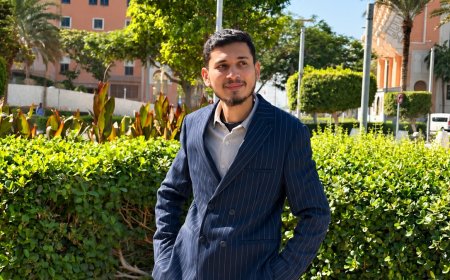
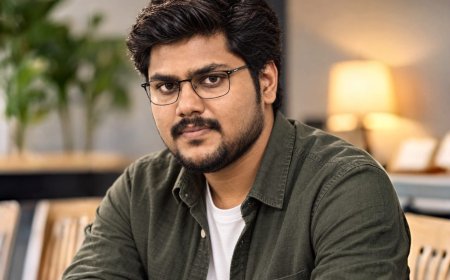
Sanidhya says that nearly 40% of people across the world have Mangal Dosh in their birth charts, making it far more common than many believe. According to him, it should not be treated as a rare curse or a reason for panic, but rather understood in the right astrological context.He explains that Mangal Dosh generally indicates a strong influence of Mars in the horoscope. Such individuals are often energetic, ambitious, independent, competitive, and action-oriented. He says this is why traditional astrology often recommended that a Manglik person marry another Manglik person, as similar energies may create better compatibility. However, he adds that this alone does not guarantee a happy marriage, as several other factors in the horoscope must also be carefully examined.
Sanidhya Tyagi further states that individuals with a strong Martian influence are naturally passionate and may possess a higher sex drive along with greater intensity in relationships. For lasting marital harmony, he emphasizes that emotional connection and physical compatibility between partners are equally important.
Sanidhya notes that in ancient times, Mangal Dosh was considered inauspicious largely because society functioned very differently. He says women with strong Mars traits—such as independence, courage, leadership, and a desire to make their own decisions—often struggled in traditional family systems where such qualities were discouraged. This suppression frequently led to conflicts in marriage, which people mistakenly attributed solely to Mangal Dosh.He also points out that Mars signifies activity, movement, and risk-taking tendencies. In earlier eras, people often traveled through forests or isolated areas without modern healthcare facilities. Injuries or accidents could become life-threatening, leading to fear around strong Mars placements. Over time, these incidents became associated with Mangal Dosh.
In today’s modern world, Sanidhya says the same planetary influence can be highly beneficial. According to him, Mangal Dosh now often gives confidence, independence, courage, career drive, and the ability to build success through one’s own efforts. He especially highlights that women with such combinations can become financially independent, career-oriented, and self-reliant rather than dependent on a spouse. Sanidhya emphasizes that astrology must evolve with changing times. What was once feared in a different social structure can become a strength in the modern era. He says the old belief that Manglik individuals may lose their spouse emerged from a time when women were entirely dependent on marriage for security, whereas today both partners are capable of creating their own identities. Sharing his professional approach, Sanidhya says that during marriage consultations, he never judges compatibility by Mangal Dosh alone. Instead, he studies the complete horoscope and examines multiple astrological combinations before giving guidance. He concludes that simply marrying one Manglik to another is not a universal solution, as true compatibility depends on many deeper factors.