Q1. Congratulations. Columbia Law School admits only a handful of students worldwide each year. What does this mean to you?
Ananya Bangar: Thank you very much! For me, Columbia is a place to engage in the biggest global debates in constitutional law, governance, technology and the future of public institutions. Personally, it feels like the result of years of perseverance, self-belief and hard work finally taking shape. Professionally, I see it as a platform that will let me contribute to law and policy in a more meaningful way. And I will be honest — I reached here only through honest preparation guided by the encouragement of my family. I hope that part of the story reaches students who think these doors are shut to them.
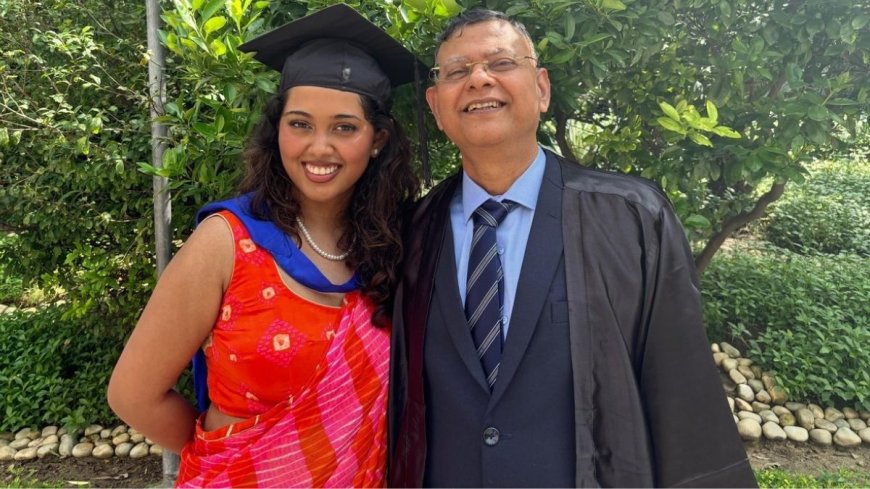
Ananya Bangar with her father, Ravindra Bangar, at her graduation ceremony from National Law University, Delhi — the foundation from which she went on to clerk at the Supreme Court of India and earn a seat at Columbia Law School, New York.
Q2. Choosing law over engineering or medicine — especially with an IITian father and a superspecialist doctor mother — is unconventional. Who inspired your journey from the tense Covid-19 exam days to NLU Delhi and your Supreme Court clerkship?
Ananya Bangar: My parents, Ravindra and Manisha Bangar, were my bedrock, inspiring me to dream big in service of humanity. During the gruelling Covid-19 pandemic, my grandparents, Pramila Rangari, Radhabai and Ramchandra Bangar kept me anchored and motivated with their love and support through multiple exhausting law entrance exams. Embracing this path at NLU Delhi opened a new world where my passion fuelled my academic success. My career was then profoundly shaped by incredible judicial mentors: Hon’ble Mr. Justice S.C. Sharma introduced me to what a judicial clerkship is, and allowed me to observe Supreme Court proceedings firsthand, while His Lordship, Former Chief Justice of India Justice B.R. Gavai sharpened my research skills and the guidance that he and those in his office provided pushed me to apply for the clerkship position. Today, my clerkship with Hon’ble Mr. Justice N.V. Anjaria is deeply inspiring, as his warmth, encouragement, and genuine appreciation for my work drive me to push my boundaries daily.
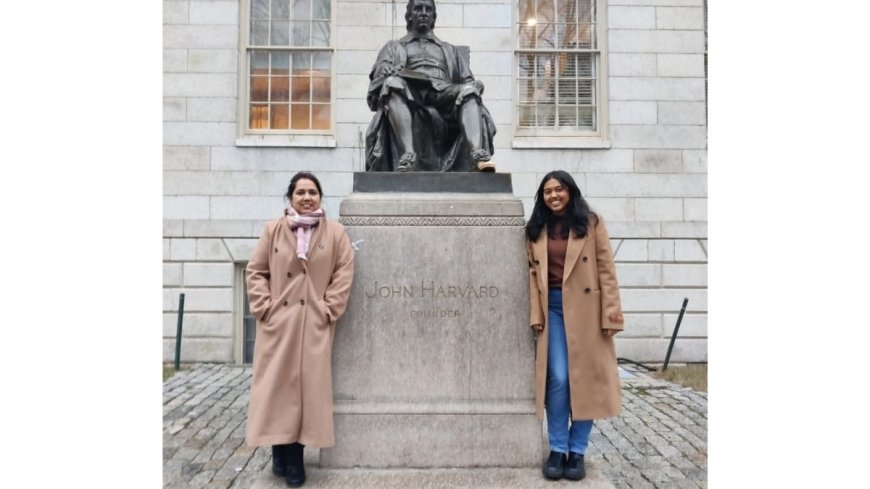
Ananya Bangar at the Supreme Court of India, New Delhi, where she has served as a judicial law clerk for two years, contributing to legal research on constitutional law, criminal justice, bail jurisprudence and minority rights under a sitting judge of the apex court.
Q3. You have been clerking at the Supreme Court. How has that shaped you?
Ananya Bangar: It has been beyond transformative. I truly enjoy every aspect of my job, and feel very fortunate that I was exposed to such experiences. The court lets you dive into an extraordinary range of issues every single day — be it constitutional questions, criminal appeals, civil disputes, public interest litigation, or the application of social welfare legislations. Beyond the research itself, it teaches you intellectual discipline, precision and a sense of institutional responsibility. You learn very quickly that the work is demanding and confidential, and that there is no room for shortcuts.
From a judicial clerk’s desk at the Supreme Court of India to the LL.M. classrooms of Columbia Law School — the New York university where Dr B.R. Ambedkar once studied — Ananya Bangar talks about merit without coaching, the importance of self-belief and perseverance, and why the next generation of lawyers cannot afford to ignore artificial intelligence.
Q4. What is the single most valuable lesson the judiciary gave you?
Ananya Bangar: That law is never abstract in practice. Every file in court represents real people, real institutions, and real social consequences. Judicial work means balancing legal principle with fairness, constitutional morality, and long-term institutional impact. That perspective stays with you. It pushes you to value objectivity, while also balancing it with sensitivity to the human and institutional consequences of every decision.