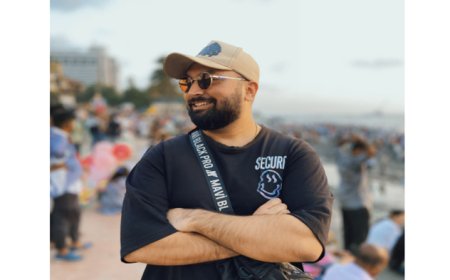
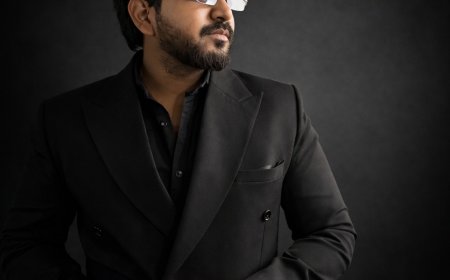
For Kumar, the recognition is significant, but it is only one chapter in a story shaped by hardship, persistence and an unusual choice of canvas.
A Childhood Marked by Scarcity
Madhurendra Kumar was born on September 5, 1994, in East Champaran district of Bihar, close to the India-Nepal border. His father, Shiv Kumar Sah, is a farmer and his mother, Gena Devi, is a homemaker.
Growing up, financial stability was never a certainty. Like many children in rural Bihar, Kumar became familiar with responsibility long before adulthood. He grazed goats, sold curd from village to village, made bamboo baskets, painted houses, worked in roadside hotels and earned money through seasonal jobs during local fairs. Every small earning helped him remain in school.
Even after reaching college, money remained a constant concern. There was a period when he could not afford hostel accommodation and spent several months sleeping in the college corridor rather than giving up his education. Friends recall that sketching was one habit he never abandoned, regardless of circumstances.
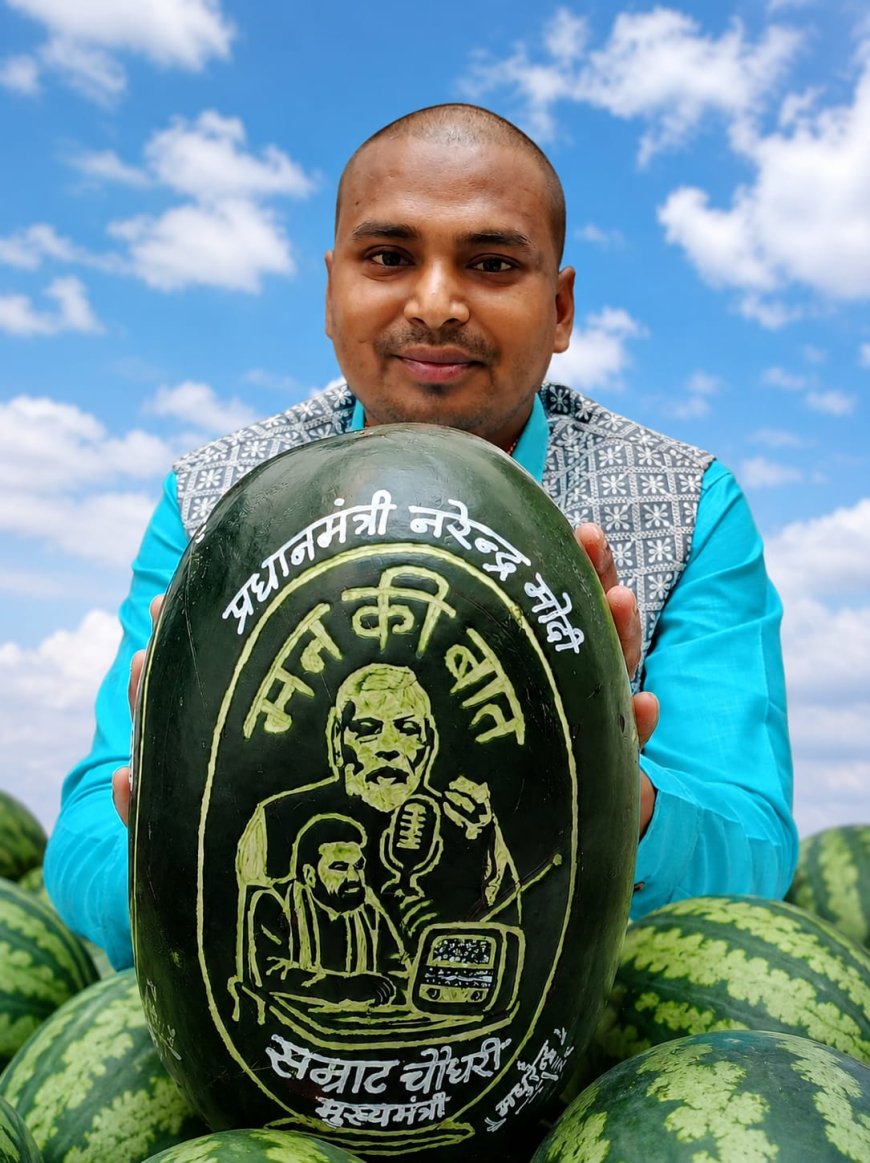
Where an Artist Found His Medium
Unlike painters who begin with brushes or sculptors who inherit workshops, Kumar's first studio was a riverbank. He experimented with wet sand along the Aruna River, shaping figures that disappeared within hours. There were no formal lessons and no mentor guiding him through the process. Most of what he learned came from repeated practice.
His academic education came later through Bachelor and Master of Fine Arts degrees in Sculpture from Mahatma Gandhi Kashi Vidyapith in Varanasi. He also studied painting through Prachin Kala Kendra in Chandigarh. Those qualifications strengthened his technical understanding, but sand remained his preferred material.
A Meeting That Stayed With Him
One of the defining moments in Kumar's career came during an event in Bathinda, Punjab. Working with nearly fifty labourers, he completed a massive sand sculpture that stretched almost 100 feet in length and stood around 40 feet high. Nearly 200 tonnes of sand went into the installation.
Former President Dr. A.P.J. Abdul Kalam visited the exhibition and appreciated the work. Kumar has often spoken about that meeting, describing it as one of the moments that convinced him to continue pursuing sand sculpture despite the uncertainty that surrounded the profession.
Beyond Artistic Expression
Many of Kumar's sculptures disappear within days, but the subjects they address are intended to stay with viewers. Climate change, plastic pollution, addiction, water conservation, sanitation, peace, cultural heritage and women's empowerment have appeared repeatedly in his work.
He has also worked beyond sand, creating detailed pieces using leaves, grains, fruits, cement, recycled waste and metal. Some of his installations built from discarded bottles and tobacco packets have been displayed as public awareness campaigns against substance abuse and environmental pollution. Rather than exhibiting inside galleries alone, much of his work has appeared in open public spaces where thousands of people encounter it during festivals and awareness drives.
Carrying Indian Sand Art Abroad
As invitations increased, Kumar began representing India at international sand art festivals. According to information released by his team, he has participated in more than fifty international events across over twenty-five countries, including the United Kingdom, Germany, France, Italy, the United States, Japan, Australia, Russia, China, Bhutan and Sri Lanka. Many of his sculptures combine Indian cultural themes with contemporary global concerns, making them accessible to audiences from different backgrounds.
Record Books and Recognition
The last two years have brought a series of recognitions. In 2025, the London Book of World Records acknowledged his work for creating more than 5,000 sand sculptures carrying social messages.
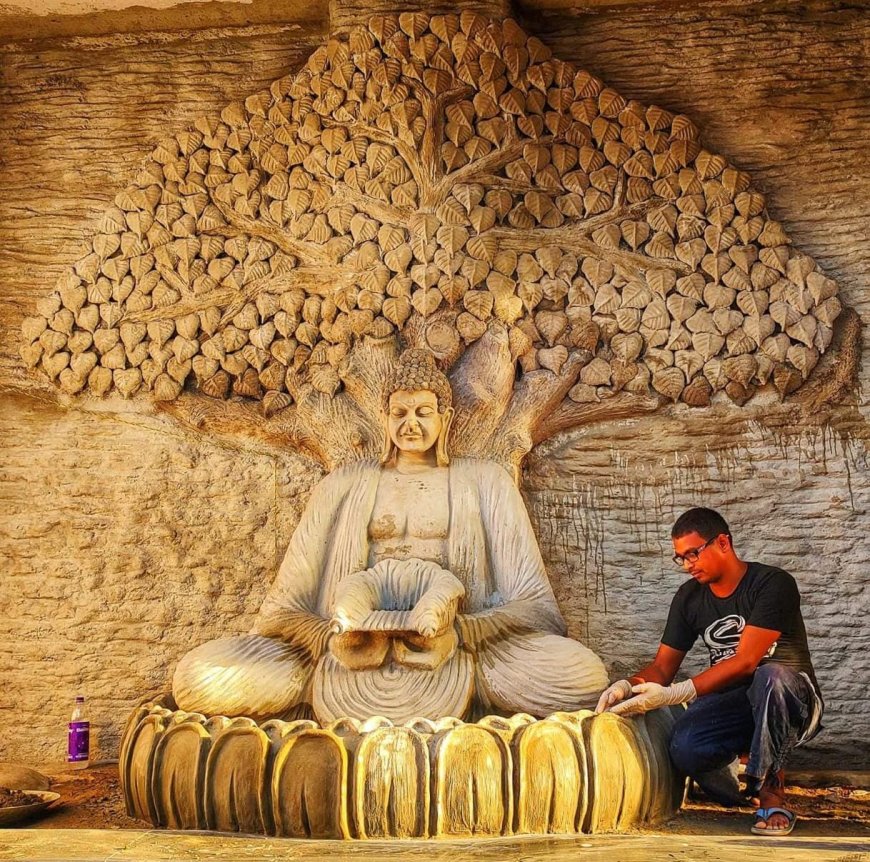
The Asian Book of World Records recognised a collection inspired by the mythological episode of Gaj Grah Yudh, while the following year the U-N Book of World Records recorded his series depicting the life of Lord Buddha through fifty separate sand sculptures. His work with leaf art also attracted international attention, leading to recognition from the USA Book of World Records for more than 21,000 individual leaf artworks.
Another acknowledgement came from the Forbes Book of World Records for using sand sculpture to support public awareness campaigns. Earlier this year, America International University (AIU), Hollywood, California, awarded him an Honorary Doctor of Philosophy in Sand Art. The university cited his contribution to contemporary Indian art and his efforts to address issues such as environmental conservation, climate change, cultural preservation and humanitarian awareness through sculpture.
Recognition Within India
National institutions have also acknowledged his contribution. Over the years, Kumar has received honours that include the Indian Lalit Kala Academy Award, Raja Ravi Varma National Award, Bharat Gaurav Samman, Dr. B.R. Ambedkar National Honour and National Kala Ratna Award.
Government departments have invited him to create awareness campaigns related to elections, sanitation and farmer welfare, using public art as a medium to communicate with large audiences.
Looking Back While Looking Ahead
Despite international invitations and awards, Kumar continues to speak about the village where his interest in art first took shape. One of his long-term plans is to establish a free sand art academy for children from economically disadvantaged families. The idea comes from his own experience of struggling to continue his education because of financial constraints.
He believes artistic ability often exists in places where opportunities do not. Every sculpture he creates is temporary. Rain, wind or time eventually erase it. Yet the stories behind those sculptures have travelled much farther than the sand from which they were made. For an artist who began by shaping figures beside a river in rural Bihar, that may be the most enduring work of all.