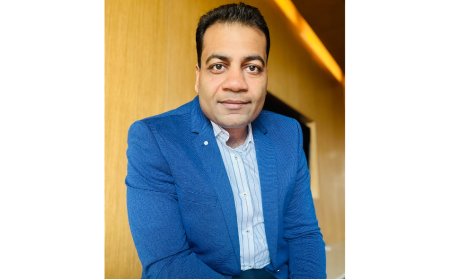
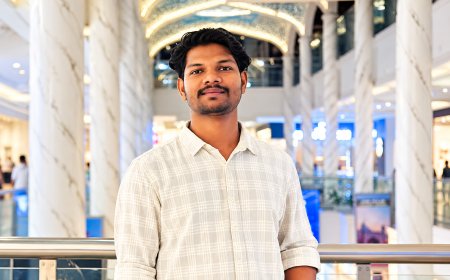
At ISRO, Ashish worked in the Engine Assembly and Integration Entity, a division of the ISRO Propulsion Complex (IPRC) in Mahendragiri that carries out the ground-up assembly of ISRO’s liquid-propulsion rocket engines. Mr. Ranjan worked on the assembly, integration, and testing of the Vikas engine, India’s workhorse high-thrust rocket engine used in all three of its major launch vehicles.
The young scientist began by working on engine subassemblies and eventually went on to lead the assembly and integration of complete flight Vikas engines that contributed to several successful launches and missions.
Many things can go wrong during a rocket launch, which is why every component must be carefully assembled and integrated to ensure the successful execution of a space mission. A scientist’s position such as the one Ashish held is critical to the execution of a mission and demands an in-depth understanding of mechanical and aerospace engineering.
An engineer in such a position is responsible for a team of three to six technicians and junior engineers who work together to assemble the subsystem, integrate the engine with the rocket stage, and perform preflight testing activities to ensure mission readiness.
During his time at ISRO, Ashish worked on several missions and played a key role in their success. He worked on the widely renowned Chandrayaan-II mission, which demonstrated India’s ability to launch a major deep-space spacecraft using its own heavy-lift launch vehicle.
The mission’s payload was placed on its trajectory using the LVM3, which uses two Vikas engines in a paired configuration to generate the high thrust required by the rocket. The mission strengthened India’s expertise in lunar navigation, imaging, radar science, and mission operations, and became the technological foundation for the subsequent Chandrayaan-3 mission.
The Chandrayaan-II orbiter produced internationally valuable lunar data, including orbital imagery with a resolution of approximately 30 centimetres, elemental maps, observations of lunar water and hydroxyl, studies of the lunar exosphere, and radar investigations of the Moon’s polar regions. ISRO also released mission data for public scientific use, allowing researchers beyond India to study lunar geology, water resources, and potential landing regions for future missions.
As one might imagine, securing such a role is not easy. ISRO follows a thorough three-round screening process to identify world-class engineers for such critical positions. It does so through its ICRB examination, in which approximately 40,000 candidates compete for around 40 positions based on their engineering skills, representing a selection rate of approximately 0.1%.
Ashish secured his position on his third attempt with All India Rank (AIR) of 4, an experience that helped him understand the most effective ways to develop the engineering skills required to qualify for such an organisation. It also encouraged him to look back at young college graduates with similar ambitions and begin mentoring engineers seeking guidance through his YouTube channel, Torq4712.
Ashish says that the channel is his initiative to provide young engineers with the knowledge and guidance he wishes he had received during the early stages of his own career.
Currently, Mr. Ranjan is the founder and Chief Technology Officer of Raste, Inc., where he is developing a novel AI-powered vehicle-health monitoring technology for vehicle owners.
Ashish leads a team of skilled engineers and innovators who believe that the automotive industry needs to catch up with modern technologies that can transform raw vehicle data into meaningful and actionable next steps.
Raste has begun demonstrating its value to its early customers, particularly high-mileage users such as rideshare drivers and last-mile delivery fleets, for whom unexpected vehicle problems and downtime can directly affect their income and operations.
For Ashish, Raste represents a continuation of the same engineering philosophy that has shaped his career: understanding complex systems, identifying potential problems, and using technology to make them safer and more reliable. From working on rocket engines that carried spacecraft beyond Earth to developing intelligent systems designed to keep everyday vehicles safely on the road, his journey reflects his belief that engineering creates its greatest impact when advanced technology is transformed into practical solutions for people.