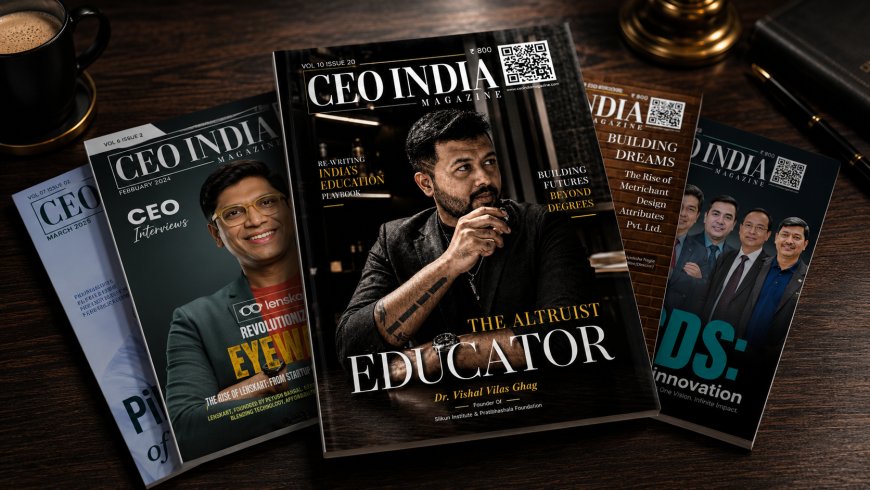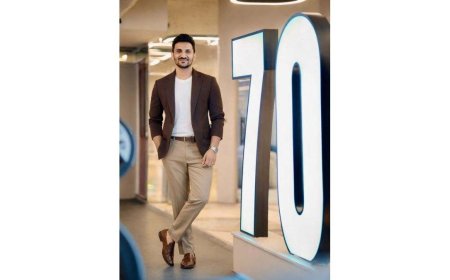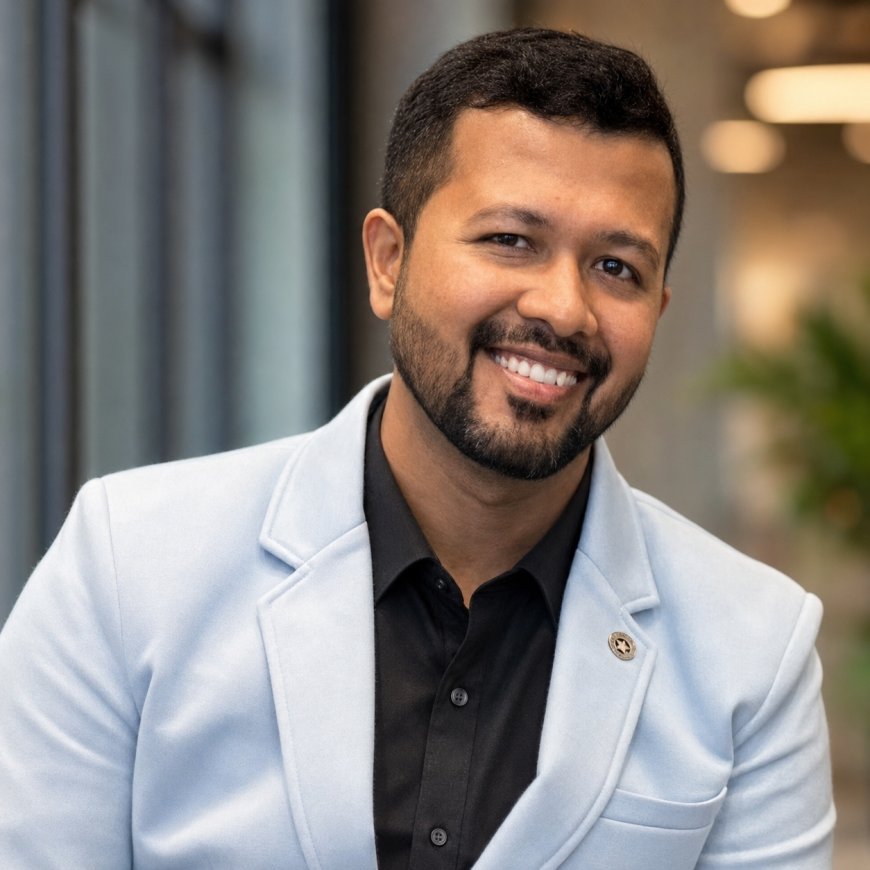
Following his recent feature, Hindustan Metro had the opportunity to engage in an extensive discussion with Dr. Ghag on the changing landscape of education, employability, artificial intelligence, and lifelong learning. What followed was not a conversation about institutions, degrees, or rankings, but a deeper reflection on the purpose of education itself.
Here is a summary of the key ideas that emerged from that discussion.
India Doesn't Have an Education Crisis. It Has a Clarity Crisis.
According to Dr. Ghag, one of the biggest misconceptions about education is that the primary challenge facing learners today is access to information. In reality, information has never been more abundant.
Students today have access to thousands of courses, certifications, tutorials, and learning resources at their fingertips. Yet many continue to struggle with fundamental questions:
Who am I?
What am I good at?
Which career path aligns with my strengths?
How do I transform education into meaningful opportunities?
The issue, he argues, is not a lack of education but a lack of clarity. Learners often receive information without receiving adequate guidance, mentorship, exposure, and direction.
The Missing Layer in Modern Education
Traditional education systems have played a vital role in creating literacy, knowledge, and professional competence. However, the demands of the modern world have changed dramatically.
Today's learners need more than academic instruction. They need context.
Dr. Ghag believes education must help students understand how knowledge connects to real-world environments. Industry exposure, mentorship, problem-solving experiences, and practical learning opportunities are becoming increasingly important in helping learners navigate a rapidly changing world.
Degrees Are Valuable, But They Are Not Enough
One of the recurring themes during the discussion was the distinction between qualifications and capabilities.
While degrees remain important, employers today are increasingly evaluating communication skills, adaptability, leadership potential, emotional intelligence, critical thinking, and the ability to learn continuously.
Academic credentials may open doors, but long-term success depends on what individuals can do once those doors are opened.
The future workforce, according to Dr. Ghag, will be defined not by static knowledge but by continuous adaptability.
Why Lifelong Learning Has Become Essential
A generation ago, many professionals could build entire careers around a single qualification. Today, industries evolve faster than ever before.
Artificial intelligence, automation, changing business models, and emerging technologies are constantly reshaping the professional landscape.
As a result, learning can no longer be viewed as a phase that ends with graduation.
Dr. Ghag believes educational institutions must begin preparing learners for decades of continuous growth rather than a single job immediately after college.
The most successful professionals of the future may not be those who know the most, but those who continue learning the longest.
The Human Side of Learning in an AI World
Artificial intelligence was another major topic during the discussion.
While many fear AI may replace educators, Dr. Ghag sees technology as a powerful ally rather than a threat.
AI can personalize learning, increase accessibility, and deliver information instantly. However, human development extends beyond information transfer.
Empathy, values, creativity, leadership, self-awareness, resilience, and mentorship remain fundamentally human experiences.
The future of education, he suggests, will not be a competition between technology and teachers. It will be a collaboration between technological advancement and human development.
Building Learners, Not Just Graduates
Perhaps the most compelling idea from the conversation was a simple question posed by Dr. Ghag:
"Are we producing graduates, or are we developing capable human beings?"
The answer may define the future of education in India.
As institutions adapt to changing economic and technological realities, success may increasingly depend on their ability to nurture confidence, adaptability, curiosity, and lifelong learning alongside academic achievement.
For Dr. Vishal Vilas Ghag, the ultimate purpose of education is not merely to award qualifications but to help individuals discover their potential, create meaningful careers, and contribute positively to society.
In a world changing faster than ever before, that vision may be more relevant than ever.
To quote his exact words, “The future belongs not to those who collect the most certificates. It belongs to those who develop the capacity to continuously learn, adapt, and create value. That is the education system India truly needs.”
FOR MORE INFORMATION
https://ceoindiamagazine.com/the-altruist-educatorrewriting-indias-education-playbook/
https://slikuninstitute.org.in/