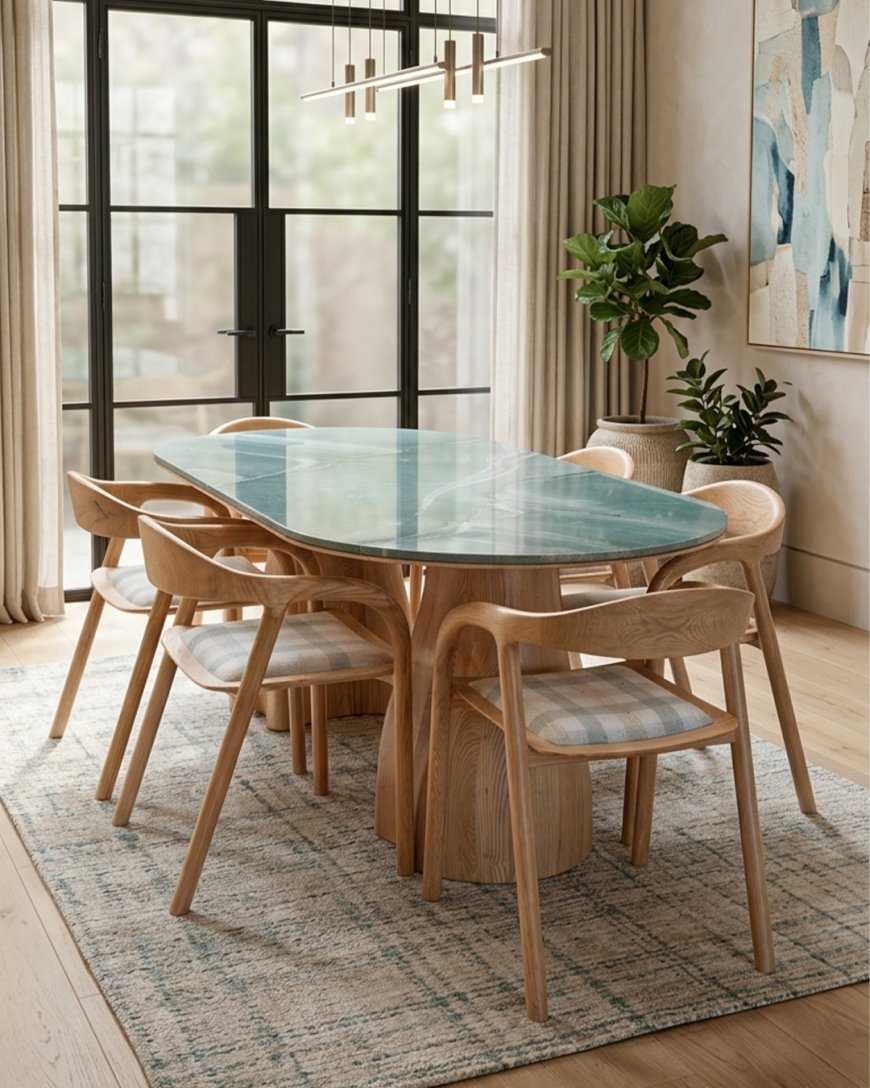
The scenario is familiar. Someone buys a ₹15,000 dining table from a mall. It looks fine for three years. Then the varnish starts peeling, a leg develops a wobble, the surface stains easily, and it becomes clear the finish was only ever cosmetic. Eventually, what's left is a particle board frame, held together mostly by habit.
A solid teak table costs several times that upfront. But here's the part that rarely gets discussed: that table your parents bought in 1970 is still standing, still beautiful, still worth something today. The economics shift entirely once you start thinking in decades instead of months, and that's not sentiment, that's simple math. Craftspeople working with solid wood see this pattern play out constantly. At Wootique, a teak dining table built back in 2005 is still serving its family beautifully today, and the workshop still hears from the people who own it.
Families who inherit a grandmother's wooden furniture rarely replace it. They refinish it, move it with them, and eventually pass it on. The piece survives because it was built right from the start. Engineered wood tells a different story, once it begins to fail, there's no bringing it back. Particle board and MDF can't be refurbished or rejuvenated; once damaged, replacement is the only option.
Run the actual numbers and the picture gets even clearer. A ₹75,000 piece that lasts 50 years comes out to roughly ₹150 a month. A budget table that lasts five years works out to about ₹250 a month. Custom, well-made furniture isn't the expensive option, it's the more economical one. There's an environmental upside too: every five years, that budget piece ends up as landfill, while a solid wood piece simply gets refinished and carries on.
Most people never run this calculation. They compare sticker prices instead of cost-per-year, which is exactly the gap between seeing quality furniture as a luxury and understanding it as smart economics. The people who invest in solid wood furniture, from Wootique or elsewhere, aren't necessarily wealthier, they've just learned to think about money and time differently.
There's a psychological side to it too. Owning something solid changes how you treat it. You care for it, live with it, and never quite worry about it falling apart. That peace of mind is worth something in its own right, and it's exactly what a well-made piece is designed to give back, year after year.
Shivam Madaan
Shivam Madaan is the Founder and Editor of Hindustan Metro and Orvox News. Committed to unbiased and impactful journalism, he is dedicated to amplifying the voice of the people and delivering news that truly matters. His vision is to provide accurate, credible, and trustworthy information, ensuring journalism that informs, empowers, and serves the public interest