What Personal Hygiene Actually Covers
Personal hygiene is more than smelling sweet. Good hygiene means washing your hands properly, good skincare, oral care, hair and scalp care, nail care, and keeping your towels, bedsheets, and clothes clean. The commonality of all of these practices is that if you neglect any one of these, your overall hygiene will be affected, thereby increasing the chances of infections.
For example, if you skip washing your hands, germs will enter your face and your food. Similarly, if your face is injured and you didn’t take any precaution, infections will spread easily. That’s not it; even if you shower daily and maintain proper skin, hand, and face hygiene, if your pillowcases and bedsheets are not cleaned, you will still get infected. Hygiene works as a system, not a checklist you can tick off one item at a time and forget about the rest.
Hand Hygiene: Where Most People Fall Short
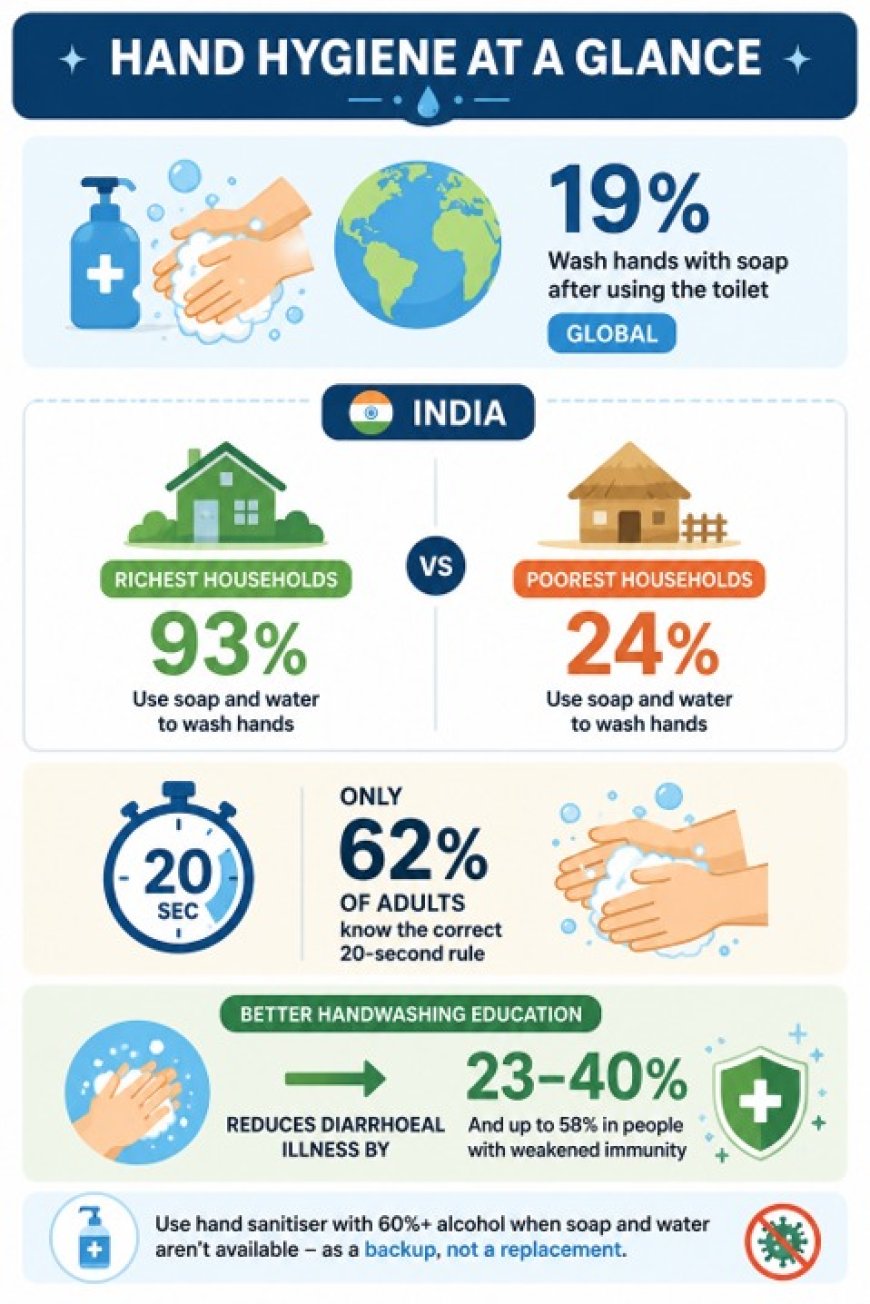
Hand hygiene looks easy. The facts, both globally and here in India, tell a different story. Just because soap is readily available at home doesn’t mean people know how to wash their hands every time.
|
Stat
|
Figure
|
Source
|
|
Global handwashing with soap after using the toilet
|
19%
|
CDC
|
|
India, richest households using soap and water to wash hands
|
93%
|
NFHS-4 (IIPS & ICF)
|
|
India, poorest households using soap and water to wash hands
|
24%
|
NFHS-4 (IIPS & ICF)
|
|
Adults who correctly know the 20-second rule
|
62%
|
NFID, 2025
|

The wealth gap in India is particularly telling here. It's not just about awareness; access to soap and water at home still decides who gets sick and who doesn't.
Community handwashing education has been shown to cut diarrhoeal illness by 23% to 40%, and by as much as 58% in people with weakened immune systems, based on CDC data drawn from multiple studies. That's not a small number. It's the difference between a bad week and a hospital visit for someone whose immune system is already stretched thin.
People don't completely skip handwashing. They only do it quickly, or only sometimes. Only 62% of adults actually know that you need to scrub your hands with soap and water for 20 seconds to get rid of the germs. The other people believe that a quick rinse of their hands is sufficient. You can wash away germs with soap and water for 20 seconds. Washing hands properly doesn’t mean a quick rinse of the hands.
Practical fix: Hand sanitizer with at least 60% alcohol should always be kept in your backpack or on your desk in case you do not have access to soap and water.
Showering the Right Way, Not Just More Often
Daily showers may appear the right solution when it comes to cleanliness. However, most dermatologists are sure that daily showering is not the best routine. While taking hot showers, one will wash away the oils produced by the body and harm the protective layer of skin. As a result, your skin becomes dry and itchy, which can develop into skin diseases instead of being prevented. Dermatologists at Intermountain Health and Baylor College of Medicine are unanimous regarding this matter. You should have brief showers of less than 10 minutes with warm water rather than hot water.
Choosing a Soap That Works With Your Skin, Not Against It
The kind of soap that you use while washing is just as important as the water temperature. Hard and fragranced soaps may make your skin feel fresh, but they remove the skin’s natural oils. If you have sensitive skin, then you should use softer soap. It is always better to use soap than cut down on baths.
A quick way to check what is in your soap or body wash:
● Look for: Glycerin, natural oils, ceramides, and fragrance-free or lightly scented formulas
● Avoid: Sulphates, high alcohol content, and heavy synthetic fragrance
Natural soaps are made from oils instead of synthetic detergents. The oils used do not cause dryness and irritation of the skin. There are brands such as Ghar Soaps, Khadi Natural, and WOW Skin Science that manufacture their bars using natural oils and other plants.
If you want to try handmade bars from these brands, you should look for deals on Ghar Soaps, WOW Skin Science, and other brands before you buy them. The prices of brands usually change when they have sales during different seasons.
Practical fix: Moisturize yourself immediately after you come out of the shower while your skin is still slightly damp. This will help to moisturize your skin. You can do this within 3 minutes after coming out of the shower.
The Hygiene Habits Nobody Talks About
● Your Toothbrush and Its Blind Spots
It is common practice for many people to keep using their toothbrushes beyond the specified period. According to the American Dental Association, one should change their toothbrush after every 3 to 4 months. It is important to ensure that the toothbrush is stored far from the toilet because an open lid during flushing can transfer germs.
● Clothes and Bedding Do More Work Than You Think
It is surprising how quickly your attire and linens pick up sweat, oil, and dead skin cells, particularly when there is high humidity. A pillowcase that has been used for 2 weeks without washing can lead to acne development. You should wash your pillowcases once a week and launder any sports gear after use.
Building a Realistic Daily Hygiene Routine
|
Time of day
|
Habit
|
Why it matters
|
|
Morning
|
Short lukewarm shower with a gentle soap
|
Protects the skin barrier while still removing overnight sweat and oil
|
|
Morning
|
Brush and floss for two minutes
|
Reduces plaque buildup that a quick brush misses
|
|
Throughout the day
|
Wash hands for 20 seconds at key points, such as before eating and after using shared surfaces
|
Cuts the spread of germs that cause colds and stomach illness
|
|
Evening
|
Wash face and change into clean sleepwear
|
Prevents oil and sweat from transferring onto bedding
|
|
Weekly
|
Wash pillowcases, towels, and gym clothes
|
Stops bacteria and dead skin from building up on fabric
|
|
Every 3 to 4 months
|
Replace toothbrush
|
Worn bristles clean less effectively and can harbor bacteria
|

Wrapping Up
Improved personal hygiene is not about doing more, but about doing what is right in the first place. This means following principles such as washing your hands thoroughly for 20 seconds, using soap that helps your skin rather than stripping it, taking shorter hot showers, and ensuring cleanliness of bedding and even your toothbrush, which most people don’t. All these improvements don’t take any money or complex procedures, but only awareness of how you have been wrong and correcting one mistake after another.