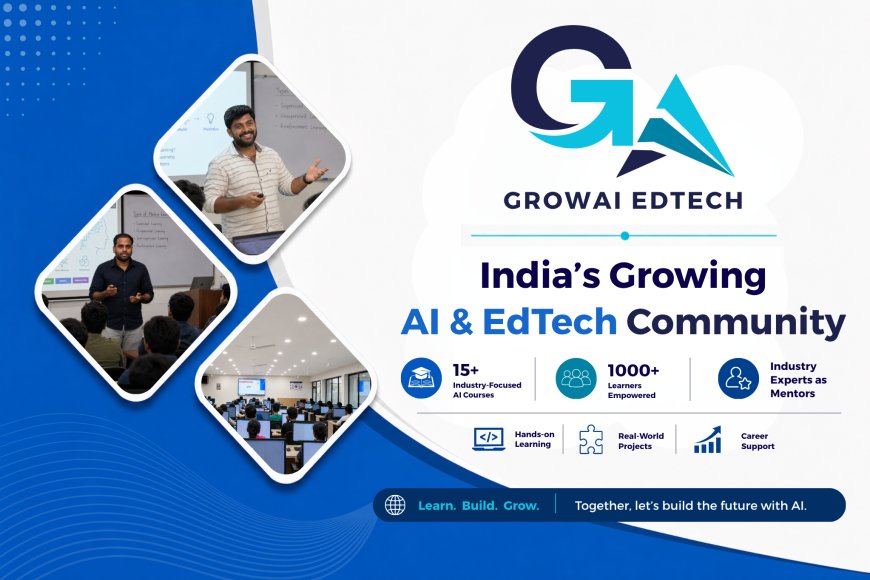
Deciding on a Salesforce certification path in 2026 often starts with confusion, given the many options: Administrator, Platform App Builder, Developer, and more. GROWAI EdTech, a Tamil Nadu firm, built its course around the Administrator path, seen as the standard starting point, priced at ₹999. This article explains why that path fits most beginners first, and how one live course builds toward it.
Ananya Krishnan, a sales operations analyst in Chennai, adds one more example of how the base-first path plays out day to day: the reports module changed how she presents pipeline data to leadership, moving her team from static spreadsheets to live dashboards almost overnight.
Among Salesforce certifications, the Administrator credential remains the usual first step, since it covers the base skills every later path builds on, such as data setup, security, and automation. Jumping straight to a developer or consultant path without this base often leaves gaps that show up fast on the job, when a new hire cannot explain basic sharing rules or object relationships.
GROWAI EdTech's course builds this base across eight modules: cloud and CRM foundations, data model and objects, security and access, UI customization, flow automation, data management, reports and dashboards, and Sales Cloud with Service Cloud and Einstein AI basics, closing with a capstone project where students build a full CRM setup on their own.
Latest Developments
A key shift for Salesforce certification seekers this year is the growing weight placed on AI and Data Cloud skills within certification tracks, alongside standard admin basics. GROWAI EdTech's course reflects this, folding Einstein AI basics directly into its Sales Cloud module, so students are not caught off guard by AI-related content once they move toward certification exams.
The full course, capstone project and certificate included, costs ₹999, cut from ₹28,000, with live weekend classes and no coding background required to start. Every student receives a free Salesforce Developer Edition org from the first module, giving them a safe space to practise without risking a live production system.
Which Salesforce certification should a beginner get first? Most training firms, including GROWAI EdTech, point to the Administrator credential as the right starting point before any specialised track, since it covers the shared foundation every other path assumes.
Why It Matters
Over 100 students have been placed directly from this course, according to GROWAI EdTech, a figure the firm reports alongside its wider platform placement data rather than in isolation from it.
Picking the right first certification path affects how fast a person can start applying for jobs. GROWAI EdTech shares a few cases. Vikram Das, an IT worker in Pune, learned Flow Builder, Data Loader, and security rules in eight weeks with a real practice setup, then got promoted to Salesforce Admin within two months. Rahul Kapoor, a consultant in Delhi, used his capstone project, a full CRM build, as the exact demo shown in his job interview. Meera Pillai, a service cloud support lead in Ahmedabad, used her new skills to set up Case management with Email-to-Case for her company's support team.
Pay grows with this base. Salesforce Administrators in India earn ₹4.5 to ₹7 lakh a year at entry level, rising to ₹7 to ₹12 lakh as senior admins, with Business Analyst roles paying ₹8 to ₹14 lakh and Consultant roles reaching ₹12 to ₹22 lakh. GROWAI EdTech reports an 85% placement rate across 12,000 students, with hiring partners including TCS and Wipro. The course itself carries a 4.6-star rating from more than 1,000 reviews.
What's Next
Sanjay Reddy, an operations manager in Hyderabad, offers a final example: he built a live sales dashboard on his practice org that directly led to his first Salesforce Admin job, without any prior Salesforce experience going into the course.
As Salesforce grows its certification tracks around Data Cloud and AI features through 2026, a base-first path, mastering data setup, security, and automation before any specialised track, is likely to stay the safest route, since advanced tracks still assume this base knowledge no matter how the platform evolves.
GROWAI EdTech's certificate carries a unique ID checkable on its website, tied to Startup India, ISO, MSME, and AICET recognition. The firm reports a 95% completion rate across its programs, and its own comparison table sets a real, self-built capstone CRM org against Trailhead-only content at other providers.
Two more cases show how this base-first approach plays out. Priya Sharma, now a Salesforce Administrator in Bengaluru, had zero CRM background before starting but says the data model module made objects and relationships clear enough to build her first custom app by week three. Riya Nair, a business analyst in Kochi, had no coding background at all but now manages Profiles and Sharing Rules for her whole organisation after finishing the security module.
No prior CRM knowledge is required to enrol, and the course is marked beginner-friendly on GROWAI EdTech's own page. Students can add the finished certificate directly to LinkedIn once the capstone project is graded, with the firm saying a digital copy goes out by email soon after.
Conclusion
If you are deciding which Salesforce certification to chase first in 2026, start with Administrator basics rather than jumping to a specialised track. GROWAI EdTech's Salesforce Administration course builds exactly this base, with a real capstone CRM build, live classes, and no coding required, for ₹999. It is a practical first step before any more advanced Salesforce path.