Whenever a large-scale project (which may contribute significantly to economic development, infrastructure creation, and industrialisation) - either public or private - is undertaken and large swathes of land are acquired for it, the question of what is to be done with the original inhabitants whose livelihoods, homes, and social networks are closely connected to the acquired land. In this context, the term 'rehabilitation and resettlement' (R&R henceforth) refers to a policy tool through which the original inhabitants of the acquired land are provided with benefits, compensation, and other means through which they can be indemnified justly to support them rebuild their lives following their displacement from the land being acquired.
To provide structural framework for navigating the complex process of satisfying all of the multiple stakeholders involved in the process of R&R, the Union government of India promulgated the Right to Fair Compensation and Transparency in Land Acquisition, Rehabilitation and Resettlement Act, 2013 (LARR Act or the Act henceforth).The Act's intention, as described in its official long title, is to ensure 'humane, participative, informed and transparent process for land acquisition for industrialisation, development of essential infrastructural facilities and urbanisation etc, with the least disturbance to the owners of the land and other affected families by providing just and fair compensation and other provisions to ensure successful rehabilitation of the affected families'. It covers all stages of land acquisition such as impact assessment, acquisition, compensation, and post-acquisition wellbeing of the original inhabitants.
I wanted to understand the impediments faced by companies and how families are affected by R&R programs. Towards this end,I interacted with concerned officials and conducted an independent survey of individuals from families that are a part of the major coal mining company’s R&R program. By exploring multiple cases from this survey, I aim to illustrate my findings. The divergence in policy’s underlying intent and real world effects of R&R program in these different cases provides deep insights that can help address some of the recurring issues faced by the families impacted by similar programs across India to deliver more meaningful rehabilitation.
Case 1: The Unguided
One of the most significant challenges observed was the difficulty some families faced in managing their compensation and planning for relocation.
A family of six reliant on and engaged in agriculture consisting of a mother, father, and their four children - two sisters and two brothers - were apprehensive about loss to their livelihood and lifestyle upon potential relocation. Their apprehension turned to reluctance. The reluctance, however, was turned to consent by the overwhelming force of the choice of the majority of their neighbours in the village. The family received its compensation but, with varying levels of guidance on financial planning and the relocation process, the funds were largely exhausted during the period between receipt of compensation and the eventual relocation. Consequently, when the time came to vacate the land, the family no longer had sufficient resources to establish itself elsewhere. At the same time, continuing to remain on the land became increasingly difficult as the effects of coal mining company's operations expanded towards their home. The family's health was adversely affected by the circumstances. The experience subsequently left the family with considerable regret about not having been able to relocate when the opportunity and resources were available.
Other families revealed different manifestations of the same vulnerability.

One such story is of a family whose bread-winner was suffering from a chronic illness. Unable to meet the massive medical expenses, they were desperate for any relief that would come their way. Thus, the moment they were offered a compensation package under an R&R program, they accepted it without much thought and most of it on the medical expenses. With the compensation exhausted and the primary source of income lost, the family found itself without the financial capacity required to relocate.
Yet another family faced a similar situation. The family had three young daughters of marriageable age. The second daughter was to get married and the family accepted an R&R package in exchange for their land to fund said marriage. When the time came to relocate, however, the family had insufficient resources to establish itself elsewhere.
These experiences highlight an important dimension of R&R that extends beyond the provision of compensation itself. While financial compensation is an essential component of rehabilitation, its effectiveness depends significantly on whether families have the knowledge, support, and financial awareness required to use it in a manner that enables sustainable relocation and livelihood restoration.
Case 2 :The Unaware
A second category comprised families that were unfamiliar with their rights and had limited understanding of the R&R process. R&R programmes involve multiple procedures, documentation requirements, timelines, eligibility conditions and institutional interfaces. Families unfamiliar with these processes often struggled to understand what they were entitled to, what action was expected from them, and when they needed to act. Many had little prior experience navigating formal administrative processes and therefore relied heavily on informal sources of information
While such sources could provide valuable assistance, the information available to families was not always complete or sufficiently aligned with the families' individual circumstances. As a result, Bureaucratic complexity combined with uncertainty about relocation, left some families in a quandary even when provisions existed to support them.
The underlying challenge in these cases was therefore not necessarily the absence of benefits or information, but the difficulty families faced in assessing and accessing resources available at their disposal.
Case 3: The Empowered
A very small group of families managed to do everything right: they were financially secure to begin with, understood the program and its process, received compensation on time, and were able to plan relocation as intended.
Understanding the Differences in Outcome
Examining these cases collectively reveal an important pattern. In the first category, families received compensation but lacked substantial financial awareness or planning support necessary to translate it into successful relocation and rehabilitation. In the second, families faced difficulties in evaluating information that made it difficult to navigate the process effectively. The third category illustrates the comparatively
positive outcomes that can emerge when financial preparedness, awareness, timely compensation, and effective implementation come together
This suggests that the variation in outcomes cannot be attributed solely to the design of the legal framework. Good policy is only the beginning of good implementation. The manner in which the framework is implemented, communicated, and supported at the ground level plays a significant role in determining its effectiveness. Importantly, even where statutory provisions are implemented as intended, rehabilitation may require additional forms of support to address the social, emotional, financial, and informational challenges associated with displacement.
Strengthening Implementation Through Complementary Interventions
During my survey, I noted that the company went above and beyond to rehabilitate the displaced. These include the provision of housing, water, and electricity, as well as employment-related initiatives that gave preference to displaced persons. The motivation of these is to create more economic opportunities and create reliable sources of income. The company undertook all of these measures suo moto as a commitment to social responsibility and inclusive growth.
However, insights of the survey indicated that the effectiveness of these initiatives could be further reinforced through focused implementation support. The challenge, therefore, is not necessarily a lack of innovative programmes or institutional intent, but the need to ensure that eligible families were adequately informed, prepared, and supported to make effective use of the opportunities available to them.
One such example is the buffer period between the receipt of compensation and final relocation. The purpose of this period is to allow families sufficient time to plan their relocation and make appropriate arrangements. In practice, however, some families struggled to use this period effectively. Difficulties in financial planning, uncertainty about the relocation process, emotional attachment to their existing homes and communities, and apprehension about navigating administrative procedures could all contribute to delays. On other hand, for implementing organisations, difficulties in relocation can result in delays and additional administrative complexities.
This highlighted the importance of building trust, confidence, and awareness among families throughout the R&R process.
Peer Learning as a Tool for Building Confidence
One intervention explored to address these challenges was the use of peer-learning workshops. Rather than relying exclusively on formal communication from the implementing organisation, these workshops enabled villagers to hear directly from other families who had already experienced different stages of the relocation process.Through these interactions, families could develop a more practical understanding of the realities of relocation, the importance of planning, effective ways of managing compensation, and the nature of the support available to them. The use of individuals with similar backgrounds and circumstances as examples also made the information more relatable and credible.
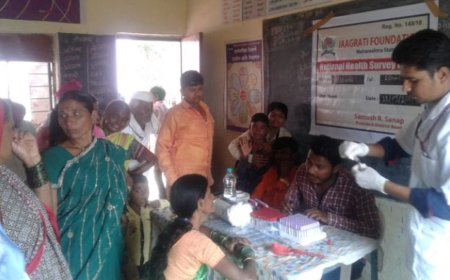
I had the opportunity to accompany officials to some of these workshops and observe the discussions and concerns raised by participants. The interactions corroborated the importance of addressing not only informational gaps but also the apprehension and uncertainty associated with displacement. For several families, hearing directly from peers who had undergone the process helped make the prospect of relocation more tangible and manageable.
The experience demonstrated that trust is not established solely through formal communication. It is strengthened when people are able to see credible examples of how the process works in practice and understand how the organisation intends to support them through the transition.
Improving Awareness of Post-Relocation Opportunities
Support for rehabilitation does not necessarily end with relocation. The company had established several initiatives intended to facilitate the continued economic development of displaced persons. These included exclusive benefits such as preference in certain tendering processes.However, observations indicated that only a relatively small proportion of eligible individuals were taking advantage of these opportunities. Further research suggested that limited awareness was an important contributing factor.To address this, targeted awareness campaigns were undertaken, with particular emphasis on opportunities that were time-sensitive. These efforts resulted in increased participation among eligible families.
The impact extended beyond the immediate beneficiaries. Greater awareness encouraged families to explore opportunities for economic activity and enterprise. Women and homemakers, in particular, emerged as important beneficiaries, as some began identifying ways to participate economically and contribute to household incomes.
Conclusion
The cases examined demonstrate that families can experience significantly different outcomes under broadly similar R&R frameworks. Financial preparedness, awareness, access to reliable information, timely receipt of benefits, and confidence in the relocation process can all influence whether compensation translates into sustainable rehabilitation. This highlights that effective R&R requires not only appropriate policy design but also sustained engagement and implementation support at the ground level. Strengthening these programmes through peer-learning initiatives, targeted awareness campaigns, financial and relocation guidance through continued engagement with affected communities can help bridge the gap between the availability of benefits and their effective utilisation. It was particularly rewarding to contribute to this gradual shift, as trust and confidence began to take precedence over uncertainty and reluctance.
All of the above lead us to the following conclusion: I began this exploration wanting to understand the impediments faced by companies and families during R&R. I came away with a broader perspective: resettlement can move a family from one place to another; only rehabilitation can enable it to move forward. Whether undertaken by governments or corporations, R&R programmes should aspire to go beyond formal compliance with statutory requirements. By placing affected communities at the centre of the rehabilitation process, R&R can become more than a mechanism for managing displacement, it can serve as an instrument for inclusive growth, shared prosperity, and long-term sustainable economic development.
Written By— Rashmi Nuligonda (rashminuligonda@gmail.com)