Prerna Rajput Returns to Miss World for a Second Year
The 73rd Miss World edition gave Rajput’s work a whole new exposure to present her designs before an international audience in Vietnam during this anniversary edition.Pageants place special demands on couture because contestants need outfits that look strong under stage lights while also allowing them to move with ease.
Rajput’s approach focused on detailed construction and hand-applied work. Her creations used elements such as pearls, Swarovski details, metallic accents, layered fabrics and floral designs. The pieces were developed through fittings and trials before the final appearances.
For a designer working with pageant contestants, the process goes beyond creating a visually striking gown. The outfit must also support the contestant during long events, rehearsals and public appearances. This made fitting and garment construction an important part of Rajput’s work at the competition.
Taanusiyaa Chetty Wears Rajput Creations
One of the notable associations from this year’s pageant was Rajput’s work with Taanusiyaa Chetty. Chetty wore custom pieces from the designer during key stages of the Miss World competition.
Chetty later secured the Miss World Asia title and also received recognition as 2nd Runner-Up and for Beauty with a Purpose. Her appearances in Rajput’s designs added another layer to the designer’s presence during the Miss world contest.
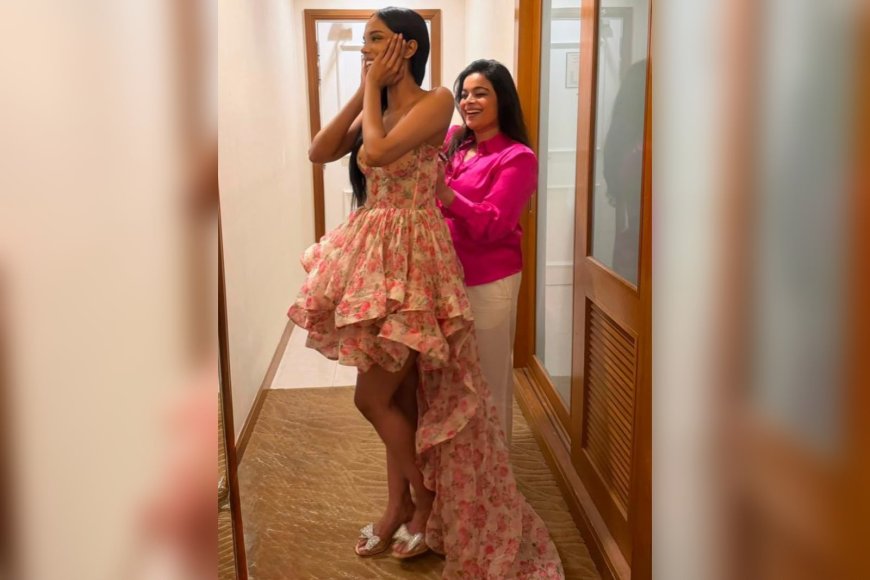
One of the key looks appeared during the Grand Finale rehearsals, Taanusiyaa wore a pink gown built with several frilled layers. The design used graduated waves of fabric to create movement as she walked. The shape gave the gown a youthful look while retaining the formal character expected from a major pageant event.
The construction also helped the garment move across the stage instead of remaining stiff. This is an important part of pageant fashion, where contestants are seen from a distance and under strong lighting.
Pearl Corset and Floral Skirt Create a Gala Look
Another Rajput’s creation worn by Taanisiyaa appeared at the official Miss World gala dinner. The outfit combined a structured corset covered with pearl detailing and a handcrafted floral skirt.
The pearls were placed by hand across the corset, creating texture and catching light as Chetty moved. The upper section of the outfit provided structure, while the wider skirt added volume and a softer shape.
The combination created a look that stood apart from a conventional evening gown. Its use of pearls and floral elements also gave the outfit a strong couture character without relying on heavy ornamentation across the entire garment.
The appearance drew attention from pageant followers, with some viewers comparing the overall styling to a Barbie-inspired look.
Handcrafted Work Remains Central to the Collection
According to Rajput, the Miss World garments were hand made by master artisans. The work began with sketches and continued through measurements, fittings and final trials.
The designer said she remained involved in the process, including decisions on stitching, bead placement and structural layers. Such involvement is common in bespoke couture, where small changes can affect the final fit and movement of a garment.
Working with delegates from different countries also required adjustments for each participant. A gown designed for a pageant contestant cannot rely only on its appearance. It has to work with the person’s proportions, movement and comfort.
Rajput’s studio handled these changes through repeated fittings and garment modifications. Embellishments were also added by hand, with pearls, Swarovski elements and metallic details used across different pieces.
Pageant Fashion Requires Design and Stage Awareness
Miss World provides a different setting from a traditional fashion show. Designers must consider how clothing will appear during interviews, formal dinners, rehearsals and stage walks.
A gown that looks strong in a photograph may not work as well during movement. Fabric weight, structure, length and embellishment can all affect how a contestant performs on stage.
Rajput’s work for the competition placed attention on these practical factors along with the visual design. The use of layered gowns and structured pieces allowed the garments to create movement while keeping their formal shape.
Her work also showed how Indian couture can be used for international pageant styling without being limited to one traditional design format. The garments combined hand craftsmanship with silhouettes suited to a global fashion audience.
International Delegates Show Interest in Custom Couture
Rajput’s work during the competition also led to interest from international participants , according to the designer’s account. Several contestants approached her about future custom outfits for events outside the Miss World programme.
These requests included gowns for red-carpet appearances, state dinners and charity events. Such commissions can extend a designer’s relationship with pageant contestants beyond a single competition.
For Rajput, the Miss World platform has therefore become more than a one-time fashion assignment. Her return for a second consecutive edition places her work within an international pageant setting where designers compete for attention alongside established global fashion names.
Indian Craftsmanship on an International Platform
The presence of Prerna Rajput at the 73rd Miss World edition in Vietnam reflects the growing role of Indian couture in international pageant styling. Her designs combined hand-finished detailing with contemporary silhouettes aimed at stage and formal wear.
Her work with Taanusiyaa Chetty was among the more visible examples, particularly through the pink layered gown and pearl-and-floral gala outfit.
As pageant fashion continues to mix designers and influences from different countries, Rajput’s participation gives Indian artisans and couture techniques another international platform. Her second consecutive appearance at Miss World also marks a continuing relationship with one of the world’s best-known beauty pageants.