This infrastructure squeeze is a scenario unfolding daily across modern enterprises.
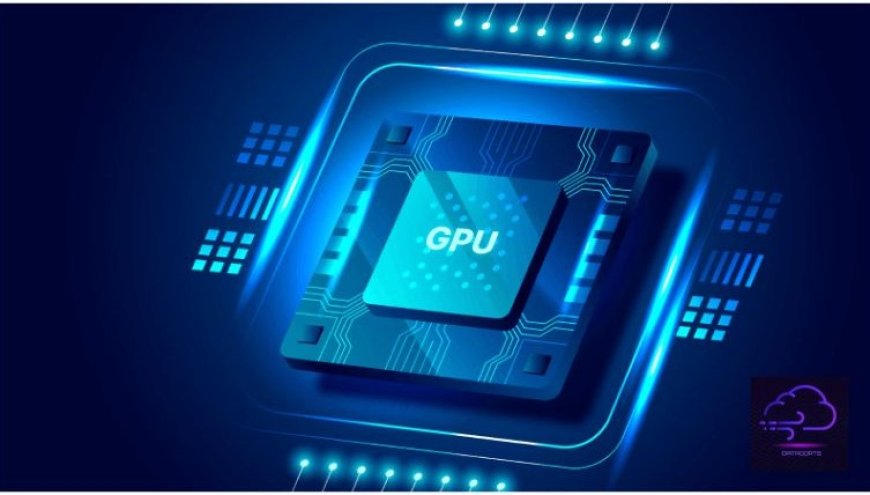
The frantic rush to scale machine learning models has created a massive bottleneck, turning high-end compute silicon into the ultimate enterprise commodity. Yet, when enterprise architects set out to evaluate infrastructure options, they frequently evaluate silicon as an isolated variable. They map out raw floating-point operations per second or compute costs on a spreadsheet, thinking that securing a cluster of high-end graphics chips solves their problem. The thing is, evaluating high-performance silicon in a vacuum ignores the complex fabric of networking, security, and global connectivity that actually determines whether an artificial intelligence model succeeds or stalls.
The Mirage of Raw Compute
A classic conflict plays out every financial quarter within deep-tech procurement. Engineering teams demand immediate access to the fastest clusters to train localized models on aggressive development schedules. Conversely, enterprise architects have to think about long-term integration, data sovereignty, legacy interconnectivity, and predictable operating costs.
Frankly, choosing an infrastructure partner based purely on chip availability or headline pricing creates immense downstream friction. It is relatively easy for boutique infrastructure operators to buy a rack of modern server accelerators, plug them into a localized data center, and market themselves as high-capacity GPU cloud providers.
But a chip is only as fast as the network feeding it data. If your dataset takes twelve hours to move across a fragmented network fabric just to reach the cluster, the physical compute efficiency drops to zero.
To build an architecture that survives sudden data expansions, enterprise architects should look at seven vital criteria that look beyond the chip itself.
● Interconnect Fabric Latency: High-performance models do not run on single instances; they run across massive, parallelized clusters. If the inter-node network fabric lacks ultra-low latency connectivity, the nodes waste valuable compute cycles waiting to sync gradients.
● Global Networking and Underlay Fabric: The proximity of your data ingestion point to your compute cluster dictates real-world training speed. The ideal partner must possess a robust, global underlay network to move massive training sets seamlessly across regions.
● Data Residency and Sovereignty: Regulations do not disappear because a project involves machine learning. Compliance requires strict control over where data is stored and processed.
● Hybrid and Multi-Cloud Integration: Modern companies don’t keep all their eggs in one basket. Any compute environment you choose has to connect cleanly with your existing public storage networks and on-premise databases.
● Comprehensive Security Architecture: Training datasets aren't just numbers; they contain your core intellectual property or sensitive customer information. You can't treat security as an afterthought. It needs to be deeply embedded right into the network layer, protecting data from ingestion to processing.
● Predictable, Transparent Cost Models: It’s incredibly common to get lured in by flashy, low up-front pricing, only to get absolutely slammed later by staggering data egress fees. Look for providers offering stable, clear billing structures that don't penalize you for accessing your own processed models.
True digital agility cannot be achieved through isolated, short-term compute rentals or fragmented hardware deployments. It requires an unyielding investment in the global, systemic connectivity that underlies the entire compute experience.
When an organization chooses AI cloud solutions providers like Tata Communications that integrate high-end compute directly into a global tier-1 network fabric, the boundaries between data, network, and compute evaporate. The business stops fighting localized capacity shortages and starts running its most demanding models on a self-sustaining, hyper-connected digital foundation.