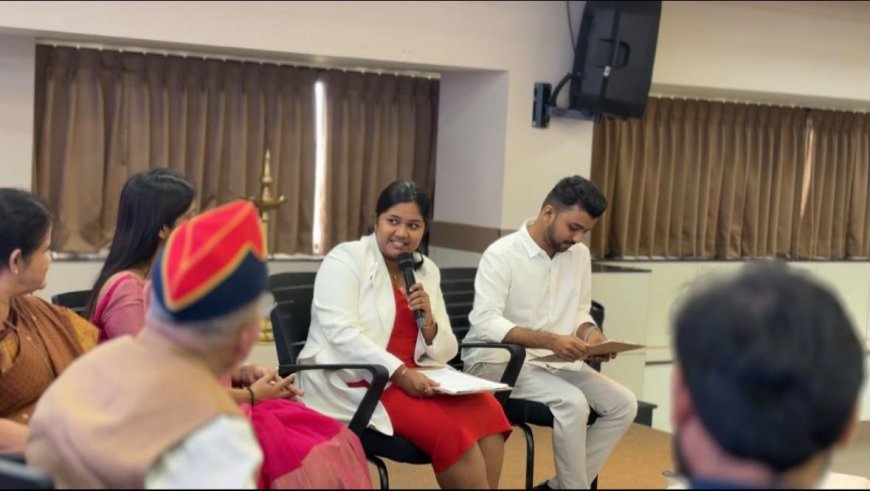
By Dr. Charunayana D.N.
Leader | Entrepreneur | State level speaker |
In a world that often measures success through job titles, professional achievements, social recognition and positions of authority, leadership is frequently misunderstood. Many young people grow up believing that they become leaders only when they are appointed team captains, promoted to managerial positions, elected to public office or entrusted with an organisation.
But leadership does not begin with a designation. It begins with behaviour.
A young person who takes responsibility for a mistake, listens to an opposing viewpoint, supports a struggling teammate or makes a difficult but ethical decision is already practising leadership. These actions may not attract public recognition, but they develop the qualities required to lead others in the future.
The question we should therefore ask is not whether young people have enough opportunities to occupy leadership positions. It is whether they are being prepared to handle the responsibility that comes with them.
Leadership begins with self-leadership
Before leading a team, an organisation or a community, a person must learn to lead themselves.
Self-leadership involves managing time, regulating emotions, recognising personal limitations and remaining accountable for one’s decisions. It requires the ability to continue working towards a goal even when external motivation is absent.
For young people, this can begin with simple everyday choices: keeping commitments, acknowledging mistakes, completing responsibilities without constant supervision and learning from criticism rather than immediately becoming defensive.
These habits may appear ordinary, but they shape how individuals respond when the stakes become higher.
A person who struggles to accept responsibility for small decisions may find it difficult to manage larger responsibilities. Similarly, someone who cannot acknowledge a mistake may struggle to build trust within a team.
Self-leadership is not about being perfect or controlling every aspect of life. It is about recognising that personal growth begins with taking ownership of what one can influence.
The difference between authority and influence
Authority can be assigned through a designation. Influence must be earned through behaviour.
A person may have the power to instruct a team, but that does not automatically mean the team trusts their judgement. Genuine leadership develops when people feel heard, respected and confident that decisions are being made thoughtfully.
This distinction is particularly important in workplaces, educational institutions, entrepreneurial ventures and public life.
Young people should understand that leadership is not an opportunity to exercise power over others. It is an opportunity to take responsibility for outcomes that affect others.
A good leader does not need to have the loudest voice in the room. Sometimes, the most valuable contribution is asking the right question, listening carefully or recognising that someone else has a better solution.
Influence grows when words and actions are consistent. People are more likely to trust someone who keeps promises, communicates honestly and accepts accountability than someone who relies only on status.
Communication is a leadership skill, not just a speaking skill
Leadership is often associated with confident speeches, presentations and the ability to persuade an audience. While these abilities can be useful, communication extends far beyond public speaking.
It includes listening without interrupting, explaining decisions clearly, addressing disagreements respectfully and giving feedback without humiliating another person.
A leader who communica…