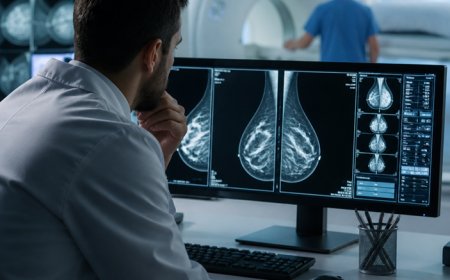
Dr. Ohmini Krishnamurthy Rajendran, MBBS, MD (Radiodiagnosis), is an Indian consultant radiologist, physician-scientist, researcher, author, inventor, and healthcare innovator whose work spans artificial intelligence in radiology, precision oncology, radiogenomics, multimodal imaging, and predictive clinical decision-support systems.
Rather than viewing radiology solely as a diagnostic specialty, Dr. Ohmini approaches medical imaging as the foundation of intelligent healthcare ecosystems capable of integrating imaging, pathology, genomics, and clinical information into comprehensive cancer intelligence platforms. Her work reflects the broader evolution of radiology from image interpretation toward computational intelligence, where data-driven insights increasingly support earlier diagnosis, personalized treatment planning, and improved patient outcomes.
While artificial intelligence has become one of healthcare's fastest-growing research areas, translating AI into meaningful clinical practice remains one of medicine's greatest challenges. Unlike many researchers whose work is primarily engineering-driven, Dr. Ohmini combines clinical expertise in diagnostic radiology with interdisciplinary research, allowing her to explore how intelligent technologies can address real-world clinical needs.
Working across diverse healthcare settings, she has interpreted a broad spectrum of diagnostic imaging studies while simultaneously pursuing research aimed at improving cancer diagnosis, risk prediction, treatment planning, and long-term patient management. Her work reflects the understanding that successful medical AI depends not only on sophisticated algorithms, but also on clinical insight, evidence-based medicine, and technologies designed to complement physician expertise.
Much of Dr. Ohmini's research focuses on computational systems capable of integrating multiple dimensions of cancer data—including imaging, pathology, genomics, molecular biomarkers, and clinical history—into unified decision-support platforms. Her published work explores emerging fields such as AI-driven radiogenomics, multimodal learning, federated learning, explainable AI, graph neural networks, digital twins, foundation models, multi-omics integration, chemotherapy toxicity prediction, AI-assisted drug repurposing, and generative AI for synthetic oncology imaging.
Collectively, these investigations represent an effort to move beyond isolated artificial intelligence applications toward integrated Cancer Intelligence Systems capable of supporting diagnosis, prognosis, therapeutic decision-making, and personalized patient care.
Building the Next Generation of Cancer Intelligence Systems
A defining characteristic of Dr. Ohmini's research is its emphasis on multimodal integration. Traditionally, radiology, pathology, genomics, and clinical medicine have operated as largely independent disciplines, each contributing valuable but separate insights into patient care. Her research instead explores computational frameworks capable of bringing these domains together within unified, AI-driven decision-support platforms.
Through work involving radiogenomics, computational pathology, multimodal learning, foundation models, and digital twin technologies, she contributes to one of precision oncology's most important ambitions: developing intelligent systems capable of understanding cancer from multiple biological perspectives simultaneously. Rather than relying on isolated diagnostic findings, these integrated approaches seek to combine diverse streams of clinical information to support more comprehensive, individualized, and predictive cancer care.
Scholarship at the Intersection of Medicine and Computational Science
The rapid evolution of artificial intelligence has transformed interdisciplinary research into one of medicine's fastest-growing academic frontiers. Dr. Ohmini's scholarly work reflects this convergence by combining expertise in radiology with emerging advances in computational medicine, oncology, and intelligent healthcare technologies.
Her scientific publications span diverse areas including explainable artificial intelligence, federated learning, multimodal intelligence systems, radiogenomics, digital twins, foundation models, and next-generation computational oncology. Collectively, her research explores how advanced computational methods can be be translated into clinically meaningful solutions that support physicians and improve patient care.
Beyond journal publications, Dr. Ohmini has authored multiple academic books examining radiogenomics, multimodal imaging, intelligent cancer diagnostics, federated radiology, digital twin technologies, and precision oncology. These contributions reflect an ongoing commitment not only to advancing scientific research but also to fostering interdisciplinary education within the rapidly evolving fields of medicine and artificial intelligence.
Innovation Beyond Academic Publishing
Scientific innovation extends beyond publications alone. Throughout her research career, Dr. Ohmini has translated scientific concepts into intellectual property through multiple patent applications focused on artificial intelligence-enabled cancer diagnostics, multimodal imaging systems, radiogenomic intelligence platforms, predictive healthcare technologies, foundation model architectures, and digital twin-based oncology systems.
These innovations demonstrate an interest in transforming emerging scientific concepts into technologies with the potential to support future clinical practice. By combining diagnostic imaging, computational intelligence, and precision medicine, her work reflects a translational approach aimed at bridging laboratory research with real-world healthcare applications.
Recognition Through Scientific Service
Leadership within the scientific community is measured not only by original research but also by contributions that help advance the broader academic ecosystem.
Dr. Ohmini has participated extensively in the peer-review process, evaluating scientific manuscripts for international journals and conferences across medicine, radiology, oncology, artificial intelligence, and healthcare innovation. Through these activities, she contributes to maintaining scientific quality while supporting the dissemination of emerging research.
Her professional activities also include serving as a session chair, conference judge, invited speaker, editorial contributor, and research collaborator within international scientific communities. These roles reflect sustained engagement with interdisciplinary research and demonstrate professional recognition extending beyond routine clinical practice into global academic collaboration.
Her affiliations with leading organizations in radiology, oncology, medicine, and public health further underscore her commitment to scientific advancement and continued professional development.
A Career Reflecting the Future of Healthcare
Healthcare is steadily advancing toward earlier diagnosis, predictive analytics, personalized treatment strategies, and AI-assisted clinical decision-making. Within this transformation, radiology is evolving from a specialty centered on image interpretation into one of the primary sources of data powering intelligent healthcare systems.
Dr. Ohmini's work reflects this broader evolution. By integrating diagnostic imaging, artificial intelligence, radiogenomics, computational pathology, digital twins, multimodal learning, and multi-omics research, she contributes to the emerging field of computational precision oncology. Rather than focusing on a single technological innovation, her research illustrates how multiple scientific disciplines can converge to support more intelligent, personalized, and evidence-driven cancer care.
As medicine becomes increasingly data-driven and interdisciplinary, physician-scientists who can bridge clinical expertise with computational innovation will help define the next generation of healthcare. Through her work at the intersection of radiology, artificial intelligence, and precision oncology, Dr. Ohmini Krishnamurthy Rajendran exemplifies this evolving model of scientific leadership—one that seeks not only to advance technology, but also to translate innovation into more personalized, evidence-based patient care.