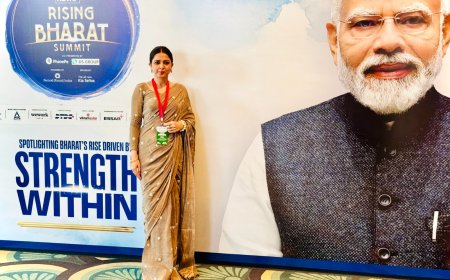
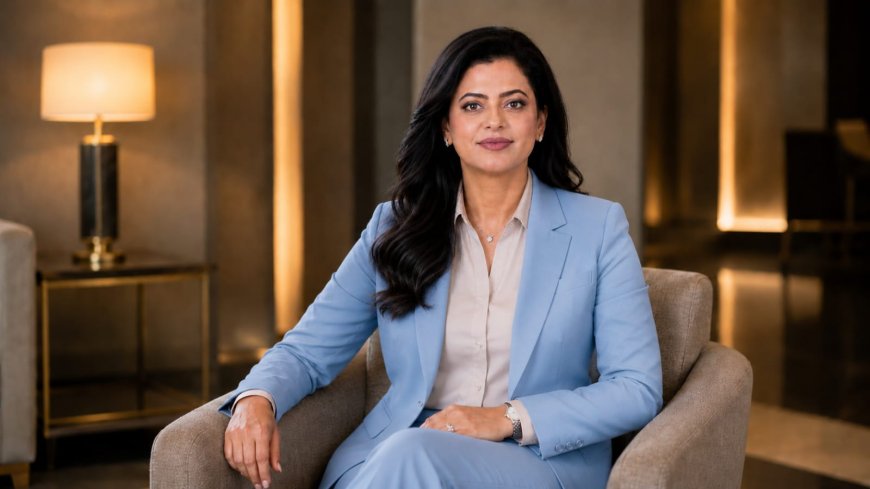
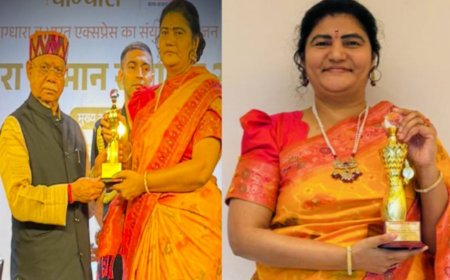
Among this emerging generation is Dr. Rajatha Maradi Hemanth Kumar, MBBS, an Indian physician, clinical researcher, author, and healthcare innovator whose work spans artificial intelligence in healthcare, precision oncology, digital twin technologies, predictive analytics, and translational medical research. Her professional journey reflects one of the defining trends shaping twenty-first-century medicine—the integration of frontline clinical practice with intelligent healthcare technologies designed to improve patient outcomes.
While continuing her clinical responsibilities as a practicing physician, Dr. Rajatha has developed a growing body of research focused on some of modern medicine's most significant challenges, including early cancer detection, AI-assisted clinical decision support, personalized treatment strategies, and computational oncology. Her work illustrates how physicians are increasingly contributing not only to patient care but also to the technological foundations of future healthcare systems.
Where Clinical Experience Meets Medical Innovation
One of the defining characteristics of Dr. Rajatha's career is the combination of extensive clinical experience with an active commitment to scientific research.
With more than seven years of experience in primary care, preventive medicine, maternal and child health, chronic disease management, emergency care, and public health, she has worked directly with thousands of patients while participating in healthcare quality improvement and evidence-based clinical practice. During the COVID-19 pandemic, she also served as a frontline Medical Officer, contributing to one of India's largest public health efforts through vaccination campaigns and disease surveillance initiatives.
Healthcare innovation experts increasingly recognize that physicians with real-world clinical experience are uniquely positioned to develop technologies that address practical healthcare challenges.
"Successful medical innovation begins with understanding the realities of patient care," notes a healthcare technology consultant involved in digital transformation initiatives. "Physicians who combine clinical insight with scientific research often identify problems that technology alone cannot fully appreciate."
This combination of clinical practice and research has become a defining element of Dr. Rajatha's professional work.
Advancing Precision Oncology Through Artificial Intelligence
Cancer remains one of the world's most complex healthcare challenges, driving unprecedented investment in precision medicine, genomics, and artificial intelligence.
Dr. Rajatha's research focuses on several rapidly advancing areas of oncology, including AI-enabled precision oncology, digital twin technologies, liquid biopsy systems, immuno-oncology, radiomics, multi-omics integration, predictive analytics, and intelligent clinical decision support systems.
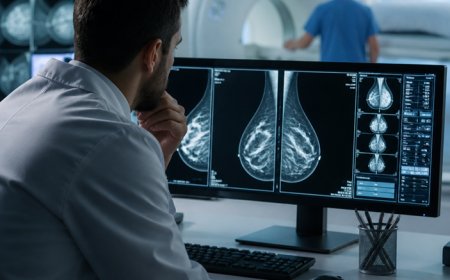
Her publications explore how foundation AI models can integrate clinical records, imaging, molecular biomarkers, genomics, transcriptomics, proteomics, and real-time patient data to support earlier diagnosis, individualized treatment planning, and continuous therapeutic monitoring.
This work aligns closely with one of healthcare's most important long-term objectives: transforming cancer management from generalized treatment pathways toward highly personalized, data-driven care tailored to each individual patient.
Medical researchers increasingly believe that future oncology will depend upon integrating diverse biological datasets into unified clinical intelligence systems capable of supporting physicians throughout the continuum of care.
Research at the Intersection of Medicine and Computational Intelligence
Artificial intelligence is rapidly expanding from experimental applications into practical clinical tools capable of assisting physicians with diagnosis, prognosis, risk prediction, and treatment optimization.
Dr. Rajatha's scholarly work reflects this evolution by combining traditional medical research with computational methodologies. Her publications investigate topics including dynamic digital twins, foundation AI models, AI-assisted immunotherapy prediction, liquid biopsy analytics, multi-modal cancer intelligence systems, and predictive healthcare architectures.
Collectively, these studies explore how computational intelligence may enhance precision medicine by enabling clinicians to interpret increasingly complex biological information while supporting more informed clinical decision-making.
Academic observers suggest that researchers capable of bridging medicine, computer science, and translational healthcare represent an increasingly valuable segment of the biomedical research community.
"The future of healthcare depends upon interdisciplinary collaboration," explains an international oncology researcher. "Physicians who understand both clinical medicine and advanced computational technologies are helping define how next-generation healthcare systems will evolve."
Supporting the Future of Predictive Healthcare
Beyond traditional academic research, Dr. Rajatha's work contributes to the broader vision of predictive and preventive healthcare.
Her research interests encompass digital twin technologies, personalized medicine, clinical decision support systems, predictive analytics, and multi-omics integration—fields widely viewed as foundational to future intelligent healthcare ecosystems.
Digital twins, in particular, have attracted growing international attention as researchers investigate virtual patient models capable of simulating disease progression, predicting therapeutic response, and supporting individualized treatment strategies.
These technologies represent a significant shift toward continuous, data-driven healthcare management rather than episodic treatment after disease has already progressed.
Clinical Leadership and Public Health Impact
In addition to her academic contributions, Dr. Rajatha has maintained an active role in clinical practice and healthcare delivery.
Her experience includes managing large outpatient volumes, maternal and child healthcare, chronic disease management, preventive medicine, dermatological procedures, and multidisciplinary clinical operations. During the COVID-19 pandemic, her work in vaccination and public health demonstrated the important role physicians continue to play during periods of large-scale healthcare challenges.
Healthcare leaders frequently emphasize that innovation is most effective when developed by professionals who remain closely connected to patient care.
This continued engagement with clinical medicine allows physician-researchers to evaluate emerging technologies within the realities of everyday healthcare practice.
Reflecting the Direction of Modern Medicine
Perhaps the most notable aspect of Dr. Rajatha's work is how closely it reflects the broader direction of global healthcare innovation.
Around the world, governments, healthcare systems, academic institutions, and biotechnology organizations are investing heavily in artificial intelligence, predictive diagnostics, precision oncology, digital twins, multi-omics research, and intelligent clinical decision support platforms.
Dr. Rajatha's research interests align closely with these priorities, illustrating the growing convergence of medicine, computational science, and biomedical innovation that many experts believe will shape healthcare over the coming decades.
"Medicine is rapidly evolving toward intelligent, predictive, and personalized care," observes a healthcare innovation analyst. "Researchers working across clinical medicine and artificial intelligence are contributing to the frameworks that will support future healthcare delivery."
As healthcare continues its transition toward data-centric, individualized medicine, physician-scientists capable of integrating patient care with computational innovation will become increasingly influential. In that context, Dr. Rajatha Maradi Hemanth Kumar represents a new generation of clinicians whose work reflects not only the current transformation of medicine but also the future direction of healthcare itself—where scientific discovery, artificial intelligence, and compassionate clinical care increasingly work together to improve human health.