However, while interest in OpenClaw is rising among developers, startups, and enterprises alike, a critical challenge continues to slow down widespread adoption: setup complexity. The promise is compelling, but the path to realizing that promise remains fragmented and, in many cases, inaccessible to a broader audience.
On the surface, OpenClaw promises freedom. Freedom from vendor lock-in, freedom over data, and freedom to build AI systems tailored to specific needs. But achieving that freedom often comes at a cost. That cost is not just financial, but also operational. All measured in time, expertise, and effort required to get systems up and running reliably.
Setting up OpenClaw is rarely straightforward. It involves configuring compatible hardware or cloud environments, managing dependencies, ensuring version compatibility, and optimizing performance for different workloads. Beyond installation, users often need to fine-tune system parameters, manage storage layers, and ensure that compute resources are efficiently utilized. Even for technically experienced users, the process can take hours or days, with a high probability of encountering configuration issues along the way.
More importantly, security is often an afterthought. Many users focus on getting the system to run, but overlook critical aspects such as environment isolation, access control, network restrictions, and data protection. In an era where AI systems frequently interact with sensitive data, ranging from internal documents to proprietary business insights, this gap can become a serious concern. A working system is not necessarily a secure system, and that distinction is becoming increasingly important.
A Growing Gap Between Interest and Execution
This disconnect between growing demand and execution difficulty is becoming increasingly evident. While more organizations are exploring private and self-hosted AI solutions, the lack of streamlined deployment options continues to act as a bottleneck. Interest is accelerating faster than the infrastructure required to support it.
For startups, this slows down innovation cycles and delays product development timelines. For enterprises, it introduces compliance challenges, governance concerns, and increased scrutiny from security teams. And for individual developers, it creates a steep learning curve that can discourage adoption altogether or push them back toward less flexible but easier-to-use alternatives.
What the ecosystem lacks is not capability, but accessibility. The tools are powerful, but the barrier to entry remains high, creating a gap between those who can technically implement these systems and those who can benefit from them.
Simplifying the Path to Secure AI
This is where Beeeowl is positioning itself as an enabling layer.
Beeeowl lets you order pre-configured OpenClaw environments that are 100% secure. Their setup methodology is designed to reduce setup friction while aligning with widely accepted security and infrastructure best practices. Instead of navigating complex installation processes, users receive systems that are prepared for immediate use. Whether on dedicated hardware, personal devices, or cloud environments. This approach allows users to bypass the most time-consuming and error-prone stages of deployment.
Each environment is configured with attention to stability, performance, and baseline security considerations, helping users start from a stronger foundation rather than building everything from scratch. The goal is not to replace user control, but to enhance it by removing unnecessary complexity at the starting point.
For users who prefer a physical setup, Beeeowl offers fully configured, 100% secure machines delivered directly to their doorstep, with OpenClaw installed and ready to run. This creates a plug-and-play experience that bridges the gap between hardware and software. For those operating in cloud or hybrid environments, similar configurations can be provisioned remotely, maintaining consistency across deployment types and reducing variability in setup quality.
Currently, these services are available in the United States and Canada, with plans to expand into additional regions in the near future. This phased rollout reflects a broader vision of making secure AI infrastructure more accessible globally.
Reducing Time to Value
By removing the operational burden of setup and initial configuration, Beee owl aims to significantly reduce the time it takes for users to go from intent to execution. What traditionally required hours or days of effort can now be achieved in a fraction of the time, allowing teams to focus on building, experimenting, and deploying AI solutions rather than troubleshooting infrastructure.
This acceleration has meaningful implications. Faster setup leads to faster iteration, which in turn drives innovation. Teams can test ideas more quickly, deploy solutions more confidently, and adapt to changing requirements without being held back by technical bottlenecks.
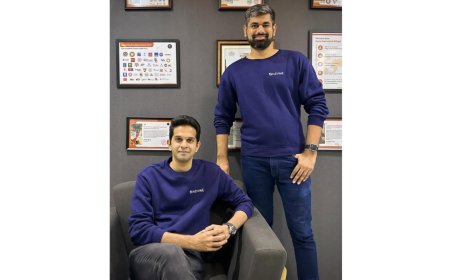
"What we consistently observed was that the biggest barrier to AI adoption wasn’t capability, it was setup and security complexity. Teams were spending more time getting systems to work than actually using them. Beeeowl was built to remove that friction, so people can focus on building with AI, not wrestling with infrastructure," said Jashanpreet Singh & Amarpreet Singh, founders of Beeeowl.
This shift is particularly relevant as AI continues to move deeper into core business workflows. The ability to deploy quickly, securely, and reliably is no longer a convenience, it is a necessity. Organizations that can operationalize AI faster gain a significant competitive advantage.
The Road Ahead
As OpenClaw and similar tools continue to gain traction, the conversation is gradually shifting from “what can AI do?” to “how should AI be deployed?” Infrastructure, security, and usability are becoming central to that discussion. The focus is moving from experimentation to operationalization.
Beeeowl’s approach reflects this shift. Focusing not just on enabling AI, but on making it practical, accessible, and aligned with real-world requirements. By addressing the foundational challenges of setup and initial configuration, it aims to unlock broader adoption across different user segments.
While the technology itself will continue to evolve, one thing is becoming clear: adoption will not be driven by capability alone, but by how easily and securely that capability can be realized.
And for many, that journey begins with removing the barrier of setup.