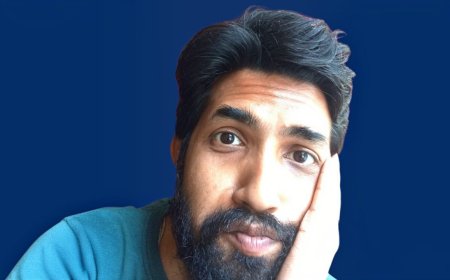
Among the many excerpts circulating online, one statement appears repeatedly in comments and reposts:
"Don't join because of blind faith. Join after seeing the results."
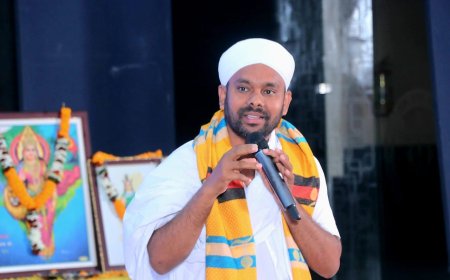
It is a simple sentence, but one that reflects the larger philosophy Aryaa Maharaj has been building through his public appearances, YouTube content and his upcoming book. Rather than encouraging unquestioning belief, he argues that spirituality should inspire personal understanding and lived experience. His published profile similarly describes him as an Adhyatmik Margdarshak, focusing on recurring life challenges through personalized spiritual guidance instead of generic predictions or remedies.
That distinction has become one of the reasons many viewers believe his approach feels different from the conversations that often dominate India's digital spiritual space. While astrology and devotional content continue to attract millions of viewers online, much of that content is built around predictions, fear of planetary influences or universal remedies. Aryaa Maharaj, however, repeatedly shifts the conversation away from certainty about the future and toward responsibility in the present.
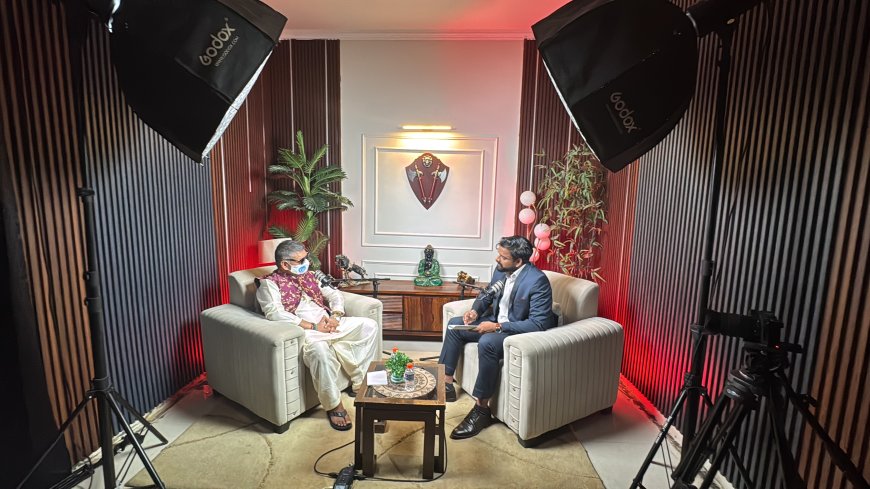
During the podcast, he avoids presenting himself as someone who can simply predict what lies ahead. Instead, he describes his role as helping people understand the patterns that repeatedly appear in their lives and encouraging them to examine what he calls their Spandan, or inner vibration. According to his philosophy, many external problems—whether in relationships, careers or finances—are not isolated events but reflections of deeper internal patterns. This idea also forms the foundation of his upcoming book, Spandan – You Can Change Your Life, which explores recurring life patterns, karma, faith and personal transformation.
The interview also stood out because it approached spirituality through conversation rather than declaration. Instead of delivering a discourse, Aryaa Maharaj spent time explaining why he believes blind faith can be counterproductive. In his view, faith should become stronger through experience rather than expectation. The message resonated with many younger viewers who increasingly question traditional authority while remaining open to spiritual ideas that encourage reflection over dependence.
Another discussion that attracted attention explored the relationship between spirituality and science. Rather than presenting the two as opposing forces, Aryaa Maharaj suggested that both seek to understand reality, often using different languages to describe similar experiences. The podcast framework itself was designed to explore subjects such as karma, consciousness and personal transformation through thoughtful dialogue rather than rapid-fire questions.
Interest in Aryaa Maharaj has also grown beyond the podcast. He is the founder of Ichha Purti Dhaam, under which he conducts the Samasya Samadhan Sabha, a free, application-based guidance initiative that emphasizes privacy and individualized spiritual guidance. According to his profile, the initiative reflects his belief that people should receive guidance tailored to their circumstances rather than one-size-fits-all solutions.
The podcast has also renewed attention around his forthcoming book, which is expected to examine questions that many people quietly ask themselves: Why do similar problems return despite repeated efforts? What is the relationship between karma and free will? Can changing one's inner state influence external circumstances? Rather than presenting fixed answers, the manuscript outline suggests a reflective exploration of these questions through the framework of Spandan.
Whether Aryaa Maharaj becomes one of the defining contemporary voices in India's spiritual landscape remains to be seen. What is already evident, however, is that his latest podcast has introduced his ideas to a far wider audience. At a time when public conversations are often driven by speed and certainty, his emphasis on reflection, responsibility and experience has offered something noticeably different. That difference may explain why the discussion continues to travel well beyond the podcast itself, finding new audiences one clip, one conversation and one shared idea at a time.