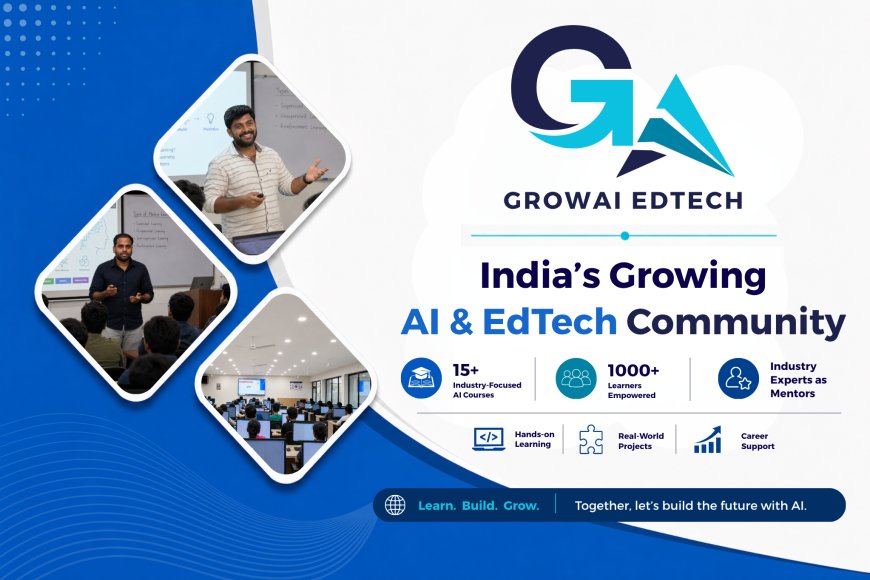
People who want to learn digital marketing this year are not just learning to post on social media. They are learning to run full campaigns across SEO, ads, email, and online stores, often helped by AI tools. GROWAI EdTech, a Tamil Nadu firm, offers a two-month course on this at ₹999, taught live on weekends. This article maps out a clear path to learn digital marketing in 2026, and shows how one live course structures it.
No prior marketing or design background is needed to enrol, and the course is marked beginner-friendly on the firm's own page, which also lists a free internship and an industry-recognised certificate among the course badges.
Digital marketing has always covered a wide range of skills, but learning it once meant picking one channel and going deep. That has changed. Small firms now expect one marketer to handle many channels, so a modern learning path needs to move through content, ads, SEO, and analytics in order, rather than treating each as a stand-alone subject.
GROWAI EdTech sequences its course this way across eight weeks. Week one covers digital marketing basics and career paths, plus content creation using Canva and Canva AI. Week two covers social media marketing across Instagram, Facebook, YouTube, and LinkedIn. Week three moves into Meta Ads, covering campaign setup, Meta Pixel, and retargeting. Week four covers SEO, including keyword research with tools such as Semrush. Week five covers Google Ads and Performance Max campaigns. Week six covers email and WhatsApp marketing, including automation through a tool called Interakt. Week seven covers analytics and building a full WordPress website. Week eight covers e-commerce setup with WooCommerce and Shopify, plus freelancing and career guidance.
Latest Developments
The clearest shift in how people learn digital marketing this year is AI use woven into each step, not taught as a stand-alone topic. GROWAI EdTech's course maps AI tools to nearly every module, including ChatGPT for research, Canva AI for content, and Meta Advantage+ for ad targeting, alongside the free and paid standard tools for each channel.
The course costs ₹999 for the full two-month program, taught live by working marketing staff, with input from IIT-trained mentors and full access to recordings. A milestone review sits at the end of month one, giving students a mock test and live doubt-clearing session before moving into paid advertising and analytics work.
How long does it take to learn digital marketing as a beginner? Structured courses, including this one, run around eight weeks to reach a job-ready base across major channels, provided a learner keeps pace with the weekly live sessions.
Why It Matters
Learning digital marketing well means being able to run a campaign, not just explain one. GROWAI EdTech's course builds toward set goals: running a first live Meta Ad campaign with real budget management, setting up a first Google Ads campaign using Performance Max, and building a working website with a connected store through WooCommerce or Shopify.
This matters because hiring in 2026 rewards proven campaign work over pure theory. GROWAI EdTech reports 12,000 trained students platform-wide, an 85% placement rate, and graduates now at TCS, Infosys, and Accenture, with a separate module for students who want freelance work instead of a traditional job. The course carries a 4.7-star rating from 720 reviews, with more than 300 students enrolled in current batches.
What's Next
As AI-made content and AI-targeted ads become common, not rare, the digital marketing path in 2026 is likely to shift more toward strategy and AI-tool skill, and less toward manual, repeat tasks. Learners who build channel basics first, then add AI tools, are likely to do better than those who skip straight to AI shortcuts without grasping the strategy behind them.
GROWAI EdTech's certificate carries a unique ID checkable on its website, tied to Startup India, ISO, MSME, and AICET recognition. The firm also reports a 95% completion rate across its programs, a figure that matters for anyone worried about finishing what they start alongside a job or studies.
The course also teaches practical platform trade-offs many self-taught learners miss, comparing Shopify against WooCommerce on cost, hosting needs, and SEO control, and covering WordPress plugin basics for speed, security, and forms. Students finish with a working website, a real ad campaign, and an online store, three things that carry far more weight in an interview than a list of channels a candidate says they know.
GROWAI EdTech's own comparison table places its course against a typical rival platform. It lists an industry certificate and freelancing guidance against providers that offer neither, live classes with year-round recording access against pre-recorded-only libraries, and live mentor support against none, all under one ₹999 fee.
The full tools reference table published on the course page also lists a free AI tool, a free standard tool, and a paid alternative for every module, from ChatGPT and Google Trends in the introduction through Shopify Magic AI in the e-commerce module, giving learners a full map of the marketing stack rather than one narrow slice of it.
Conclusion
For anyone who wants to learn digital marketing in a way that leads to real work in 2026, a live, structured path covering SEO, ads, content, and AI tools works better than scattered free videos. GROWAI EdTech's Digital Marketing course covers this over eight weeks, with a free internship and a certificate, for ₹999. It is a low-cost way to start learning digital marketing from the ground up.