The push towards electrification in India is picking up pace, but as more electric two and three wheelers start hitting the road, one question looms larger than ever – who will maintain them?
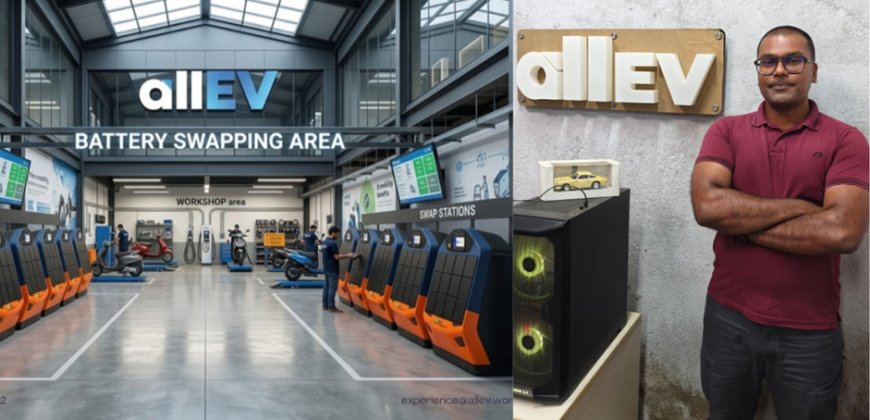
Whereas most of the debate around electric vehicles has been centred on manufacturing, adoption, batteries and charging infrastructure, the ecosystem that would follow once the EV hits the market is still largely fragmented. After sale diagnostics, maintenance, spare parts, battery services, trained technicians and recycling have usually been done by separate service providers. All of this is what Harshin Lalpet aims to solve with allEV, an EV services platform based in Hyderabad which aims to develop a technology enabled after sales ecosystem.
Lalpet’s background gives him ample perspective on this problem. Having built race cars for the Formula Student competition at SRM University, Lalpet has had the opportunity to work at Mahindra & Mahindra before venturing out into the area of electric mobility solutions through companies such as IZA Mobility and Persist Energy.
His journey in EV space taught him a valuable lesson – manufacturing and selling an EV is just the beginning of the ownership experience.
From Vehicles to the Ecosystem Behind Them
His decade and more of working on the areas of vehicle development, diagnostics, servicing and customer operations at Lalpet made him realize the problems encountered by owners of electric vehicles, gig economy drivers and fleet operators.
He founded Sawarsh Electroguru Technologies Private Limited along with co-founder Sawan Yadav in October 2024 with the concept of allEV to address the problem of the lack of necessary infrastructure needed for EV ownership.
While the traditional EV workshop focuses on servicing and maintenance, allEV intends to build a phygital and brand-agnostic platform, which will be an ecosystem combining many aspects such as servicing, diagnostics, charging, batteries, spare parts, retrofits, recycling and fleet maintenance.
For commercial customers, the problem is not only about repair but vehicle uptime, which impacts earnings.
Building a Full-Stack EV After-Sales Platform
Multi-brand offerings stand out among the unique value propositions of allEV. Rather than being confined to one OEM ecosystem, the platform enables multiple electric two-wheelers and three-wheelers, offering a common service layer for individual users and commercial fleets.
Alongside technology developments, allEV is planning to use AI-enabled diagnostics to enable standardisation of the fault detection process in batteries, BMS, motors and other EVs parts. Besides technology innovations, allEV is going to improve its model by building expertise in technician skilling through the training program, thereby solving one of the key challenges that hinders wide adoption of EVs – lack of trained EV service professionals.
Moreover, the business model of allEV brings charging and services into one ecosystem. The company’s service hubs allow it to charge, diagnose and repair electric two- and three-wheelers within one ecosystem.
The allEV’s business model also includes the development of skills and technologies to test, collect, refurbish and recycle batteries. The company has already gained experience in EV retrofits and has transformed over 100 two-wheelers into electric ones.
AllEV's model has been implemented in real life at Hyderabad and reached TRL 7 level, having over 30 trained technicians, 1,000+ serviced gig riders, 20 MWh of clean energy dispensed and over 0.5 tonne of lithium batteries collected for recycling.
The Next Phase Begins With SISFS Support
One important landmark on allEV's path forward is its selection as part of Cohort 3 of the Startup India Seed Fund Scheme (SISFS) via the Atal Incubation Centre – Goa Institute of Management (AIC-GIM).
For allEV, the funding does not just amount to seed money, It is also about improving their technology, enhancing infrastructure capabilities, developing service capabilities using artificial intelligence, and growing the fleet partnership program and building out of a scalable hub model outside of Hyderabad.
But the greater objective is quite simple; as more and more electric vehicles hit the road in India, it is going to require an ecosystem to help them stay there.
For Lalpet, it is a full circle experience – starting off with building the vehicles and knowing how they work, moving on to figuring out why they do not work, and finally building the infrastructure necessary for them to stay on the road.
allEV is now hoping that the next phase of India's EV revolution is not just about building more EVs, but making sure that they stay on the road.