The first generation of robotic knee replacement focused on improving precision. These systems helped surgeons make more accurate bone cuts than conventional instruments. The next generation introduced detailed three-dimensional planning using CT scans, giving surgeons a comprehensive picture of the patient's anatomy before entering the operating theatre.
Today, robotic surgery is evolving once again.
Modern imageless robotic platforms build and refine the surgical map during the operation itself. Instead of relying only on images captured before surgery, they collect anatomical information in real time, allowing surgeons to assess alignment, joint movement and soft-tissue balance as the procedure progresses.
The objective, however, remains the same. Whether a robotic platform is CT-based or imageless, its purpose is to help surgeons position implants more accurately, create a well-balanced knee and improve consistency from one operation to the next. The difference lies in how the information is gathered and presented to the surgeon.
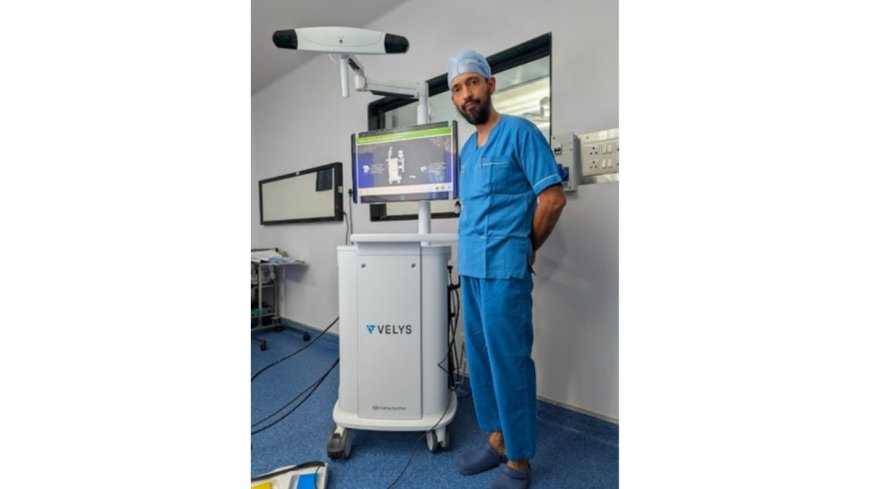
One example of this newer approach is the VELYS Robotic-Assisted Solution, available at Inamdar Multispeciality Hospital in Pune. Rather than requiring an additional CT scan before surgery, VELYS creates its surgical map inside the operating room, giving surgeons continuous information throughout the procedure.
According to Dr. Qaedjohar Dhariwal, Orthopaedic Surgeon at Inamdar Multispeciality Hospital, patients often misunderstand the role of robotic technology.
"Patients often believe the robot performs the surgery, but every important decision still rests with the surgeon. A CT scan is an excellent planning tool because it provides valuable anatomical information before surgery. However, surgery itself is dynamic. Once the knee is exposed, we are assessing alignment, soft-tissue balance and joint movement in real time. I prefer working with information that reflects the patient's anatomy at that precise moment. An imageless platform such as VELYS supports that decision-making process by continuously providing intra-operative data, allowing me to fine-tune implant positioning based on what I am seeing during the procedure rather than relying solely on a pre-operative image."
As robotic knee replacement continues to evolve, imageless systems are becoming an increasingly important part of that journey. For patients, the growing number of robotic platforms may appear confusing at first. But perhaps the most important question is no longer, "Which robot does this hospital have?" Instead, it is, "How does this technology help my surgeon deliver the safest, most accurate operation possible?"
https://inamdarhospital.com/robotic-knee-replacement-surgery-in-pune/