Mayaa SH is a prominent Indian author, feminist activist, and social reformer known for her extensive contributions to literature and women's empowerment. Mayaa SH speaks on mental health because she recognizes its critical role in overall well-being and social progress. Through her podcast series "Purpose With A Light," she addresses vital issues surrounding depression and suicide prevention, aiming to help individuals cope with extreme trauma and mental stress. Her advocacy emphasizes the importance of open communication about mental health challenges, particularly for those dealing with depression or suicidal thoughts. By sharing insights on these topics, she seeks to foster a supportive community environment that encourages individuals to embrace their unique qualities and strengths while navigating life's complexities.In a candid conversation Mayaa SH believes that addressing mental health is essential for personal growth and social responsibility, making it a central theme in her activism and literary work.
Psychotic love can significantly affect mental health by exacerbating existing mental health conditions, leading to emotional instability, impaired relationships, and increased risk of violence or self-harm.
Step 1: Definition of Psychotic Love
Psychotic love often refers to intense feelings of affection that are intertwined with delusional beliefs or severe emotional disturbances. This phenomenon can manifest in various ways, including obsessive thoughts about a partner, extreme jealousy, and possessive behaviors. In some cases, it may be associated with psychiatric conditions such as schizophrenia or borderline personality disorder.
Step 2: Connection to Mental Health Conditions
Individuals experiencing psychotic love may already be dealing with underlying mental health issues. For instance:
Borderline Personality Disorder (BPD):
People with BPD often fear abandonment and may exhibit impulsive behaviors in relationships. Their emotional responses can swing dramatically from idealization to devaluation of their partners, which complicates their ability to maintain stable relationships.
Obsessive-Compulsive Disorder (OCD):
In the context of relationships, individuals may experience Relationship Obsessive-Compulsive Disorder (ROCD), where they obsess over their partner's reliability or fidelity. This can lead to significant anxiety and distress.
Delusional Disorders:
Some individuals may develop delusions related to their romantic interests, such as believing that a celebrity is in love with them (erotomania). This condition can lead to dangerous behaviors if the individual feels rejected or threatened.
Step 3: Emotional Instability
Psychotic love can create a cycle of emotional instability :-
Intense Emotions: The feelings associated with psychotic love are often overwhelming. Individuals may experience euphoric highs when things go well but suffer devastating lows during conflicts or perceived rejections.
Increased Anxiety and Depression: The constant worry about losing the object of affection can lead to heightened anxiety levels. Additionally, feelings of inadequacy or unworthiness may contribute to depressive symptoms.
Step 4: Impaired Relationships :
The nature of psychotic love often leads to dysfunctional relationship dynamics :-
Possessiveness and Control: Individuals may attempt to control their partner's actions out of fear of abandonment or betrayal. This behavior not only strains the relationship but also creates an unhealthy environment for both partners.
Isolation: Those experiencing psychotic love might isolate themselves from friends and family due to jealousy or paranoia about their partner's interactions with others. This isolation can further exacerbate mental health issues by reducing social support systems.
Step 5:
Risk of Violence or Self-Harm
In extreme cases, psychotic love can lead to dangerous outcomes:-
Violence: There is a risk that individuals who feel threatened in their relationships might resort to violence against their partner or themselves. This behavior is particularly concerning in cases involving delusional jealousy where the individual believes they must "protect" their relationship at all costs.
Self-Harm: Feelings of despair stemming from unreciprocated affections or relationship breakdowns can lead individuals to engage in self-harming behaviors as a coping mechanism for emotional pain.
How can psychotic love lead to changes in behavior and mental health?
Psychotic love, often characterized by obsessive and delusional behaviors towards a partner, can significantly impact an individual's behavior and mental health. This phenomenon is not formally recognized as a distinct psychological disorder but shares characteristics with various mental health conditions, such as obsessive love disorder, borderline personality disorder, and erotomania.
Behavioral Changes Associated with Psychotic Love :
(1)Obsessive Thoughts and Actions:
Individuals experiencing psychotic love may develop an overwhelming preoccupation with their partner. This can manifest as constant thoughts about the partner's whereabouts, feelings of possessiveness, or intrusive thinking about the relationship. Such obsessive behaviors can lead to actions like excessive texting or calling, monitoring the partner's activities, or attempting to control their social interactions.
(2)Delusional Jealousy:
A hallmark of psychotic love is delusional jealousy, where individuals may believe their partner is unfaithful without any evidence. This type of jealousy can lead to irrational accusations and extreme behaviors aimed at "protecting" the relationship. For example, someone might confront perceived rivals aggressively or isolate their partner from friends.
(3) Impulsive Behavior:
The intense emotions associated with psychotic love can trigger impulsive actions that are harmful to both the individual and their partner. This includes making threats if the partner attempts to leave or engaging in self-destructive behaviors when feeling rejected.
(4) Social Withdrawal:
Individuals may withdraw from friends and family due to their fixation on one person, leading to isolation. This withdrawal can exacerbate feelings of loneliness and depression.
Mental Health Consequences :
(1)Increased Anxiety and Depression:
The stress of maintaining an obsessive relationship can lead to heightened anxiety levels and depressive symptoms. Individuals may experience mood swings that fluctuate between euphoria when they feel close to their partner and despair during conflicts or perceived rejections.
(2) Post-Traumatic Stress Disorder (PTSD):
In severe cases where relationships become abusive either emotionally or physically individuals may develop PTSD symptoms due to ongoing trauma from their experiences within the relationship. Symptoms might include flashbacks, severe anxiety, and uncontrollable thoughts about the traumatic events.
(3)Deterioration of Self-Esteem:
The dynamics of psychotic love often involve significant emotional manipulation or control by one partner over another. This can lead to a decline in self-esteem for both parties involved; the obsessed individual may feel inadequate if they perceive any signs of rejection from their partner.
(4) Development of Other Mental Health Disorders:
Psychotic love can be linked with other psychiatric conditions such as borderline personality disorder (BPD) or obsessive-compulsive disorder (OCD). These disorders share features like emotional instability and compulsive behaviors that can further complicate relationships.
What are the signs that love has become unhealthy or psychotic?
Love can be a beautiful experience, but when it becomes unhealthy, it can lead to emotional distress and even abusive situations. Recognizing the signs that love has turned unhealthy or psychotic is crucial for maintaining your well-being and safety. Below are some key indicators to look out for.
Signs of Unhealthy Love :
(1) Intensity :
Unhealthy love often manifests as overwhelming intensity. This includes extreme feelings and behaviors that feel obsessive or suffocating. If you find that your partner is rushing the relationship, wanting constant contact, or expressing extreme emotions that make you uncomfortable, this could indicate an unhealthy dynamic.
(2) Possessiveness :
Possessiveness is a significant red flag in relationships. When a partner exhibits excessive jealousy to the point of trying to control who you spend time with or what you do, it becomes problematic. This behavior may include accusations of flirting or cheating without basis and can escalate to stalking.
3. Manipulation :
Manipulation involves controlling another person's decisions or emotions through subtle tactics. If your partner tries to influence your feelings or actions in ways that make you uncomfortable, such as guilt-tripping or passive-aggressive behavior, this is a sign of an unhealthy relationship.
4. Isolation :
Isolation occurs when one partner attempts to distance the other from friends and family. This behavior may start subtly but can escalate into demands for exclusive time together at the expense of social connections. If you feel dependent on your partner for emotional support due to isolation from others, this is concerning.
5. Sabotage :
Sabotage involves undermining your achievements or reputation intentionally. This could manifest as spreading rumors about you or discouraging you from pursuing goals important to you. Such behaviors are designed to diminish your self-esteem and independence.
6. Belittling :
Belittling includes making derogatory comments about you or your interests. This might be framed as jokes but ultimately serves to undermine your confidence and self-worth over time.
7. Guilting :
Guilting is a form of manipulation where one partner makes the other feel responsible for their happiness or actions. This can involve threats of self-harm if demands are not met, creating an emotionally charged environment where one feels obligated to comply with unreasonable requests.
8. Volatility :
Volatile relationships are characterized by unpredictable emotional reactions from one partner, leading to fear and confusion in the other person. You may feel like you're walking on eggshells around them due to their extreme mood swings or potential for explosive reactions.
9. Deflecting Responsibility :
When a partner consistently blames others for their own negative behaviors, it indicates an inability to take responsibility for their actions. This deflection often includes excuses related to past trauma or substance abuse but ultimately prevents healthy communication and resolution of issues.
10. Betrayal :
Betrayal encompasses disloyalty through dishonesty, such as lying or infidelity. A partner who shares private information about you without consent also demonstrates a lack of respect and trustworthiness in the relationship.
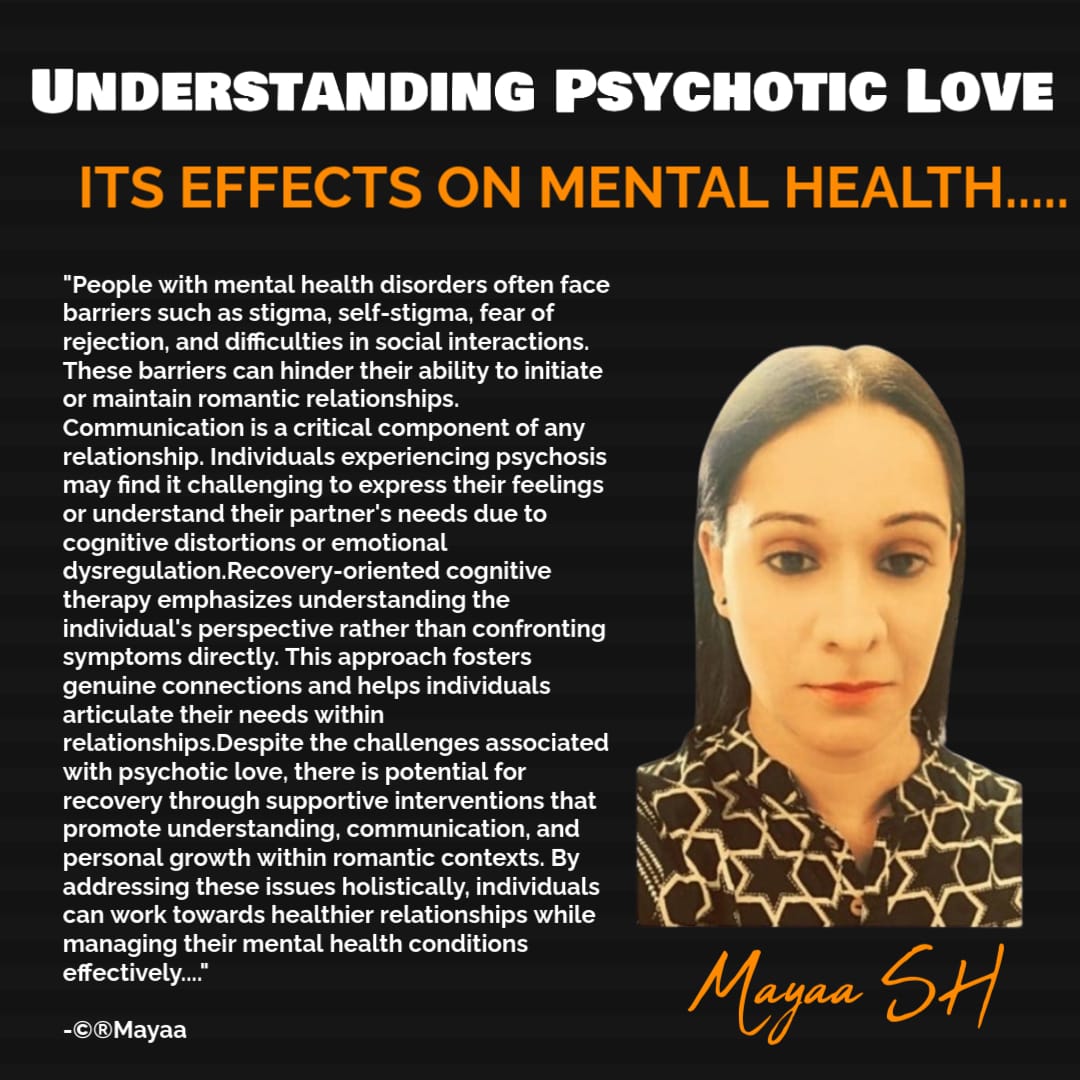
"People with mental health disorders often face barriers such as stigma, self-stigma, fear of rejection, and difficulties in social interactions. These barriers can hinder their ability to initiate or maintain romantic relationships.Communication is a critical component of any relationship. Individuals experiencing psychosis may find it challenging to express their feelings or understand their partner's needs due to cognitive distortions or emotional dysregulation.Recovery-oriented cognitive therapy emphasizes understanding the individual's perspective rather than confronting symptoms directly. This approach fosters genuine connections and helps individuals articulate their needs within relationships.Despite the challenges associated with psychotic love, there is potential for recovery through supportive interventions that promote understanding, communication, and personal growth within romantic contexts. By addressing these issues holistically, individuals can work towards healthier relationships while managing their mental health conditions effectively...."
Conclusion :
Mayaa SH emphasizes the importance of open discussions about mental health, particularly in the context of women and marginalized communities. She actively promotes empathy and compassion as essential components in addressing mental health challenges. By encouraging conversations around mental well-being, she aims to dismantle the stigma that often prevents individuals from seeking help. Her belief that "courage is not the absence of fear but the decision to move beyond it" reflects her commitment to empowering individuals to confront their mental health struggles openly.The effects of psychotic love on mental health are profound and multifaceted. It intertwines deeply with existing mental health conditions while creating new challenges that impact emotional stability and interpersonal relationships. Without appropriate intervention and treatment, these dynamics can spiral into more severe psychological issues.
About The Author
Mayaa SH is a prominent Indian author, feminist activist, and social reformer known for her extensive contributions to literature and women's empowerment. Born in Kolkata into an Army family, she has lived in various cities across India, which has shaped her understanding of diverse societal issues. Mayaa SH's journey into activism began when she realized the importance of using her knowledge and skills to uplift others, particularly women facing societal challenges. She has authored numerous books and co-authored over two hundred plus anthologies with fourteen solo books , focusing on critical issues such as gender inequality, mental health awareness, and women's rights. Her notable works include self-help books that instill self-belief among women, thereby empowering them to overcome societal challenges.
Mayaa SH has significantly impacted mental health awareness through her advocacy, literary contributions, and the creation of supportive platforms that address critical issues related to mental health.Mayaa has been a vocal advocate for mental health awareness, emphasizing its importance in overall well-being. She addresses various mental health challenges such as depression, anxiety, and the stigma surrounding these conditions. Her work aims to educate the public about the signs and symptoms of mental stress and burnout, particularly within different professions. By bringing these issues to light, she fosters a greater understanding of mental health among her audience.
One of her key initiatives is the podcast series, which specifically targets critical issues such as stigma around mental health, body shaming, character assassination, depression, and suicide prevention. The podcasts serves as a valuable resource for individuals struggling with mental health challenges by providing insights into coping mechanisms and fostering a supportive community environment. Through storytelling and shared experiences, the podcast humanizes the struggles faced by those with mental health conditions and encourages open conversations about these topics.
Mayaa SH emphasizes the role of education in reducing stigma associated with mental health issues. Her efforts include creating accessible content that demystifies complex psychological concepts and promotes empathy towards individuals facing mental health challenges. By making this information relatable and understandable, she empowers listeners to engage in discussions about their own experiences or those of others.Through her initiatives, Mayaa SH fosters a sense of community among individuals who may feel isolated due to their mental health struggles. By encouraging participation in her programs and discussions, she helps create networks where people can connect over shared experiences. This communal support is vital for individuals dealing with trauma or depression as it provides them with a safe space to express themselves without fear of judgment.
Mayaa SH's approach often includes sharing personal stories that resonate with many individuals facing similar challenges. By doing so, she not only validates their feelings but also inspires hope for recovery and resilience. Her narratives highlight the importance of self-actualization and personal growth while addressing societal norms that hinder progress in mental health awareness.
Mayaa SH's impact on mental health awareness is profound, characterized by her advocacy work, educational outreach through platforms like "The Beacon Of Hope," community building efforts, and relatable storytelling. Her commitment to fostering understanding around mental health issues contributes significantly to reducing stigma and promoting a culture of empathy and support.