The Illusion of the HbA1c Target: What Truly Kills Patients?
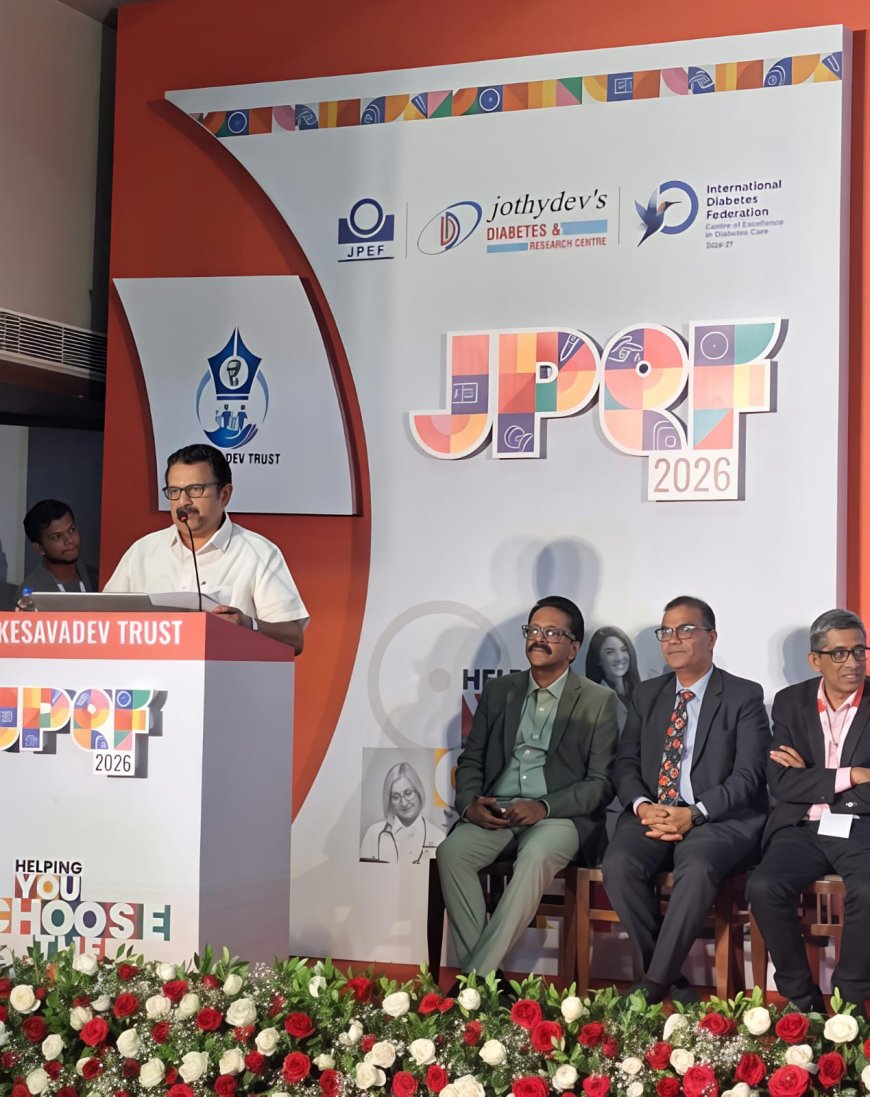
A centerpiece session that generated substantial academic momentum was delivered by Dr. Jayakrishnan B., who challenged three decades of "glucocentric" clinical practices. His presentation, entitled “The ‘Best in Care’ Hierarchy: Prioritising Comorbidity-Driven Management in Type 2 Diabetes,” directly confronted the flaws of relying solely on blood sugar metrics.
“We don't lose patients because their HbA1c is 8%," Dr. Jayakrishnan argued. "We lose them because organs fail.”
According to clinical trials spanning from UKPDS (1998) to the landmark ACCORD study (2008), intensive glycemic management alone systematically failed to reduce overall cardiovascular mortality. While lower blood glucose offers microvascular protection, the underlying metabolic syndrome aggressively ravages major organ systems. Dr. Jayakrishnan emphasized that the leading proximate causes of mortality in diabetes patients remain macrovascular and metabolic complications: Atherosclerotic Cardiovascular Disease (ASCVD), heart failure (which carries a two-year mortality rate mirroring several aggressive cancers), progressive Chronic Kidney Disease (CKD), and Metabolic Dysfunction-Associated Steatotic Liver Disease (MASLD).
The Phenotype-First Workflow
The lecture showcased a new clinical paradigm: Treat the organ at risk first, then treat the glucose. Enabled by recent guideline shifts from the ADA 2026, EASD 2025, and KDIGO 2024, the convention championed a rapid "30-Second Phenotyping Screen." Instead of building drug choices around metformin and escalating blindly, clinicians are urged to diagnose the individual patient’s dominant metabolic phenotype at every single visit.
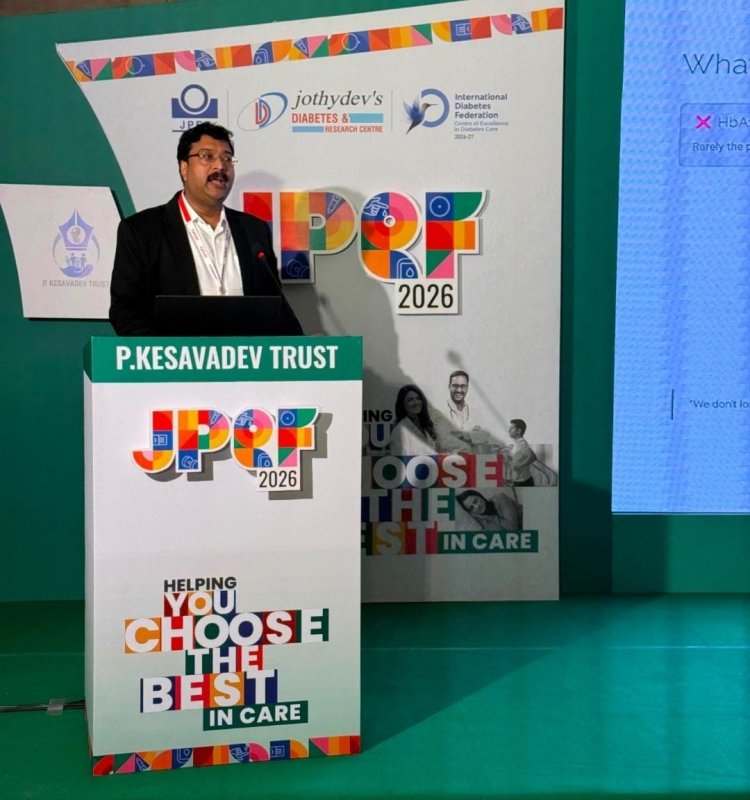
Dr Jayakrishnan, giving a centerpiece session
Dr. Jayakrishnan illustrated this with two drastically contrasting clinical scenarios:
The Kidney Phenotype: A patient with an acceptable HbA1c of 7.4% but suffering from declining kidney functions (eGFR of 45 and microalbuminuria). The modern standard bypasses glucose tracking to immediately initiate reno-protective agents like SGLT2 inhibitors and finerenone.
The Obesity Phenotype:
A patient with a BMI of 37 and an HbA1c of 8%. Instead of prioritizing secondary oral agents, the clinician targets the root metabolic driver—adiposity-driven insulin resistance—by prescribing highly potent incretin therapies (like tirzepatide or semaglutide). The goal is achieving a 15–20% weight loss, which automatically resolves the glycemic target.
Robust clinical trial data—including the EMPA-REG OUTCOME, DAPA-CKD, FLOW, and SELECT trials—substantiate this shift. These studies verify that SGLT2 inhibitors and GLP-1 receptor agonists deliver profound cardio-renal and hepatic tissue preservation entirely independent of a patient's baseline blood sugar levels.
A Confluence of Global Visionaries
The international assembly drew more than 2,500 delegates and showcased an impressive lineup of healthcare pioneers. Dr. Jothydev Kesavadev, Conference Organizing Secretary, highlighted JPEF 2026 as a premiere translational platform converting complex medical science into practical bedside workflows.
Esteemed international speaker Dr. Julia Mader from the Medical University of Graz, Austria, contributed key insights on emerging global technologies and inpatient management. JPEF Chief Advisor Dr. Shashank Joshi, alongside renowned national experts such as Dr. Banshi Saboo, Dr. Anuj Maheshwari, and Dr. Rakesh Parikh, engaged in multi-disciplinary panel sessions. They collectively underscored the value of precision cardio-renal-metabolic medicine, warning clinicians to tailor goals specifically to prevent hypoglycemia, especially in fragile or older patient populations.
The convention concluded with a clear consensus: the modern management of Type 2 Diabetes has officially evolved past basic finger-prick monitoring. The future of medicine lies in precise, preemptive, organ-protective healthcare that shields the heart, kidneys, and liver before irreversible clinical damage is done.