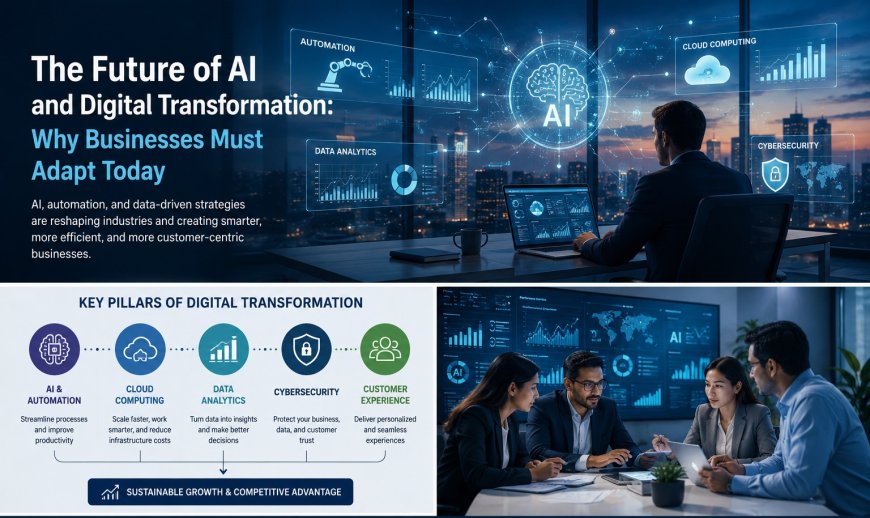
One of the most noticeable changes is the rise of AI-powered automation. Routine tasks such as customer support, document processing, appointment scheduling, lead management, and reporting can now be handled more efficiently through intelligent systems. This allows employees to focus on strategic initiatives, creative problem-solving, and building stronger customer relationships.
Data has also become a key business asset. Every interaction, transaction, and operational process generates valuable information. Modern analytics platforms help organizations convert this data into actionable insights that improve forecasting, operational planning, and decision-making. Companies that effectively leverage their data are better equipped to respond to market changes and customer expectations.
Cloud computing has further accelerated digital transformation by making enterprise-grade technology more accessible. Businesses can scale operations quickly, collaborate securely across locations, and reduce infrastructure costs without investing heavily in physical hardware.
Cybersecurity remains an essential consideration. As businesses become increasingly digital, protecting customer information and operational systems is no longer optional. Organizations must invest in secure infrastructure, employee awareness, and proactive risk management to maintain customer trust and regulatory compliance.
Small and medium-sized businesses are particularly well positioned to benefit from AI. Affordable cloud-based solutions now provide capabilities that were once available only to large enterprises. Customer relationship management, marketing automation, workflow optimization, and financial reporting can all be enhanced through modern digital platforms.
Successful digital transformation is not driven solely by technology, it requires clear business objectives, leadership commitment, and continuous learning. Companies should begin by identifying operational challenges, prioritizing high-impact improvements, and implementing technology that supports measurable business outcomes.
The future will increasingly be shaped by AI-assisted decision-making, intelligent automation, predictive analytics, and integrated digital ecosystems. Organizations that view technology as a strategic investment rather than a short-term expense will be better prepared to innovate, adapt, and compete in evolving markets.
At RJ Global Solutions, we believe that technology should solve real business problems rather than simply introduce complexity. By combining business consulting with software development, cloud technologies, AI solutions, and digital transformation strategies, organizations can create sustainable growth while delivering greater value to customers.
Digital transformation is no longer a destination, it is an ongoing journey. Businesses that start today will be better positioned to lead tomorrow - Venkatesh Chowtipalli, Founder & Managing Director of RJ Global Solutions.