































NIU's School of Sciences Wraps Five-Day International FDP, Draws 180 Faculty from Four Countries



Hybrid programme on research, innovation and global best practices ran July 6–10 at Noida International University, with speakers from Delhi University, IIT Delhi, IIT (BHU), Jamia Hamdard, ICMR, and institutions in the UK, Czech Republic, Kyrgyzstan and Saudi Arabia.


Greater Noida · July 2026

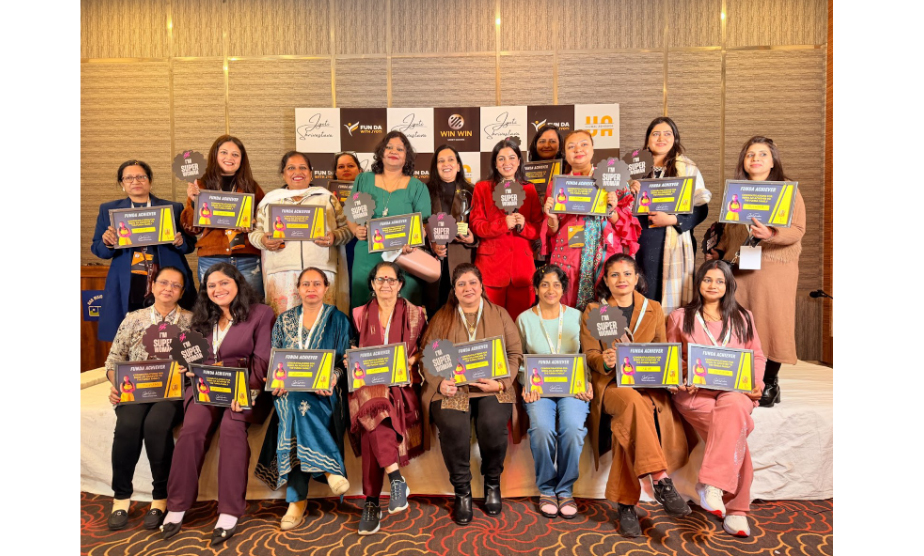
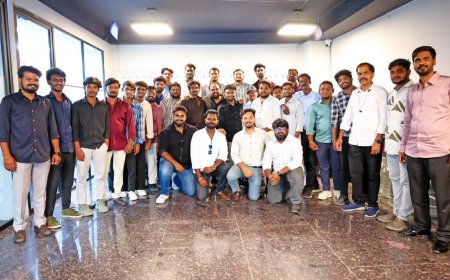
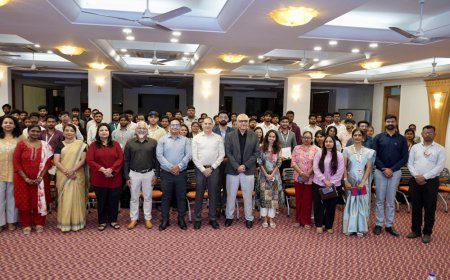
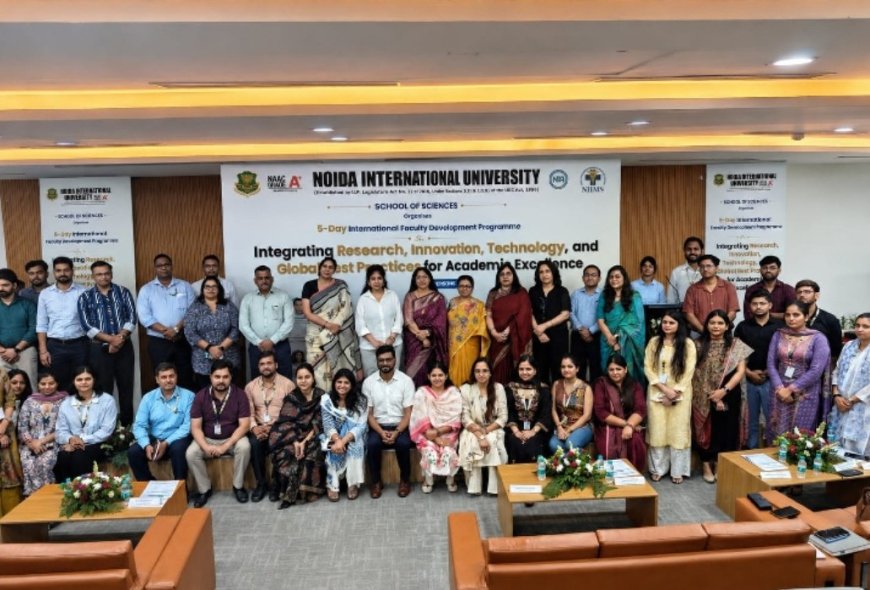
Faculty, delegates and the organising committee of NIU's International FDP at the closing session, SBM Seminar Hall.
Noida International University's (NIU) School of Sciences closed a five-day International Faculty Development Programme (FDP) on July 10, run in hybrid mode from the university's SBM Seminar Hall in Greater Noida. Themed “Integrating Research, Innovation, Technology and Global Best Practices for Academic Excellence,” the programme brought together close to 180 faculty members, scientists and researchers from institutions across India and abroad.
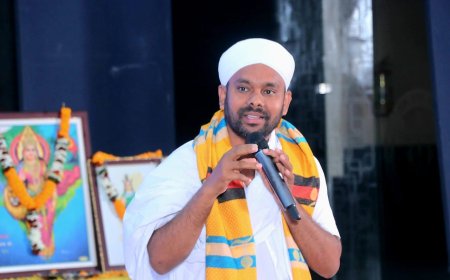
The FDP was conceptualised by Prof. (Dr.) Deepshikha Pande Katare, Dean of the School of Sciences and Convenor of the programme, and coordinated by Dr. Sonal Jain, Organising Secretary. Across the five days, sessions were led by resource persons from the University of Delhi, IIT Delhi, IIT (BHU) Varanasi, Jamia Hamdard and ICMR, alongside academics joining from institutions in the United Kingdom, the Czech Republic, Kyrgyzstan and Saudi Arabia — four countries represented in total, through more than 20 resource persons across nine partner institutions.
“Faculty members are the driving force behind institutional transformation.”
— Prof. (Dr.) Deepshikha Pande Katare, Dean, School of Sciences
Day 1: Setting the Tone on Interdisciplinary Research
The opening sessions argued that research excellence depends on breaking disciplinary silos. Speakers examined interdisciplinary research ecosystems, models of industry-academia collaboration, and outcome-based education mapped to institutional research goals. The line-up included Prof. (Dr.) K. N. Saraswathy and Prof. (Dr.) N. Kiranmala Devi of the Department of Anthropology, University of Delhi; Dr. Reshma Rani, Group Leader at Jubilant Life Sciences, Greater Noida; and Prof. (Dr.) Roumi Deb, Director at Amity University.
Day 2: Governance, Rankings and Research Policy
The second day turned to the administrative machinery behind research output — how individual faculty contributions feed into NAAC and NIRF scores and global rankings, how international research networks are built, and how research methodology can be taught across disciplines rather than confined to one department. Sessions were led by Dr. Fazil Hasan (School of Sciences, NIU), Dr. Suniti Yadav (Dept. of Anthropology, University of Delhi), Dr. Priya Vashisth (Centre for Biomedical Engineering, IIT Delhi) and Prof. (Dr.) Suhel Parvez, Dean, School of Chemical & Life Sciences, Jamia Hamdard.
Day 3: Global Mobility, AI in Research and High-Impact Publishing
Day three leaned hardest on the hybrid format, with international speakers dialling in to cover research collaboration and mobility, the growing role of AI and data science in higher education research, and research data management and academic repositories. The day closed with a session on publishing in high-impact peer-reviewed journals, delivered by a speaker joining from the Czech Republic. Resource persons included Dr. Vineet Chaudhary (Scientist-B, ICMR, New Delhi), Dr. Ruchi Jakhmola Mani (Founder & CEO, AlgoBiome, Noida), Dr. Chandana Basu (Centre for Genetic Disorders, IIT (BHU) Varanasi), and Dr. Rahul Patil of the Technical University of Ostrava, Czech Republic.
Day 4: Ethics, Integrity and Sustainable Research
The fourth day made the case for research ecosystems built on ethics rather than output alone — covering the essentials of a sustainable research culture, the role of Institutional Ethics Committees, research-based pedagogy, and a closing session on the responsible and ethical use of Artificial Intelligence in academic research, a theme speakers returned to from three different countries. Sessions featured Prof. (Dr.) Vidhu Aeri, former Dean at Jamia Hamdard; Dr. Mirza Masroor Ali Beg of Ala-Too International University, Kyrgyzstan; Dr. Mohammad Idreesh Khan of Qassim University, Saudi Arabia; and Dr. Kaustubh Adhikari, School of Mathematics, The Open University, UK.
Day 5: Valedictory and the Roadmap Panel
The closing day opened with three sessions on research ethics and communication: Dr. C. Mahajan (Department of Anthropology, University of Delhi) on ethics, plagiarism and responsible research practices; Prof. (Dr.) Harsha Kharkwal, Director, Amity Institute of Phytochemistry and Phytomedicine, on carrying research from idea to patent and market; and Dr. Siuli Mitra, Executive Director, India Bioscience, National Centre for Biological Sciences–TIFR, Bengaluru, on research communication and science outreach. After a formal FDP assessment, the day's centrepiece was a panel discussion, “Roadmap for Research-Integrated Universities in India,” where panellists debated how Indian universities can become globally competitive through interdisciplinary research, ethical scholarship and international partnership. The panel comprised Prof. (Dr.) Deepshikha Pande Katare, Dr. Varun Kumar Sharma, Dr. Gagan Tiwari, Dr. Chetan Kumar Sharma and Dr. Sonal Jain.
The valedictory ceremony closed with certificates of appreciation presented to the organising committee and student volunteers who ran registrations, hospitality, documentation and technical support through the five days — among them Dr. Elipe Arjun, Dr. Omnarayan Agarwal and Dr. Deepika Sharma on the organising committee, working under co-convenors Prof. (Dr.) Gagan Tiwari, Dr. Varun Kumar Sharma and Dr. Chetan Kumar Sharma.
“Capacity building of faculty members is fundamental to producing globally competent graduates and strengthening India's higher education system.”
— Dr. Uma Bhardwaj, Vice Chancellor, NIU
Chief guest Prof. (Dr.) Payal Mago, Principal, Shaheed Rajguru College of Applied Science for Women, and Director, Campus of Open Learning, University of Delhi, told delegates that “while technology continues to redefine classrooms, teachers remain the true nation builders who shape the values, character and aspirations of future generations.” The programme also drew continued backing from NIU's Chairman, Dr. Devesh Kumar Singh, and Chancellor, Dr. Vikram Singh, whose support for research excellence and internationalisation has shaped the university's academic direction in recent years.
Future Outlook
NIU positioned the FDP as part of its longer-term push toward the national Viksit Bharat @2047 mission — building, as the Dean put it, a globally connected platform for faculty through research, innovation, technology and international collaboration. With four countries, nine partner institutions and 180-plus participants logged over five days, the university is framing the programme as a template it intends to repeat rather than a one-off event.
About Noida International University
Noida International University was established in 2010 under an Act of the Uttar Pradesh State Legislature. It is approved under Section 2(f) of the UGC Act, holds NAAC accreditation with an A+ grade and a score of 3.44 — the highest among private universities in Cycle 1 — and is a member of the Association of Indian Universities. The university has also been recognised as a Scientific and Industrial Research Organisation by the Department of Scientific and Industrial Research since 2022, and as an MSME Host Institute. It runs 12 schools, including a 750-bed hospital and medical college, Noida International Institute of Medical Sciences.brab