A military operation can succeed on the ground and still become a strategic problem if the world understands it differently.
That possibility says something important about modern warfare.
Battles are fought with weapons, technology and military formations. But increasingly, another contest develops alongside them—a contest over what happened, why it happened, who should be believed and how people should interpret it.
That contest takes place in the information domain.
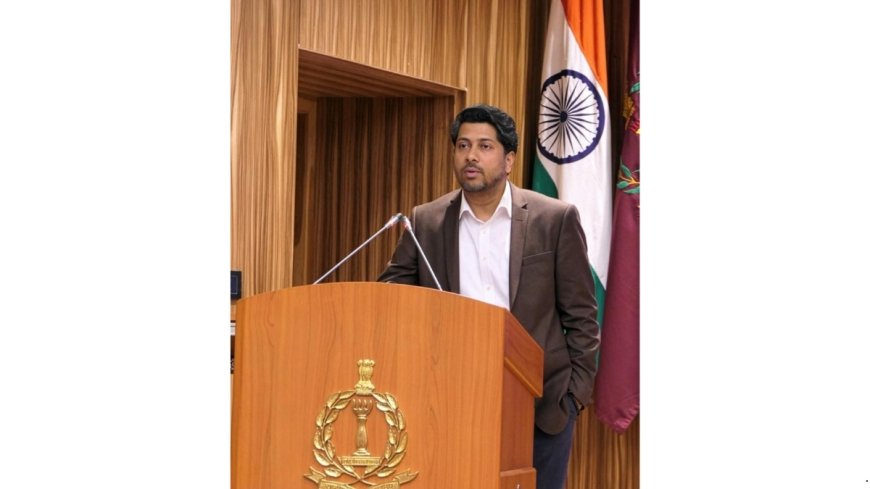
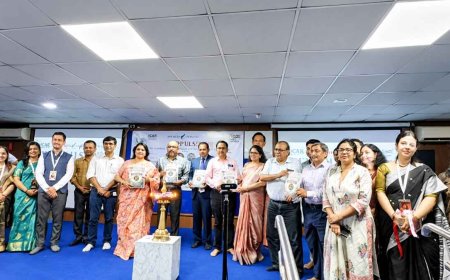
It was an important part of the discussion when Lt Col Dibya Satapathy addressed Open Source Intelligence (OSINT) and Social Media Intelligence (SOCMINT) during a lecture and interactive session at the National Defence College in New Delhi.
Satapathy described an environment in which the battlefield can no longer be understood only through the traditional domains of land, sea, air, space and cyber. Information itself has become consequential.
Recent conflicts have made the reason increasingly difficult to ignore.
The First Version of an Event Can Travel Around the World
Consider what happens immediately after a major military or geopolitical incident.
Before an official briefing is prepared, photographs may already be circulating online.
Within minutes, videos appear.
Accounts begin identifying locations. Commentators offer explanations. News organisations quote social-media posts. Supporters of competing sides advance different interpretations of the same event.
Some information will be authentic.
Some will be mistaken.
Some may be deliberately manipulated.
Yet all of it competes for attention.
By the time institutions establish precisely what happened, millions of people may already have formed an opinion.
This has changed the strategic importance of information.
Narratives Can Produce Real Consequences
The word "narrative" can sound abstract until its effects are considered.
Public perceptions can influence diplomatic relationships, political pressure, military morale and confidence in institutions.
A misleading narrative that spreads widely enough can therefore create consequences beyond social media.
This is one reason influence operations have become an important area of national-security analysis.
The objective of an influence operation may not necessarily be to convince everyone of a single false story.
Sometimes creating confusion is sufficient.
If audiences become uncertain about which sources can be trusted, establishing the truth itself becomes harder.
For militaries and governments, understanding how narratives form and move through the information environment is therefore becoming part of situational awareness.
OSINT Changes What Can Be Seen
The same digital ecosystem that enables manipulation also creates extraordinary opportunities for intelligence gathering.
Publicly available imagery, videos, social-media activity and other digital traces can provide valuable information about events that once would have been difficult for outsiders to observe.
Open-source researchers have demonstrated how apparently insignificant pieces of information can become meaningful when combined.
A photograph may reveal a location.
A video may indicate movement.
Several unrelated social-media posts may collectively reveal that something unusual is occurring.
This is where OSINT and SOCMINT become relevant to the wider information-warfare picture.
During his National Defence College session, Lt Col Dibya Satapathy discussed how these disciplines can help militaries understand adversaries, follow evolving situations, detect influence operations and support decision-making.
The important word is understand.
Collecting information is only the beginning.
The Battle for Perception Is Getting More Complicated
Artificial intelligence is now adding another layer.
Producing convincing synthetic content is becoming easier. Images, voices, videos and online identities can increasingly be generated or manipulated using AI.
At the same time, AI can help analysts examine enormous volumes of digital information and detect patterns that would be difficult to identify manually.
The result is something of an arms race.
The technologies that help institutions understand the information environment can also be used to manipulate it.
That makes verification, attribution and analytical discipline increasingly important.
It also means information warfare cannot simply be treated as a communications problem.
It touches intelligence, military operations, technology, psychology, strategic communication and national policy.
Information Advantage Is Becoming Strategic Advantage
There is a tendency to think about warfare primarily in terms of physical capability: aircraft, ships, missiles, troops and technological platforms.
Those capabilities remain fundamental.
But modern military power increasingly operates inside an information environment capable of shaping how every action is perceived.
An adversary may attempt to exploit an operational event before the military responsible for it has explained what occurred.
A false claim can travel faster than an investigation.
A manipulated image can reach millions before it is disproved.
A coordinated campaign can amplify social tensions without crossing a physical border.
These realities help explain why information warfare, OSINT and SOCMINT are receiving increasing attention within professional military discussions.
The subject addressed by Lt Col Dibya Satapathy is therefore larger than social media or intelligence collection.
It concerns the changing character of strategic competition itself.
Future conflicts will still be decided by capabilities, leadership, logistics, intelligence and military effectiveness.
But another factor is becoming increasingly difficult to separate from them:
Who understands the information environment—and who can operate effectively within it.