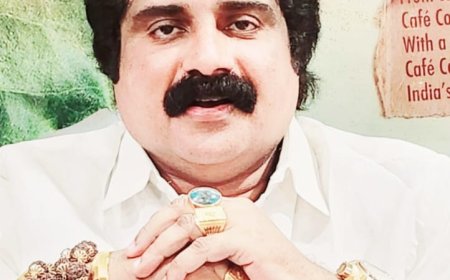
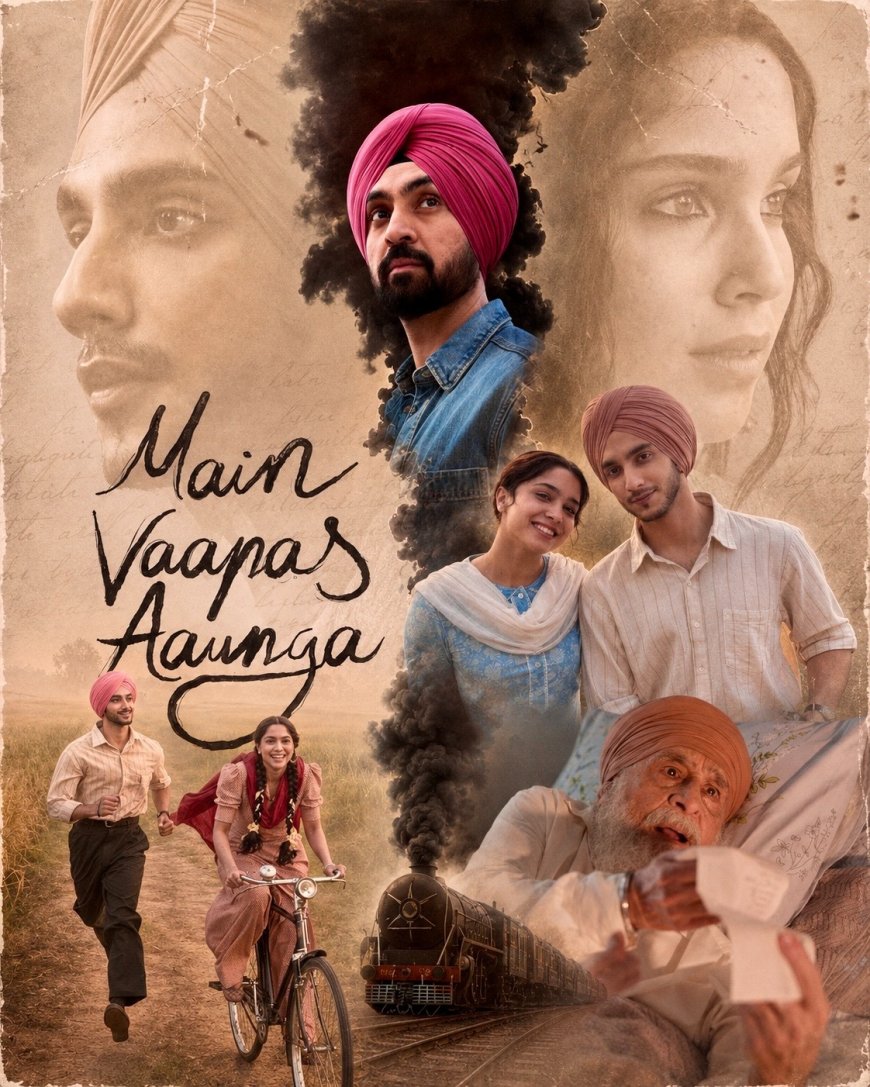
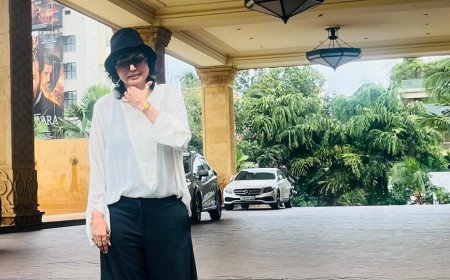
Ludhiana, Punjab: Social media creator and Sikh cultural ambassador Harjinder Singh Kukreja has described Main Vaapas Aaunga as a rare cinematic work that succeeds in preserving the emotional memory of Partition without turning it into a political argument.
Reflecting on the film, Kukreja said that while many movies attempt to explain history, Main Vaapas Aaunga chooses instead to remember the people who lived through it.
“Most films tell us what happened. This film reminds us what it felt like. There is a difference. Facts can be written in books. Emotions can only be carried through stories.”
Kukreja noted that the film’s greatest achievement lies in its refusal to simplify one of the most traumatic events of the twentieth century.
“Partition is often reduced to numbers, borders and political decisions. But behind every statistic was a family, a friendship, a wedding that never happened, a home that was never seen again. Main Vaapas Aaunga brings the human being back into the conversation.”
According to Kukreja, the film resonates particularly strongly with Punjabis because memories of 1947 continue to survive within families even today.
“Many of us grew up hearing names of villages that no longer belong to the country our families live in. We grew up hearing stories interrupted by emotion and silence. This film captures that silence.”
Kukreja singled out Naseeruddin Shah’s performance as one of the finest of his career.
“Naseeruddin Shah delivers a masterclass. This is not merely acting; it is emotional truth. His performance carries the weight of longing, memory and unfinished conversations. I believe it ranks among the greatest performances seen in Indian cinema in recent years.”
He added that while the film features several acclaimed actors, Shah remains its emotional centre.
“The film may attract audiences for different reasons, but it ultimately belongs to Naseeruddin Shah. His character stays with you long after the theatre lights come on.”
Kukreja also praised Vedang Raina and Sharvari for bringing freshness and authenticity to the story.
“Vedang and Sharvari represent the future of Indian cinema. Their performances feel natural, vulnerable and deeply believable. Vedang especially portrays a young Sikh character with remarkable dignity and confidence. He looks every bit the part, and more importantly, he feels authentic.”
While acknowledging the popularity of Diljit Dosanjh, Kukreja noted that the singer-actor’s contribution lies in his restraint.
“Diljit understands that not every role is meant to dominate the screen. He supports the story with sincerity and maturity, and that deserves appreciation.”
He also commended Rajat Kapoor for delivering a nuanced and memorable performance.
“Rajat Kapoor brings warmth and emotional balance to the narrative. His presence strengthens every scene he appears in.”
However, Kukreja believes the film’s most significant contribution comes from director Imtiaz Ali.
“In my view, Imtiaz Ali is the true hero of this project. He has taken one of the most sensitive chapters of our history and approached it with empathy rather than sensationalism. He trusts the audience to feel rather than instructing them what to think.”
Kukreja further emphasized that the film avoids creating hostility despite dealing with a painful historical subject.
“What impressed me most is that the film never asks viewers to hate anyone. Instead, it asks them to understand what human beings lose when communities are torn apart. That distinction matters.”
Calling the film essential viewing, Kukreja encouraged audiences from all backgrounds to experience it.
“This is not just a film for Sikhs, Punjabis or people connected to Partition. It is for anyone who values memory, family, identity and belonging. At a time when the generation that witnessed Partition is rapidly leaving us, films like this become important cultural archives.”
Concluding his remarks, Kukreja said:
“Three days after watching Main Vaapas Aaunga, I still find myself thinking about it. Not because of a scene, but because of a feeling. That is the mark of great cinema. It does not ask for your attention. It earns a place in your memory.”