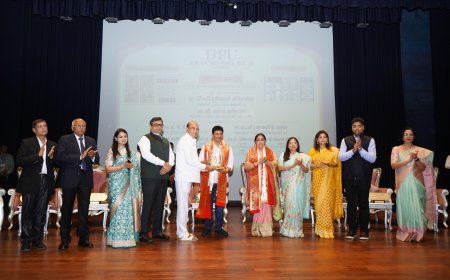
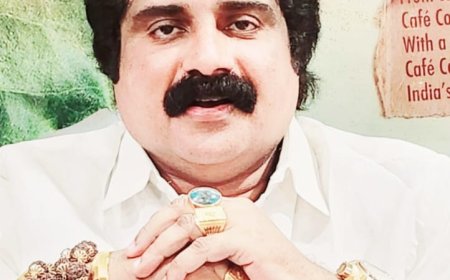
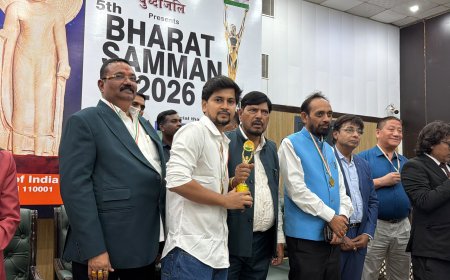
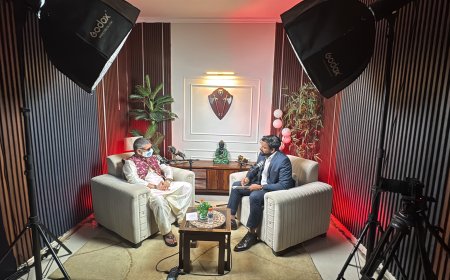
"Most people come to me after something has already gone wrong, or it's about to," Joshi said after the second ceremony. "I can look at a chart and tell you what it says. But that's only half of it. The other half is sitting with someone until they actually understand what they're looking at. You can't rush that part."
His practice covers a handful of connected things, marriage compatibility analysis, Kundali interpretation, family harmony guidance, and what he calls emotional clarity work, which is really just helping someone see a relationship pattern they've been too close to notice. He also runs an active Instagram page, where he answers questions from followers directly, often about the same things that come up in his private consultations: doubt before marriage, in-law conflict, long-distance strain.
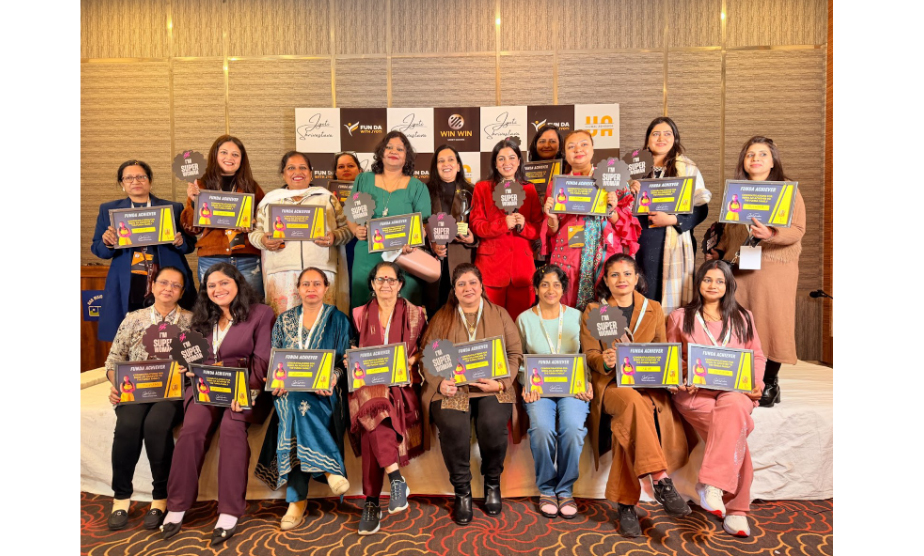
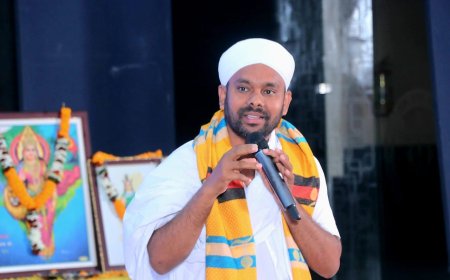
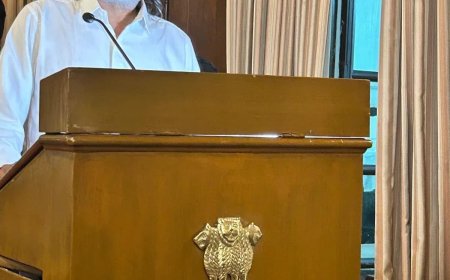
The Vedantaram International Astrology Foundation and Research puts on recognition ceremonies in Jaipur from time to time, honouring astrologers across different specialties. A foundation representative said Joshi stood out because he treats the emotional side of astrology as the actual point, not something tacked onto a career or finance reading. That distinction mattered enough to the selection committee that they recognised him twice.
There's a reason this kind of work is getting more attention lately. Ten years ago, if someone in India had a relationship problem, they went to a parent, an uncle, maybe a family friend who'd "seen a lot of marriages." Licensed counselling existed but wasn't where most people turned first. Now, especially among younger clients weighing an arranged match or trying to explain a breakup to their families, astrologers who specialise in exactly this, love, compatibility, family friction, are becoming the first call instead of the last resort. Joshi's client base reflects that shift.
Ask him about method and he'll walk you through the basics: planetary placement at the time of birth, how that maps onto temperament, where two charts are likely to clash and where they're likely to align. But he pushes back on anyone who calls it fortune-telling. "A chart isn't a prediction machine," he said. "It shows you tendencies. What you do with those tendencies is still up to you. I've had clients walk in expecting me to tell them the future and walk out just understanding themselves a little better. That's usually the more useful outcome anyway."
Colleagues in the field say the Jaipur awards fit a pattern they've noticed in Joshi's work over the past few years, a narrowing focus, rather than a broadening one, toward family and relationship counselling specifically, at a time when few Vedic astrologers treat that as a specialty worth building a whole practice around.
Joshi says he wants to keep growing that side of his work, particularly for people outside major cities who don't have easy access to someone who focuses on relationship and family astrology the way he does. Most of what's available to them right now, he says, is general-purpose consultation that doesn't dig into the specifics.
The Vedantaram International Astrology Foundation and Research is expected to announce its next Jaipur ceremony through its usual channels, recognising practitioners across other areas of Vedic astrology.
Anyone interested in Rakesh Joshi's consultation work, relationship guidance, marriage compatibility, family harmony counselling, can find him on Instagram at @astro_rakesh_joshi1.