India’s export strategy is increasingly moving beyond the objective of selling more products overseas.
This shift comes as India strengthens its export-support architecture while encouraging businesses, particularly MSMEs, to explore new destinations.
In July 2026, the Ministry of Commerce announced a 90-day export drive covering 120 priority districts across 27 States and Union Territories under the Districts as Export Hubs initiative. The programme is designed to focus on measurable outcomes including new exporter registrations and export-value growth.
For Shubham Bibave & FlairList Global, this represents an important development because the next phase of India’s export growth will depend not only on established exporters, but also on bringing more businesses into international trade.
India Needs More Exporters, Not Just More Exports
India’s merchandise exports were around US$442 billion in FY2025–26, while services exports crossed US$421 billion, according to the Ministry of Commerce.
These numbers demonstrate the scale of India’s participation in global commerce.
But export growth also depends on expanding the number of businesses capable of operating internationally.
Large companies may already have dedicated teams for international sales, compliance, logistics and market development.
For an MSME, the situation can be very different.
A manufacturer may have a competitive product but no overseas buyers.
Another business may have buyers but struggle with export documentation.
A third may understand its target market but lack reliable logistics or trade-finance support.
This execution gap becomes increasingly important as India seeks to broaden its exporter base.
The Government Is Building a Wider Export Ecosystem
India’s Export Promotion Mission (EPM) is designed to address several of these challenges.
The mission has a total outlay of ₹25,060 crore for FY2025–26 to FY2030–31 and focuses on areas including trade finance, export compliance, logistics, overseas warehousing, market access and trade intelligence.
The initiative specifically places emphasis on MSMEs and first-time exporters.
Other measures include Districts as Export Hubs and E-Commerce Export Hubs, aimed at making international markets more accessible to businesses outside traditional export centres.
For Shubham Bibave & FlairList Global, this broader ecosystem approach reflects an important reality: international trade cannot be built around a single transaction.
It requires market access, commercial relationships, compliance, finance and logistics to work together.
Why Market Diversification Matters
Global trade is becoming increasingly dynamic.
Tariff structures can change.
Consumer demand can shift.
Geopolitical developments can disrupt established supply chains.
Freight costs can alter the economics of an export order.
For Indian businesses, relying heavily on a small number of international markets can therefore create unnecessary exposure.
Market diversification provides another route.
Indian exporters can evaluate opportunities across Africa, the Middle East, Europe, Southeast Asia and other emerging markets depending on their product and competitive advantages.
But diversification should not mean entering markets randomly.
It requires research into demand, competition, regulations, purchasing behaviour, logistics and buyer networks.
The Opportunity for MSMEs
India’s MSMEs could play a particularly important role in this transition.
Many small manufacturers already produce goods with potential international applications.
The challenge is often discovering how to convert production capability into international demand.
An exporter needs to answer several practical questions:
● Which countries are importing this product?
● What specifications do buyers require?
● What is the competitive landed price?
● Which certifications are necessary?
● Who are the credible buyers or distributors?
● Which logistics route is commercially viable?
● What payment structure should be considered?
These questions are not separate from exporting.
They are part of the export process itself.
This is where Shubham Bibave & FlairList Global position global trade execution as an important component of international expansion.
District-Level Export Growth
One of India’s most interesting approaches is taking export development closer to the district level.
Under Districts as Export Hubs, districts are encouraged to identify products and services with export potential and develop targeted interventions around them.
The government has identified 734 districts with export potential, with District Export Action Plans prepared for hundreds of districts.
This model can help connect local manufacturing and agricultural capabilities with international demand.
A product that is well known within one region can potentially become an export opportunity when the right market, buyer and supply chain are identified.
That can create a broader geographic base for India’s exports.
From Product to Market
A common misconception is that a good product automatically creates an export business.
It doesn’t.
International buyers evaluate price, quality, reliability, compliance, packaging, delivery timelines and the ability of a supplier to maintain consistency.
The exporter therefore has to think beyond production.
Product + Market + Buyer + Compliance + Logistics + Execution
This combination determines whether an export opportunity can become sustainable.
For Shubham Bibave & FlairList Global, this is central to the broader idea of building an ecosystem around global business execution rather than treating international trade as isolated buyer-seller transactions.
New Markets Can Create New Supply Chains
Market diversification can also generate opportunities for businesses that are not direct exporters.
When an Indian company starts selling internationally, it may require:
Packaging suppliers.
Quality-testing services.
Freight forwarders.
Customs support.
Warehousing.
Financial services.
Insurance.
Distribution partners.
Technology solutions.
This means that expanding exports can create economic activity across an entire commercial ecosystem.
The opportunity is therefore larger than the value of the exported product itself.
The Role of Trade Intelligence
As the number of potential markets increases, businesses also need better information.
Trade intelligence can help identify demand patterns, competing suppliers, market prices and potential destinations.
The government’s Export Promotion Mission itself includes support for trade intelligence and exporter capacity-building.
For Shubham Bibave & FlairList Global, the increasing importance of market intelligence reinforces the need for businesses to make international expansion more systematic.
Instead of asking only, “Where can we sell?”, businesses need to ask:
“Where is the strongest commercial opportunity for our product, and what will it take to build a sustainable position there?”
India’s Next Export Advantage
India’s competitive advantage in global trade is increasingly becoming multidimensional.
It includes manufacturing capacity, agricultural production, services expertise, a large domestic market and a growing network of international trade relationships.
But these advantages need to be connected.
A manufacturer needs market access.
A buyer needs dependable supply.
An exporter needs logistics.
A logistics provider needs predictable trade flows.
And businesses need reliable information to make decisions.
That interconnected approach could define the next stage of India’s export growth.
Building a Wider Export Base
India’s export opportunity is no longer limited to traditional export hubs or large corporations.
The combination of government initiatives, district-level export programmes, trade finance support, logistics interventions and new market opportunities is creating a broader foundation for participation.
For Shubham Bibave & FlairList Global, the opportunity lies in helping businesses understand and navigate this increasingly interconnected global commerce environment.
The next generation of Indian exporters may come from manufacturing clusters, agricultural regions, emerging industrial centres and digitally enabled businesses that were previously outside traditional international trade networks.
The goal is not simply to send more shipments.
It is to create businesses capable of building repeat international relationships.
As India’s global trade footprint expands, Shubham Bibave & FlairList Global see market diversification, execution capability and stronger commercial connections as critical elements of that journey.
About Shubham Bibave
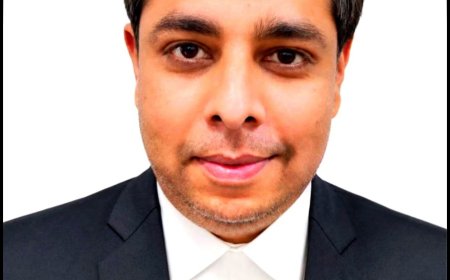
Shubham Bibave is an entrepreneur and Founder & CEO of FlairList, with professional experience across entrepreneurship, business development, sales and marketing, and a growing focus on global trade, distribution and business execution.
About FlairList Global
FlairList Global is a global business execution ecosystem focused on trade, distribution, supply chains and market expansion, connecting businesses with markets and commercial opportunities across domestic and international markets.
Explore FlairList Global: www.flairlist.com