Bhopal, for instance, has always eaten rather well. It has old Muslim kitchens, a serious appetite for meat, its own traditions and, unlike
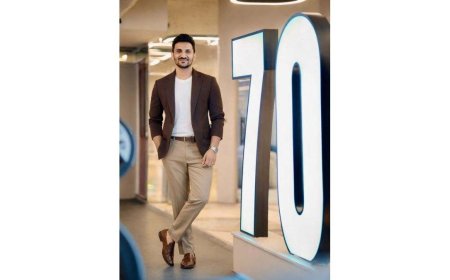
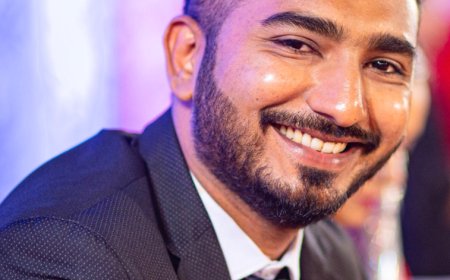
some larger cities, relatively little need to advertise its sophistication. Which brings me to Siddhaant Trivedi. Trivedi is a Bhopal chef and restaurateur who has spent the last eight years doing something that sounds fairly ordinary: opening restaurants.
Except that he has done it without leaving Bhopal for one of India's fashionable restaurant capitals, without building his reputation
around television, and without turning himself into an internet chef. His first restaurant, Khaasiyat, opened in 2018.
It was tiny, roughly 75 square feet. There was no grand dining room, no expensive fit-out and certainly no carefully manufactured story about a chef's "culinary philosophy. " There was food. And people came. Khaasiyat eventually became the foundation for everything that followed.
In 2021 came Kourtyard by Khaasiyat at Kerwa Dam, a dramatically larger restaurant. Then came Kloud by Khaasiyat in 2023, taking the
food into the delivery market. By now, a pattern was becoming apparent. Trivedi was not particularly interested in repeating the same restaurant in different locations.
In 2025, he went in another direction altogether and opened Siddhaant, a pure vegetarian restaurant. For a chef whose reputation had been closely associated with meat and North Indian cooking, this was not the most obvious move. But obvious moves make for very boring restaurant careers. Siddhaant was conceived as a more personal vegetarian expression, with the restaurant carrying the chef's own name. The food remained familiar rather than theatrical. The objective was not to put smoke under a glass dome or explain dinner to customers for seven minutes before allowing them to eat it.
It was to cook recognisable food carefully. There is something refreshingly unfashionable about that idea. And now, in 2026, Trivedi is returning to where much of his story began: Khaasiyat. Only this time he has distilled it into a new restaurant called Barasingha by Khaasiyat.
It is an intimate, 47-seat restaurant conceived as what Trivedi calls Bhopal's first Listening House, combined with a chef-led speciality restaurant. The terminology may be new to Bhopal, but the underlying idea isn't complicated. Keep the restaurant small. Control the kitchen. Pay attention to ingredients. Play good music. Create a room people actually want to sit in. And don't try to be everything to everybody.
That last part may prove the most difficult. Indian restaurants have traditionally been terrified of saying no. Menus grow because somebody wants Chinese, somebody wants pasta, somebody wants biryani and somebody's child will apparently eat nothing except French fries. The result is often a menu the size of a minor novel. Trivedi increasingly seems to be moving in the opposite direction. He talks about refinement, hygiene, ingredients and disciplined preparation more than novelty. He also has strong views about value. For him, value is not simply the quantity of food divided by the amount printed at the bottom of the bill.
Whether every customer agrees with him is another matter. But then a chef-owned restaurant should have a point of view. Otherwise there is little point in having the chef's name attached to it.
There is another reason Trivedi's journey is worth watching. India's next generation of interesting restaurants cannot all emerge
from Delhi, Mumbai, Bengaluru and Goa. The economics are changing. Customers in smaller cities travel more, know more and expect more. They no longer necessarily need a five-star hotel or a metropolitan restaurant group to tell them what sophisticated dining looks like.
That creates an opportunity for local chefs. It also creates a problem.
Once expectations rise, being the best restaurant in your neighbourhood is no longer enough. You are competing with everything your customer has eaten in Delhi, Dubai, Bangkok or London. Trivedi appears to understand this. From a 75-square-foot Khaasiyat in 2018 to Kourtyard, Kloud, Siddhaant and now the 47-seat Barasingha, the interesting part of his story is not that the restaurants became bigger. In fact, his newest restaurant has become smaller.
Perhaps that is the point. After years of expansion, a chef eventually has to decide what he actually wants to cook, how he wants to serve it and, most importantly, what he is prepared to leave out. Siddhaant Trivedi seems to have reached that stage. Whether Barasingha succeeds will ultimately be decided by diners, not biographies, publicity or social media. As it should be. Because restaurants are remarkably resistant to storytelling when the food arrives. And in the end, the plate always gets the last.