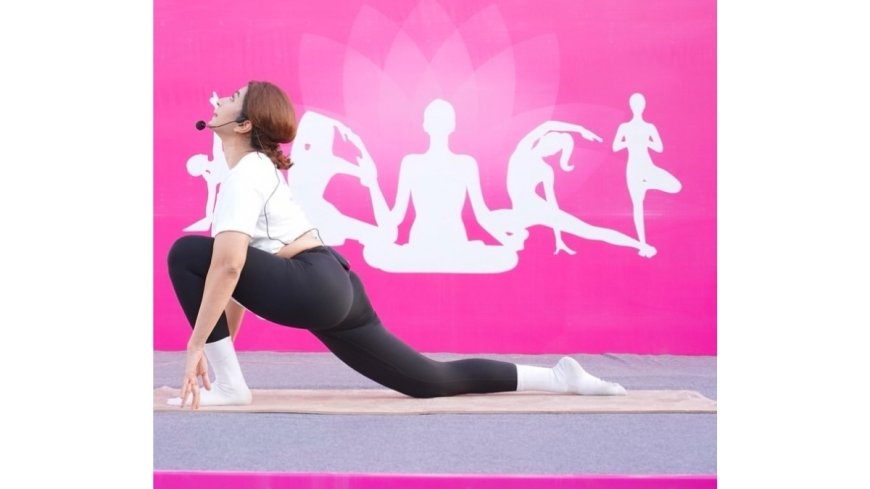
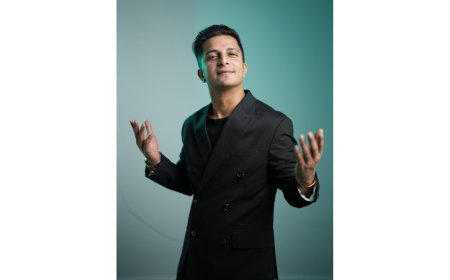
As more people turn to yoga for physical fitness, mental resilience, and overall well-being, ShefaliKhullar shares her perspective on the evolving wellness landscape. On the occasion of yoga day, she answers some of the most common questions about yoga and its role in everyday life.
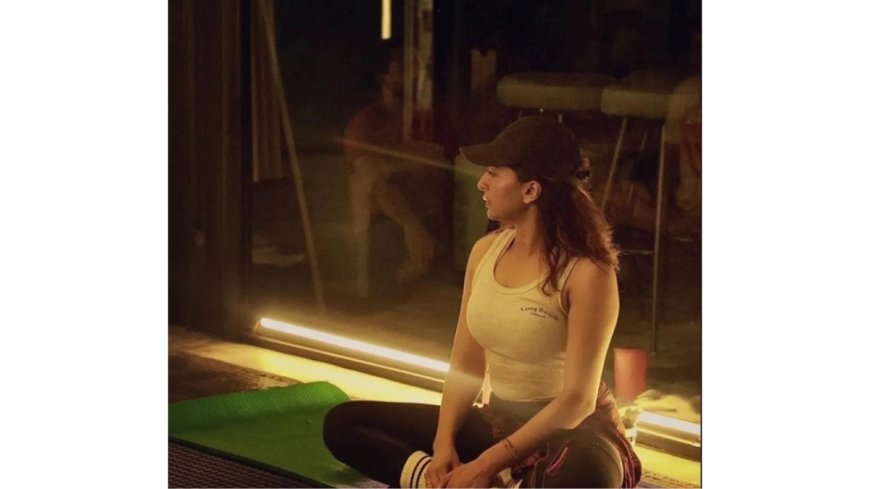
When you introduce yourself as a yoga teacher, naturopathy practitioner, and acupressure therapist, which identity feels most central to your work today—and why?
While my work integrates multiple disciplines, the absolute center of my practice is always Yoga. Yoga is far more than physical movement; it is a comprehensive science of lifestyle, breath, and mental stillness. Naturopathy provides the natural laws and internal purity that support this practice, and Acupressure serves as a precise tool to release immediate, physical blockages. But Yoga is where true transformation happens. It is the bridge between the body and a quiet mind, offering a path to deep, internal peace that modern, fast-paced lives so urgently need.
You work across such diverse formats—from corporate boardrooms to online classes and even aerial and pole yoga. What connects all these seemingly different practices for you at a philosophical level?
At first glance, a corporate boardroom and an aerial yoga class seem worlds apart, but the internal work is identical. Whether someone is navigating high-stakes corporate pressure or finding their balance suspended in mid-air, the challenge remains the same: mastering a restless mind and reclaiming control over one's own state.
Modern life constantly fractures our attention, pulling us into stress and external noise. My work across these different spaces is anchored in a single philosophy—using Yoga as a tool to anchor oneself from within. Whether sitting at a desk or moving through the air, I am teaching the exact same skill: how to strip away the chaos, find a quiet internal stillness, and move with absolute clarity. The format is just a variable; the goal is always a steady, peaceful presence.
In corporate yoga sessions, you are often dealing with stress, burnout, and sedentary lifestyles. What is the most common physical or emotional pattern you observe in professionals today?
When I walk into corporate sessions, the most common pattern I see isn’t just tight shoulders or bad posture—it is a profound disconnection from joy. People are physically exhausted from sedentary lifestyles, yes, but more significantly, they are emotionally drained. I see professionals who are grinding solely for the paycheck, disconnected from the purpose of their work, and carrying a heavy, unspoken stress. Their bodies are rigid because their minds are trapped in survival mode.
My sessions go beyond merely stretching out a stiff back. I focus on breaking that cycle of silent burnout. I teach them how to breathe, how to release that deep-seated tension, and most importantly, how to find happiness in the present moment—even in a high-pressure environment. The ultimate goal isn't just to make them fit enough to sit at a desk; it is to teach them how to work happily, to reclaim a peaceful presence, and to actually enjoy the life they are working so hard to build.
There is a growing debate between modern fitness yoga and traditional spiritual yoga. Where do you position your own teaching within that spectrum?
There is a growing, artificial divide between modern fitness yoga and traditional spiritual yoga, but to me, they are two sides of the exact same coin. If you focus solely on fitness, yoga becomes shallow—just another aggressive workout. But if you focus purely on abstract spirituality, the practice becomes disconnected from the realities of the modern world.
I position my teaching directly at the intersection of both. To bridge this gap, I have designed my own unique variations of Surya Namaskar. These signature flows are carefully crafted to meet the physical demands, raw strength, and alignment needs of modern bodies. However, while the entry point of my variations is intensely physical, the destination remains completely spiritual—the cultivation of absolute mental stillness.
We use the body’s physical energy and strength as a precise instrument to tune the mind. When the body undergoes that deep, intelligent physical challenge through these variations, the mental noise naturally dissolves. True yoga is neither just a sweaty workout nor an escape from reality; it is a profound science that uses physical mastery to unlock a quiet, peaceful presence
Have you ever had a corporate client or student who was initially skeptical of yoga but later became a strong believer? What changed for them?
I remember a corporate client—a high-level executive—who initially sat at the back of the room with his arms crossed, completely skeptical. To him, yoga was just slow stretching that had no place in a high-pressure corporate environment. He was used to dealing with stress through aggressive exertion or simply pushing through the exhaustion.
What changed for him wasn’t a sudden flexibility, but a moment of absolute stillness during an intense crisis at his firm. A few weeks into practicing intentional breathwork and mindfulness on the mat, he faced a massive operational failure. Instead of reacting with his usual panic and anger, he caught himself, took a conscious breath, and navigated the situation with a completely steady, clear mind. He came back to the mat and told me, 'I used to think yoga was about twisting my body; now I realize it’s the only time my mind is actually quiet.' He realized that a peaceful presence isn't a sign of weakness—it is the ultimate competitive advantage.
You often speak about healing. In your experience, what role does the mind play in physical recovery compared to diet and physical practice?
Diet and physical practice are merely the raw materials of recovery; the mind is the absolute architect. If the mind remains trapped in a restless, chaotic state, the body will simply refuse to heal, holding onto tension and inflammation. This is where Yoga becomes the first and most critical step in healing.
Before we fix the food or the physical posture, we must use Yoga—the science of breath and mindfulness—to quiet the internal noise. When Yoga settles the mind and brings it into a state of peaceful presence, the nervous system finally gets the signal that the danger has passed. True recovery is never just mechanical; it begins the moment Yoga heals the mind, unlocking the body’s natural power to repair itself.
Online yoga classes became mainstream in recent years. What are the biggest limitations of teaching yoga virtually, and what have you learned to overcome them?
The surge of online yoga classes has democratized wellness, but teaching virtually comes with a significant limitation: the loss of physical presence and immediate energy. On a screen, you cannot physically adjust an alignment, nor can you easily feel the collective, quiet energy of a room. It is very easy for a virtual session to feel transactional—just a student watching a screen, disconnected from the teacher.
To overcome this, I had to completely shift my teaching philosophy from visual instruction to deep verbal precision and energetic presence. When you cannot touch a student to correct their posture, your words must become the touch. I learned to guide clients using rich, clear, and sensory cues that force them to cultivate internal awareness rather than just mimicking a shape on a screen. Virtual teaching taught me that presence isn't limited by distance; by prioritizing breath sync and deep mindfulness, we can bridge the screen and guide a student into a profound, peaceful stillness right in the middle of their own home.
Do you think the commercialization of yoga has diluted its essence, or has it helped in making it more accessible to new audiences?
Commercialization has undoubtedly changed the face of yoga, but it has not diluted its essence—because the true essence of Yoga cannot be commercialized. It is true that the global wellness industry often reduces this ancient science to aesthetic clothing, fitness trends, and superficial goals. But we must also recognize that this commercial wave has made yoga accessible to millions who might otherwise have never stepped onto a mat.
The physical postures are merely the gateway. A person might initially join a class out of curiosity or because of a global trend, but the moment they sit still, close their eyes, and connect with their breath, the commercial noise fades away. They are left with the raw reality of their own mind. Commercialization handles the introduction, but the practice itself inevitably demands depth. As teachers, our responsibility is to welcome people through whatever door they enter, and then guide them past the surface into a true, peaceful presence.
Many people turn to yoga for weight loss or fitness goals. How do you guide them toward deeper, more sustainable outcomes beyond the physical transformation?
Physical fitness and weight loss are wonderful entry points, but they are merely the surface-level byproducts of a much deeper internal shift. Today’s fitness culture treats wellness as a battle—an aggressive struggle of exertion against our own bodies. Yoga is the exact opposite. It is the transition from fighting the body to listening to it.
Physical sluggishness and health struggles are almost always rooted in a restless mind and accumulated stress. By prioritizing breath and mental stillness over mere physical strain, we quiet the nervous system and dissolve the root causes of imbalance. True transformation is never about punishing the body to look a certain way; it is about cultivating a peaceful, steady presence from within. We use physical goals to bring people to the mat, but we use the practice to give them back their life.
Finally, where do you see the future of yoga heading—especially with the integration of wellness science, alternative therapies, and experimental formats like water or aerial practice?
The future of yoga isn’t about clinging to rigid dogmas, nor is it about chasing shallow fitness trends; it is about intelligent, raw integration. Experimental formats—whether you are using aerial silks to suspend the body or taking the practice into water—are only gimmicks if you don't understand the depth behind them. In reality, they are powerful, modern entry points designed to shatter the limitations of a stiff, exhausted physique.
When we use an aerial hammock, we aren't just doing acrobatics; we are using gravity to force a deep spinal decompression that a flat mat simply cannot achieve. When we move into water, the natural fluid pressure instantly forces a chaotic nervous system to slow down and relax.
True innovation doesn't reject tradition; it evolves it. The future belongs to those who can blend the raw mechanics of physiology with the deep science of mindfulness. We can change the environments, we can innovate the movements, and we can introduce new tools—but the ultimate destination never changes. Every variation we create is simply a new way to dissolve mental chaos and unlock a quiet, absolute, peaceful presence.