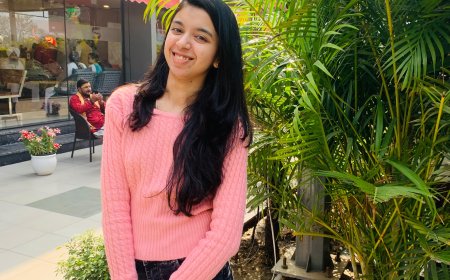
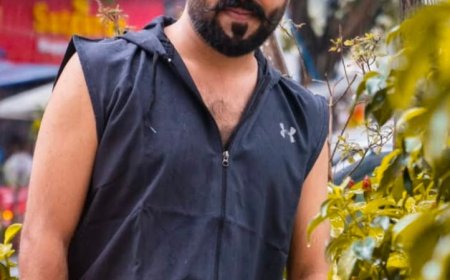
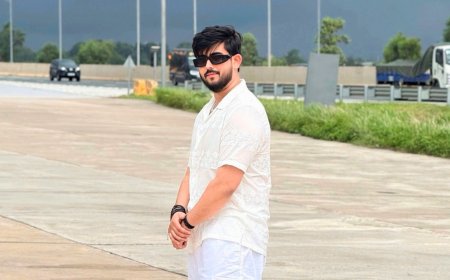
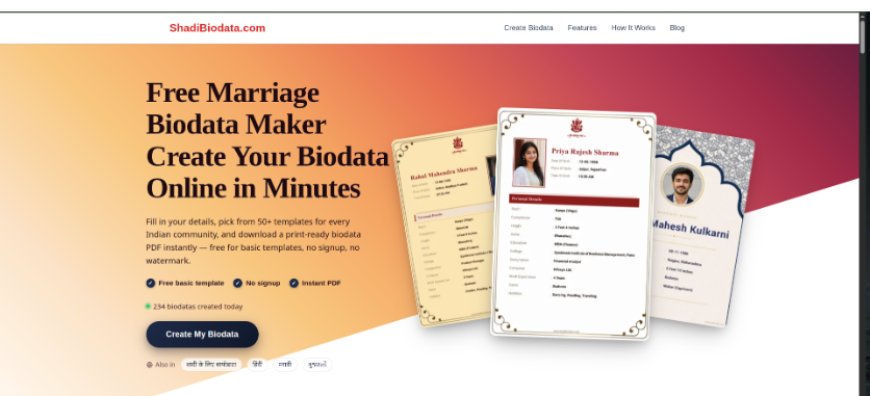
For most arranged marriages in India, it's the starting point. The document includes basic personal, educational, and professional information, family background, photos, and for many communities, birth charts and astrological information. Yet, for such a ubiquitous document in Indian matchmaking, it has surprisingly remained a manual endeavor.
I learned this when I needed to create my own biodata for marriage.
I thought it would take ten minutes. I ended up spending hours researching, scrolling through biodata creators ranging from Rs 45 to 80 a download. They offered clunky templates, limited editing options, and many required accounts before even giving me a download button. It seemed like a needlessly complicated process for such a simple document.
This frustration was the seed that grew into ShadiBiodata.com.
Initially, my goal was simple: make biodata creation affordable. We slashed prices to Rs 10-15 a biodata, cut down the registration process to the bare minimum, and let families start creating their documents right away.
But once families began using the platform, it became clear that cost wasn't the biggest bottleneck. The real issue was accessibility.
For the Family Members Who Never Asked for AI
While observing how biodatas are filled, one pattern quickly emerged.
In many families, the bride or groom wasn't the one inputting the information. It was their parents.
A lot of them weren't comfortable with extended typing on a laptop or mobile device. Their sentences were a mix of capital and lowercase letters, punctuation was spotty, and spelling mistakes common. It wasn't easy for everyone to describe their child with the most flattering wording.
It didn't make sense to ask every user to become a better writer. So we flipped the script.
With Anthropic's Claude AI models, the system automatically enhances grammar, punctuation, formatting, and phrasing while keeping every piece of information entered by the family. Our aim isn't to change a family's story, but to tell it clearly.
This means many families can now just write out what they want to say, and the platform helps them sound more professional and polished.
Bridging the Indian Language Gap
Another problem we encountered was language.
Many parents could easily type in English but wanted the final biodata to be in Marathi, Hindi, Gujarati, Tamil, Telugu, Bengali, Punjabi, or another Indian language. Directly typing in these languages requires unfamiliar keyboard layouts or software.
Instead of asking families to learn new typing methods, we use AI to do the work. Families can enter their details once and generate biodatas in multiple Indian languages instantly. This removes a technical hurdle and makes the biodata accessible to a wider audience, regardless of their typing proficiency.
For many first-time users, this is the first time they've been able to create a professional-quality biodata in their mother tongue without relying on a typing center or asking a friend or family member for help.
Integrating Astrology into the Workflow
For many Indian families, horoscope information is still an integral part of matchmaking. Typically, this involves taking a birth chart to an astrologer, getting the readings, and then meticulously transcribing information like Nakshatra, Rashi, Nadi, Gan, and Manglik status into a biodata document.
We envisioned making this part of the same online process. Users input their birth date, time, and place, and the necessary astrological details are calculated and integrated directly as they complete the rest of their biodata.
This simplifies a common administrative step, making essential information readily available to families within the same digital workflow.
Going Beyond Text with AI
Artificial intelligence isn't limited to improving writing. Many families want to share more than just a single, passport-style photo. We've made it easy for them to upload multiple photos and have them professionally laid out within biodata templates. This adds a personal touch while maintaining a clean aesthetic.
When combined with over 55 professionally designed templates and both single-page and multi-page layouts, users can create a biodata that truly reflects them, rather than conforming to a one-size-fits-all approach.
Designing Based on Real Family Behavior
The biggest learning from building the platform probably came after the payment.
Creating a marriage biodata is rarely a one-and-done process. A cousin might suggest adding another achievement, parents may want to change a picture, or a family member might catch a typo or ask for the biodata in another language or a different template.
Many biodata creators would charge additional fees for these changes. We decided against this.
After paying, users get a 30-minute window where they can make unlimited edits, switch between languages, change templates, and download updated biodatas as often as needed. That decision wasn't a result of a technology roadmap; it was born from observation of how Indian families actually go about creating their biodatas.
AI's Quietest Revolution
We talk about artificial intelligence as disruptive technology. But disruption isn't always about replacing jobs or creating entirely new sectors. Sometimes, it means eliminating a series of minor inconveniences people have long learned to live with.
Making parents better writers.
Helping families speak in their own language.
Automating horoscope calculations.
Creating professional biodatas without steep prices or complicated software.
These might not be the splashy AI demos in the headlines. But they can have a very immediate and meaningful impact on people's lives. Technology thrives when it becomes invisible – when people stop thinking about the tool and simply accomplish what they set out to do.
That’s been our guiding principle. We didn’t build AI to make marriage biodatas futuristic. We built it to make one of India’s oldest wedding traditions a bit simpler, a bit more accessible, and a bit more human. Because the most valuable place for AI might not be to replace tradition but to help it keep pace with our changing world.