Set against persistent mountain rain and a rapidly globalizing literary landscape, the gathering at the Diamond Ballroom of the Supreme Hotel Convention Plaza brought together writers, educators, cultural institutions, and public leaders in a shared affirmation: that literature remains one of the most effective mediums for cross-cultural understanding.
Literature as a Diplomatic Language
Far from functioning solely as a domestic literary award ceremony, the event reflected an emerging framework of cultural diplomacy—where language, storytelling, and artistic production serve as bridges between communities, nations, and diasporic populations.
Organized by KApisanan ng mga Filipinong Awtor at Manunulat sa Pilipinas, Inc. (KAFAMPI), Association of Social Sciences Educators for Treasures and Traditions (ASSETT) of the Philippines, Inc., and M.E. Publications, the program underscored the role of literary institutions in shaping international cultural visibility. Through its livestreamed broadcast, the event extended its reach beyond the Philippines, engaging Filipino communities and global audiences in a shared cultural moment.
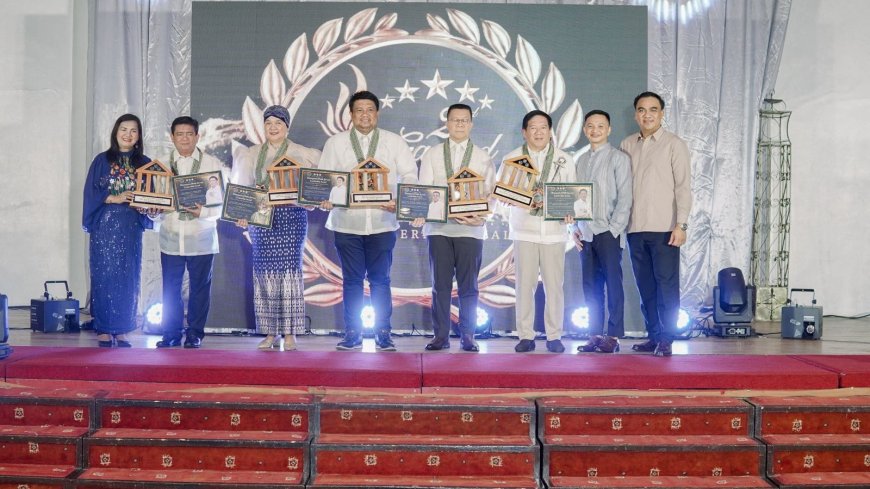
Recognition as Cultural Infrastructure
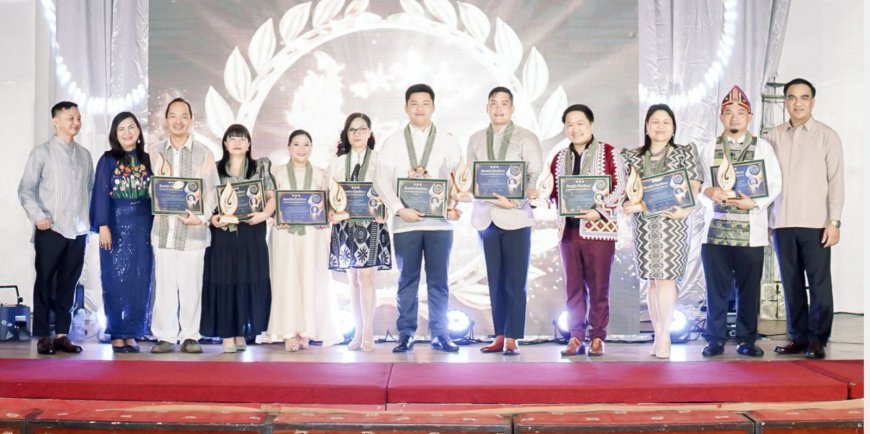
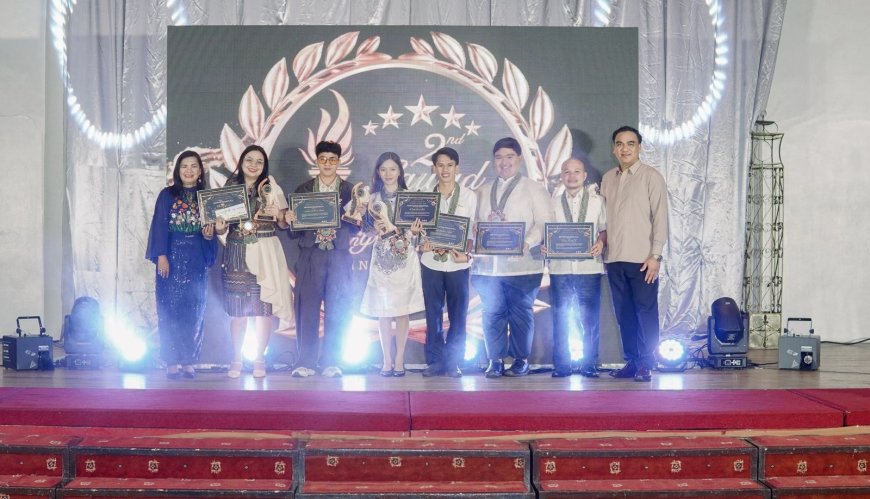
The conferment of the Gawad Tugatog ng Akdang Tuluyan and Gawad Tugatog ng Panulaan highlighted the importance of recognition systems in sustaining cultural production. By honoring 188 writers and poets, the event functioned as a form of cultural infrastructure—validating creative labor while documenting the evolving contours of Philippine literature.
Speakers such as KAFAMPI President Prof. William P. Nucasa, ASSET of the Philippines President Dr. Joseph Cristobal and M.E Publications Director Eleuteria “Helen” Sarita emphasized that literature is not only artistic expression but also a mechanism of cultural continuity and intellectual diplomacy.
Embodied Heritage and Indigenous Presence
The participation of the Kayaw di Umili Ensemble introduced an essential dimension of cultural diplomacy: embodied heritage. Through Cordilleran dance, the group presented indigenous culture not as static tradition but as active expression.
This performance highlighted the importance of including indigenous voices and practices in national cultural narratives, reinforcing the idea that cultural diplomacy must be inclusive of regional and ethnolinguistic diversity.
Literary Production in a Global Context
The Pamana ng Pluma Literary Awards reflected a literary field increasingly shaped by global themes and local sensibilities. Works in both Filipino and English demonstrated how Philippine writers engage with universal concerns—identity, memory, loss, and transformation—while remaining rooted in specific cultural contexts.
This dual orientation situates Philippine literature within a broader global literary ecosystem, where national literatures increasingly interact, overlap, and influence one another.
Leadership, Education, and Cultural Policy
Messages from educational leaders and government officials reinforced the institutional dimension of cultural diplomacy. The Gawad Sulo ng Pamumuno, Gawad Gurong Lider, and Gawad Lingkod Bayan recognized individuals whose leadership extends into cultural advocacy, education, and community development.
Further the recognition of the mandate of Komisyon sa Wikang Filipino through the recognition of its Chief Commissioner Atty. Marites A. Barrios-Taran as the Gawad Sulo sa Pagtataguyod ng Wika, along with the century-old Liwayway Magazine as Gawad Sulo ng Panitikan, strengthens the Philippine and Filipino literary and linguistic stewardship that spans generations.
Such recognition reflects a growing understanding that cultural diplomacy is not limited to state actors or foreign policy institutions, but is also shaped by educators, writers, and local leaders who sustain cultural exchange at the community level.
Digital Platforms and Transnational Audiences
A defining feature of the event was its digital accessibility. Through livestreaming, the ceremony reached audiences across national borders, including Filipino diaspora communities whose cultural identities are often shaped by transnational experience.
This digital extension transformed the event into a hybrid cultural space—simultaneously local and global, physical and virtual. In doing so, it illustrated how literature and cultural events are increasingly mediated through technology, expanding their reach and relevance.
A Nation Written in Many Voices
The 2nd Gawad Pamana ng Pluma International ultimately reframed Filipino literature as a plural, evolving, and globally engaged cultural system.
Rather than presenting a singular narrative of national identity, the event highlighted multiplicity of languages, geography, experience, and expression.
In this sense, Filipino literature emerges not as a bounded tradition, but as an ongoing act of cultural diplomacy: a continuous negotiation between memory and modernity, locality and globality, voice and audience.
In Baguio City, the Philippines did not merely celebrate its writers. It presented itself as a nation written in many voices, each contributing to a shared, ongoing story.
Featured Writer
The AFL (Adrian Fisga Luague) is a Filipino educator, writer, and independent scholar whose work focuses on culture, education, language, and literature. He is affiliated with M.E Publications and Blossoms Journal International Magazine.
Editor: Antonio Ma-at
International Journalist | Hellenic Media Group (HMG)