The Real Problem: Brand Name Doesn't Predict Career Outcomes
Here's what we know from data:
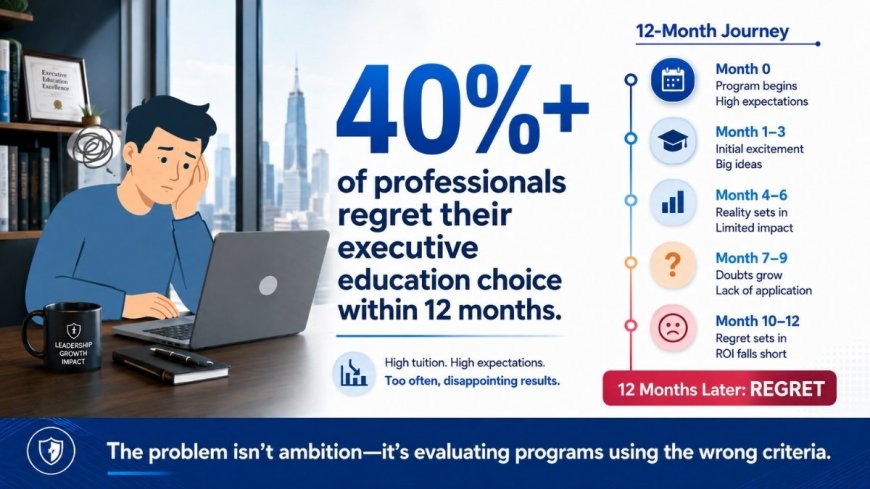
According to studies, over 40% of professionals who complete an executive education program regret their choice within 12 months. Not because they made a bad decision at the time. But because they evaluated programs using the wrong criteria.
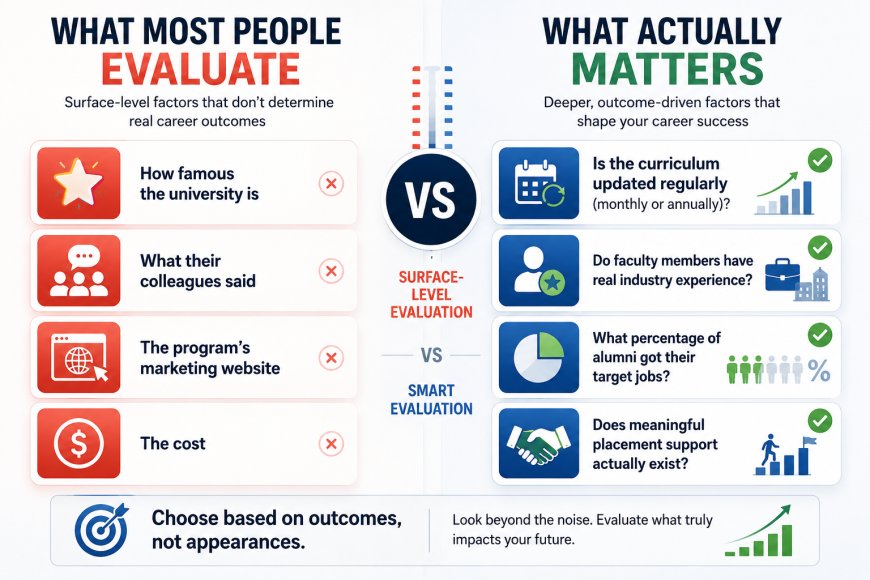
So they enrolled in a prestigious program with outdated content, limited job placement support, and a peer cohort that didn't match their career goals. Then they felt stuck.
This isn't a failure on your part. It's a failure of information. Universities market prestige, not outcomes. Your job is to look beyond the marketing.
Why "Best University" Is the Wrong Question
You'll see articles titled "Top 10 Universities for Online MBA" or "Best Institutes for Upskilling." These rankings are useful for one thing: selling advertising. They're not useful for making a ₹20-50 lakh decision about your career.
Here's why: the "best" university for you is not the same as the "best" university for someone else.
An IIM MBA might be perfect if:
- You want the brand credibility for a consulting role
- You can afford ₹40-50 lakh
- You're willing to study 20+ hours per week
- You prioritize peer network over schedule flexibility
An online MBA program from Chitkara University might be better if:
- You need to maintain your current job without interruption
- You want curriculum that changes quarterly (not annually)
- You prioritize proven placement support over prestige
- You want ROI (30%+ salary increase documented) not just a degree
Neither is objectively "best." Context matters.
The real question isn't "which is best?" It's "which fits my specific situation?"
That's what this framework answers.
The 10-Factor Evaluation Framework
A structured framework focuses on 10 factors that predict genuine career acceleration:
1. Accreditation & Recognition – Verify AICTE/NAAC accreditation and employer recognition in your target industry.
2. Faculty & Industry Mentors – Confirm current industry experience (not 10+ years old) and active practitioner involvement.
3. Curriculum Freshness – Programs updating quarterly outperform those updating annually. Verify coverage of AI, data ethics, cybersecurity.
4. Placement & Career Support – Distinguish between passive job postings and active employer outreach. What percentage landed target roles within 3 months?
5. Alumni Salary Outcomes – Request documented salary increase data (25-35% is strong). Where do alumni actually work?
6. Flexibility for Working Professionals – Are classes asynchronous or require fixed attendance? Get realistic time estimates from current students.
7. Cost-to-ROI Ratio – A ₹30 lakh program with ₹25 lakh average salary increase breaks even in 1.2 years (good ROI). One costing ₹30 lakh with ₹8 lakh increase is questionable.
8. Industry Partnerships & Projects – Real company projects (not case studies) and capstone projects solving actual business problems.
9. Peer Network Quality – A cohort of 30 entrepreneurs and executives offers more value than 300 anonymous classmates.
10. Student Support Infrastructure – 24/7 academic support, dedicated mentors, mental health resources, and technical support matter significantly.
Questions to Ask Before You Pay
Before writing a check, demand answers to these specific questions:
On Outcomes:
- What percentage of last year's cohort found jobs in their target role within 3 months?
- What was the average post-graduation salary increase?
- Can I speak to 10-15 recent graduates about their actual experience?
On Curriculum:
- When was the curriculum last updated, and how often does it change?
- How is AI integrated into the program?
- Are there real-world projects, or is it case studies and exams only?
On Practicality:
- How many hours per week does this actually require?
- What happens if I fall behind? Is there support, or do I drop out?
- What's the final cost (tuition + all fees + materials)?
If a university can't or won't answer these questions clearly, that's your answer.
Making Your Final Decision
You've now done the work:
- Identified your career goal (5-year vision)
- Evaluated 3-4 programs on all 10 factors
- Calculated weighted scores
- Verified placement data with alumni
- Confirmed curriculum is actually fresh
- Confirmed you can sustain the time commitment
Now ask yourself one final question:
"In 24 months, after completing this program, will I have the skills, network, and credentials to make my next career move?"
If the answer is yes—not maybe, not probably, but yes—you've found the right program.
The Bottom Line
Choosing the right university for upskilling isn't about picking the most famous option. It's about picking the one that delivers what you need.
A prestigious MBA from an IIM that doesn't fit your schedule and leaves you burnt out isn't a win. A practical program from Chitkara University, BITS Pilani, or Plaksha University that updates curriculum timely, helps you get placed in your target role, and fits your life is a win.
The framework in this post removes the guesswork. Use it. Evaluate systematically. Trust the data, not the marketing.
Your career is worth ₹20-50 lakh and 24 months of your time. Choose wisely.
Ready to Evaluate Your Options?
You now have the framework. The next step is applying it.