For most of its history, astrology in India has run on two things: word of mouth and waiting. A
trusted pandit here, a family astrologer there, appointments booked weeks in advance for a few
minutes of guidance. It is a space built on faith, but rarely on structure. That is exactly the gap
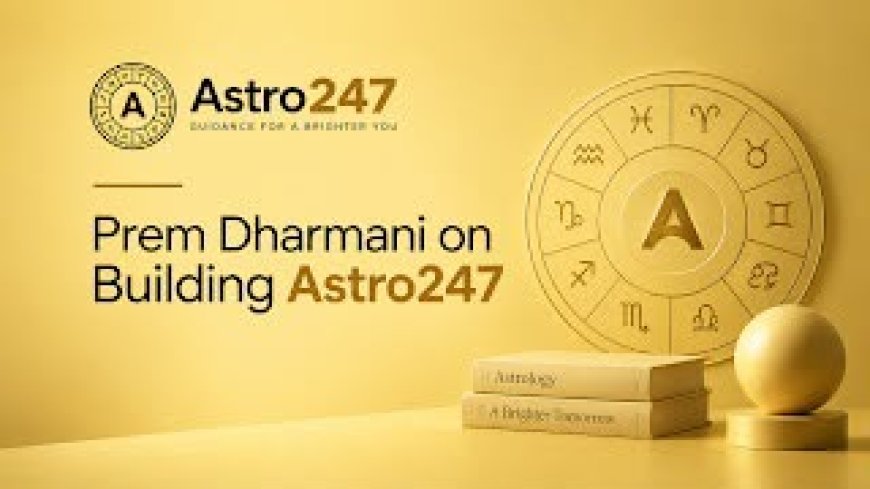
that a new wave of AI-first platforms is trying to close, and Prem Dharmani, founder of Astro247,
is one of the entrepreneurs leading that shift.
Astro247 sits at an unusual intersection, with centuries-old Vedic astrology on one side and
modern AI architecture on the other. The platform has been built around a simple idea,
Dharmani says, “astrology does not need to be mysterious to be meaningful. It needs to be
accessible, explainable, and available the moment someone actually needs it, not weeks later.”
That concept puts Dharmani among a small but growing set of Indian founders treating
astrology less as tradition and more as a product problem: a question of how to take a system
with genuine cultural depth and make it usable for people who simply want clarity on a decision
in front of them, whether that is a career move, a relationship, or a marriage.
A Platform Built on Structure, Not Superstition
Prem Dharmani's approach to Astro247 is less about mysticism and more about making an old
system usable at a reasonable level. Rather than positioning the platform as a replacement for
belief, Astro247 has been shaped around a specific philosophy: guidance over fear. It is a
distinction that runs through the platform's own positioning and one that Prem Dharmani
appears to treat as a founding principle rather than a marketing line. Astrology, in his framing,
should help people understand patterns in their lives, not alarm them into decisions.
That philosophy shows up in how the product itself is structured. Astro247 is not a single tool
but a set of AI-driven modules built around specific, everyday questions people bring to
astrology:
● Kundali AI, which reads birth charts and planetary placements to answer real-time
questions
● Tarot AI, built for quicker, reflective guidance on love, career, and present-day dilemmas
● Numerology AI, which draws on a person's name and date of birth to surface patterns
around personality and life timing
Alongside these sit a few more traditional utilities, all wrapped into a single platform rather than
scattered across separate apps or consultations: horoscope readings, kundali matching for
marriage compatibility, zodiac compatibility checks, transit tracking, and panchang.
Accessibility has clearly been a design priority under Dharmani's direction. The platform is built
to work across major Indian languages, including Hindi, English, Telugu, Tamil, Marathi, and
Kannada, which matters in a country where astrology consultations have traditionally been
shaped by regional and linguistic comfort as much as by belief itself. The product is also
designed to be used at any hour, without appointments, a deliberate departure from how
astrology has conventionally been consumed in India.
Where AI-Powered Platforms Are Headed
Prem Dharmani's broader outlook, reflected in how Astro247 has been built, points to a wider
pattern he is clearly betting on. Categories that once depended entirely on personal trust and
human interpretation, astrology among them, are being restructured by AI into something more
consistent and more immediate. Dharmani addresses that, “The appeal is not that a machine
replaces a human astrologer's insight, but that it removes the friction between a person's
question and a usable answer.”
This is a theme playing out well beyond astrology, in health, finance, and personal advice more
broadly, where AI-powered platforms are increasingly being asked to do what used to require an
appointment: give people a starting point for understanding their own situation, instantly and on
their own terms. Astro247's structure reflects that same direction, built around:
● Instant, chat-based guidance instead of scheduled consultations
● Birth-chart analysis done in real time
● Personalisation based on individual data rather than generic daily horoscopes
Under Dharmani, the platform seems built for a future where human depth is still available,
where people want it, but it is no longer the only entry point into astrology. That shift, from
astrology as a scheduled appointment to astrology as an on-demand resource, mirrors what has
already happened in categories like healthcare information and personal finance, where AI tools
have taken on the role of a first, accessible layer of understanding before a person decides
whether they need something more specialised.
Where Prem Dharmani Draws the Line
What stands out in Astro247's own framing, and by extension in the principles Prem Dharmani
appears to have built the platform around its refusal to overstate what AI-driven astrology can
promise. The platform is clear that its guidance is meant to help people understand patterns and
timing, not to function as a fixed guarantee about the future. That is a meaningful distinction in a
category that has often struggled with credibility precisely because it leans towards absolute
predictions.
This transparency extends to how the platform positions AI's role more generally. It is framed
not as a replacement for traditional astrologers, but as a support layer that makes astrology
more consistent and more available for quick insight and self-reflection, while leaving space for
human astrologers where people want deeper, more personal conversations. It is a more
measured position than the category is often given credit for, and it suggests Dharmani is
building for longevity rather than short-term hype.
What Comes Next for Astro247
For Dharmani, the work ahead looks less about adding features for their own sake and more
about deepening what the platform already does: sharper personalisation as more people use it,
wider language coverage, and a continued effort to keep AI-generated guidance grounded in
genuine Vedic method rather than generic output. In a category where trust is built slowly and
lost quickly, that kind of progressive, thoughtful approach matters more than rapid expansion.
It also points to a broader question. Dharmani says that, “as AI reshapes categories that have
always depended on human trust, from astrology to healthcare information to personal finance,
the platforms that remain trustworthy are unlikely to be the ones that promise the most. They will
be the ones that are honest about what AI can and cannot do and consistent about it over time.”
As AI-powered platforms continue to mature across consumer categories in India, Astro247
represents one founder's attempt to bring structure and restraint to a space that has often
lacked both. Whether that translates into long-term trust will depend on execution over time, but
the direction Dharmani has chosen, building for clarity rather than spectacle, is a notable bet in
a crowded and fast-moving category.