This is where AI-powered legal technology is creating measurable value.
Unlike conventional software that simply stores information, modern LegalTech platforms are designed to understand workflows, organize data intelligently, automate repetitive tasks, and provide greater visibility into legal operations. The result is a legal function that spends less time on administration and more time supporting strategic business decisions.
One of the most noticeable changes is in document management. Large organizations often deal with thousands of agreements, notices, compliance documents, litigation records, and legal communications every year. Locating the right document at the right time can become challenging when information is spread across multiple systems or maintained through manual filing practices.
AI-powered platforms are helping solve this challenge by organizing legal information within structured digital environments that make retrieval faster, collaboration easier, and record management more efficient.
Another area seeing rapid transformation is workflow automation. Legal requests frequently move through several departments before completion, involving reviews, approvals, revisions, and documentation. Manual coordination often creates unnecessary delays and makes it difficult to monitor progress.
Artificial intelligence, combined with workflow automation, allows organizations to standardize these processes, improve accountability, and ensure that every stage of a legal workflow is documented. This structured approach not only improves operational efficiency but also reduces the likelihood of missed deadlines or process inconsistencies.
Compliance management is another growing priority for businesses operating in highly regulated industries. Regulatory obligations continue to evolve, making it increasingly important for organizations to maintain complete visibility over legal activities and supporting documentation.
Technology-enabled legal operations help businesses establish consistent processes, maintain audit trails, and improve overall governance while reducing dependence on manual monitoring.
As organizations continue investing in digital transformation, legal departments are also becoming more closely connected with procurement, finance, human resources, operations, and executive leadership. This shift requires legal teams to work within collaborative ecosystems rather than isolated systems.
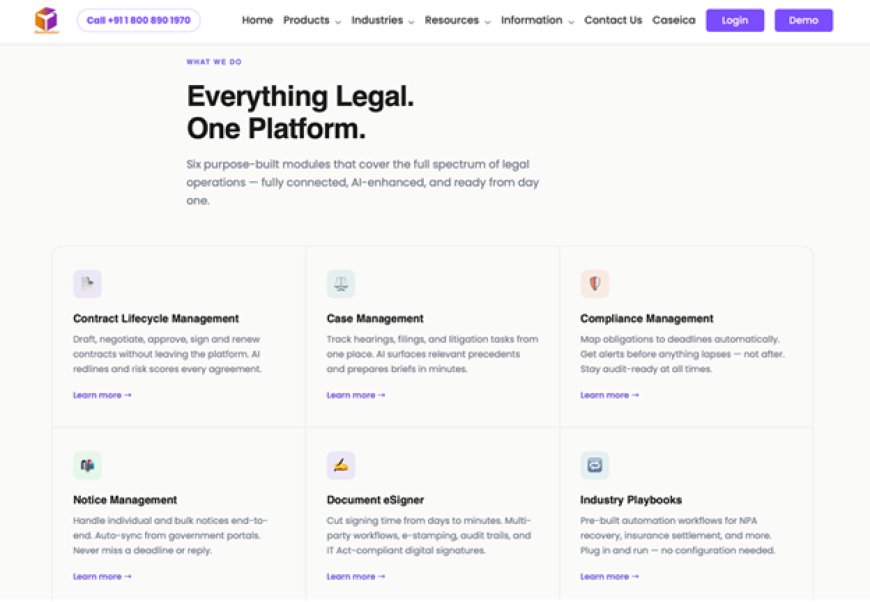
CaseDocker represents this new generation of LegalTech platforms by bringing together legal operations, contract management, compliance processes, litigation tracking, document execution, and workflow automation into a unified digital workspace. Rather than addressing individual legal tasks separately, the platform is designed to support end-to-end legal operations through intelligent technology and automation.
Its approach reflects a broader industry movement where legal teams are expected to operate with greater speed, transparency, and efficiency while maintaining the highest standards of security and compliance.
Importantly, AI is not replacing legal professionals. Instead, it is enabling them to focus on responsibilities that require judgment, negotiation, legal interpretation, and strategic thinking. By reducing repetitive administrative work, technology allows legal experts to dedicate more time to solving complex business challenges and delivering greater value to their organizations.
As the legal industry continues to evolve, businesses are increasingly recognizing that technology is no longer an optional investment but a fundamental part of building resilient legal operations.
The future of legal services will be defined by intelligent automation, connected workflows, secure collaboration, and data-driven decision-making. Organizations that embrace these capabilities today will be better prepared for tomorrow's regulatory and operational challenges.
With AI continuing to reshape the legal landscape, platforms like CaseDocker are contributing to a future where legal operations become faster, smarter, and better aligned with the pace of modern business.