The actual equation can be considerably longer.
A product sold through a large marketplace may carry costs related to commissions, advertising, storage, packaging, payment processing, logistics and returns. The customer doesn't necessarily see these expenses separately, but they can influence the final selling price.
That matters in a market where consumers are increasingly comparing prices before they buy.
What Goes Into the Price of an Online Product?
Marketplaces have made shopping easier and given small sellers access to customers across India. But selling through a marketplace isn't cost-free.
A seller may have to spend on advertising to make a product visible among thousands of competing listings. Storage and fulfillment can add another expense. Then there is the movement of the product, from pickup and sorting to transportation and last-mile delivery. If the product comes back, reverse logistics adds another cost.
None of this is unusual. It is simply part of how modern e-commerce operates. But when several such costs accumulate, they can affect what the customer eventually pays.
For someone buying everyday household products, that raises a practical question: is there another way to structure the business?
Why Wholesale Shopping Offers a Different Equation
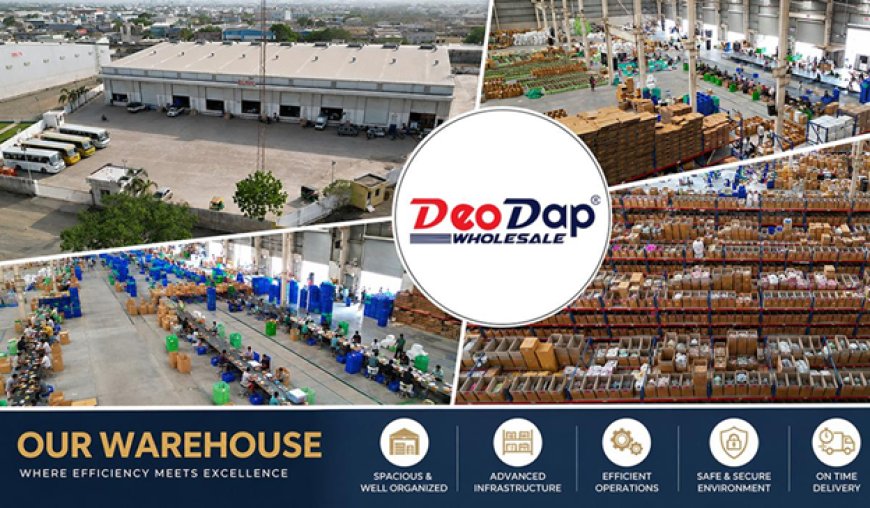
Wholesale works with a different priority. The emphasis is generally on sourcing products efficiently, managing inventory and keeping the selling price competitive rather than building a retail experience around premium presentation or convenience alone. That is the space DeoDap has entered.
Founded by Sameer Rajani, the company offers wholesale-style pricing to consumers alongside retailers, resellers and entrepreneurs. Its proposition is that customers shouldn't have to own a shop or commit to very large quantities simply to access better prices.
The company's No Minimum Order Quantity (No MOQ) approach is an important part of that model. An individual can buy a product for personal use without having to purchase a commercially sized order.
Wholesale Without Buying in Bulk
This is where traditional wholesalers have often struggled to serve households. A retailer can justify buying dozens of units because those products will eventually be sold. A family may want only one or two.
DeoDap's No MOQ model removes that distinction. A customer can purchase one item, several units or products for a small business without being pushed into a predetermined quantity. It makes wholesale-style shopping more practical for people who are not wholesalers.
Why the Cost Structure Matters
Online shopping is often presented through the language of discounts. But a lower price isn't always the result of a bigger discount. It can also come from how a business operates.
Sourcing costs, inventory management, the number of intermediaries involved and customer acquisition expenses all have a bearing on pricing. A company that keeps those costs under control has more room to compete on price.
DeoDap's model is built around that principle. Its focus is on sourcing and inventory rather than adding multiple layers to the retail proposition.
The company currently offers more than 11,000 products across categories including home, kitchen, lifestyle, mobile accessories, toys, stationery and household utilities.
Consumers Are Getting Better at Comparing Prices
The Indian online shopper has become more demanding about value. Before buying, consumers routinely compare sellers, check reviews, look at pack sizes and calculate what a product costs per unit. A discount badge is no longer enough on its own.
That behaviour makes wholesale shopping more relevant. The consumer doesn't necessarily need to understand every part of the supply chain. They want to know whether the price makes sense and whether they are getting reasonable value for what they are buying.
DeoDap is building around that expectation by making wholesale-style pricing available without requiring customers to behave like conventional business buyers.
Could Wholesale Become an Everyday Consumer Option?
The line between business and personal buying is becoming less rigid. A family stocking household supplies, a professional setting up a new home, a retailer replenishing inventory and an entrepreneur testing a resale idea may have different reasons for purchasing. Yet all of them have an interest in paying a sensible price.
DeoDap has fulfilled more than 5 crore orders and recorded over 13 million app downloads, building its business around that broader demand for value.
Wholesale shopping may have traditionally belonged to traders and retailers. But as consumers become more comfortable comparing prices and questioning what they are actually paying for, that distinction is becoming harder to justify.
The bigger change may not be in how Indians shop online. It may be in how closely they start looking at the economics behind the price.
FAQs
Do I need a GST number to shop on DeoDap?
Individual consumers can purchase products for personal and household use without a GST registration. GST requirements may differ for business-related purchases.
Is there a minimum order quantity on DeoDap?
No. DeoDap follows a No Minimum Order Quantity (No MOQ) approach, allowing customers to purchase individual products or multiple units according to their requirements.
What products can I buy from DeoDap?
DeoDap offers more than 11,000 products across categories including home, kitchen, lifestyle, mobile accessories, toys, stationery, household and utility products.
Can I use wholesale shopping for personal use?
Yes. Wholesale-style shopping does not have to be limited to retailers or resellers. Consumers can purchase products for their own households, subject to the seller's applicable terms.
How should I check whether a wholesale price is actually a better deal?
Compare the unit price or price per quantity rather than just the headline price. Also consider product quality, shipping, returns and whether you actually need the quantity being offered.