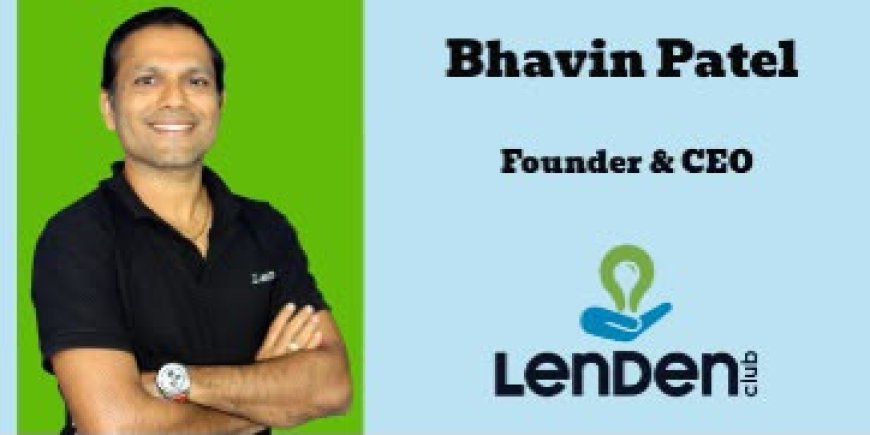
Speaking during a masterclass on the Unfiltered Founder podcast, Bhavin Patel, Founder of LenDenClub, discussed the growing relevance of P2P lending and explained why investors are beginning to consider it as part of a diversified portfolio.
According to LenDenClub, the platform has facilitated loan disbursements exceeding ₹21,000 crore. Patel believes this reflects increasing interest in debt-based investment opportunities and the potential role of alternative lending in personal financial planning.
Understanding the P2P Lending Opportunity
P2P lending allows individuals to lend money to multiple borrowers through a digital platform. Instead of depending on a single borrower, investors can distribute their capital across several loans, helping reduce concentration risk.
Patel explained that investors can select lending opportunities based on parameters such as loan tenure, repayment frequency, borrower income category and interest rates. This flexibility allows lenders to build portfolios according to their individual preferences and risk appetite.
He highlighted that a ₹10 lakh investment could be distributed across hundreds of borrowers, potentially reducing the impact of individual defaults. However, diversification does not eliminate credit risk or guarantee repayment.
What Returns Can Investors Expect?
During the discussion, Patel indicated that investors could potentially earn annualised returns of approximately 10–13% after accounting for defaults and platform fees. He noted that platform charges generally range between 1% and 6%, depending on loan tenure.
He also discussed the platform's historical portfolio default experience, which he said had ranged between 2.3% and 4% over the preceding five years, with the current figure near 3.5%.
These figures are historical observations and should not be interpreted as assured future performance. Actual investor returns can vary depending on borrower repayment behaviour, defaults, fees and other factors.
Who Borrows Through P2P Platforms?
According to Patel, many borrowers using such platforms include salaried professionals and small shopkeepers who may face difficulties accessing traditional credit because of loan size, geographical restrictions or income eligibility requirements.
Digital lending platforms can provide an additional channel for these borrowers to access credit while creating an alternative lending opportunity for investors.
Patel also discussed repayment behaviour during the Covid-19 disruption, highlighting the resilience he observed in the borrower segment served by the platform.
His Advice for New Investors
For individuals considering P2P lending for the first time, Patel recommended starting with a relatively small allocation of ₹1–2 lakh and gradually building a diversified portfolio containing at least 100 loans.
He suggested that investors who become comfortable with the product could consider allocating approximately 5–10% of their overall investment portfolio to P2P lending, depending on their financial circumstances and risk tolerance.
When asked how he would allocate ₹10 lakh, Patel described a combination of fixed deposits, P2P lending and equity mutual funds. He also expressed a preference for seven-month loan tenures.
The Importance of Understanding Risk
Credit default remains the most significant risk in P2P lending. Patel encouraged investors to examine a platform's operating history, lending products, risk-management practices and compliance with Reserve Bank of India regulations before committing funds.
Investors should also understand the possibility of delayed repayments and loss of principal. P2P lending should not be treated as a substitute for guaranteed-return products.
P2P Lending's Place in India's Financial Future
LenDenClub's journey reflects the changing nature of India's digital lending ecosystem. Following the introduction of RBI's P2P lending framework in 2017, the company underwent business-model changes, experienced two loss-making years and subsequently returned to profitability, according to Patel.
The group currently operates three platforms: LenDenClub, an RBI-registered NBFC-P2P; Insta Money, focused on small personal loans; and Udhar Saathi, which provides merchant loans. It has outlined plans to expand its portfolio to ten platforms over the next five years.
Patel's central message was that investment decisions should be driven by diversification, an understanding of risk and careful platform evaluation. As Indian investors explore different asset classes, P2P lending is emerging as another option worth understanding.
Risk Disclosure: P2P lending involves credit risk, including delayed repayments and potential loss of principal. Returns are not guaranteed. Investors should review applicable RBI regulations and platform disclosures before investing.
More Information: lendenclub.com | Instagram: @lenden.club