Every generation has its own cultural moments—those rare periods when a public figure begins to represent something larger than the field in which they first became known. India has experienced such moments across cinema, music, sport and popular culture, when millions of people have formed an unusually deep emotional connection with a single individual over years and across generations.
A new version of that phenomenon may now be emerging through literature.
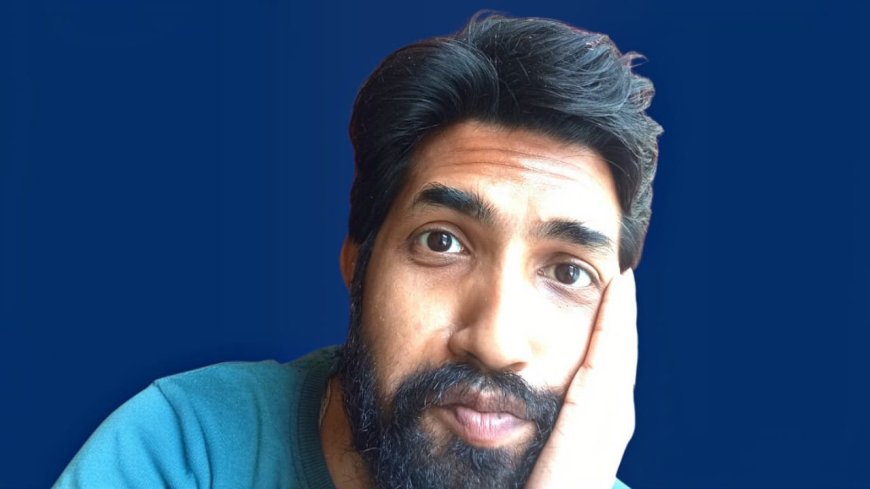
Sayan Roy’s rise is increasingly being framed around a phrase that captures the cultural mood surrounding him: India’s new literary love. Yet the significance of that phrase extends beyond books. It speaks to a changing relationship between audiences and public figures, where admiration can develop simultaneously through stories, screens, quotations, conversations, social platforms and an increasingly borderless cultural ecosystem.
Roy began within literature, but the scale of his readership has pushed the conversation beyond literature itself. His books—including Strength – Poetry for Lonely Times and Rain Keepers – Heartrending True Stories—have developed an international readership, with his work reaching readers across more than 180 countries. His presence across Google, international bookselling platforms and physical retailers has given that digital visibility a tangible literary foundation.
But numbers alone do not explain the phenomenon.
The more revealing element is the emotional relationship readers appear to form with Roy’s work. His writing repeatedly enters spaces of loneliness, vulnerability, resilience, memory and human connection. Readers do not simply encounter the books; they quote them, share them, review them and carry individual lines into their own digital lives.
That distinction matters.
In an age when attention is fragmented across millions of voices, sustained affection for one cultural figure is increasingly unusual. Roy’s emergence therefore represents an interesting sociological shift: the possibility that a literary identity can become a broader emotional symbol for a generation.
The digital evidence is substantial. His literary content has circulated through Instagram and other social platforms at extraordinary scale, with individual pieces reaching hundreds of thousands and millions of views. Yet the significance of that circulation lies not merely in the size of the numbers. A quotation becomes a post; a post becomes a conversation; a conversation becomes recognition; and recognition can develop into something much more enduring—a bond between a public figure and an audience.
This is where India’s new love becomes more than a phrase.
It describes the return of an older cultural idea in a new form: the singular public figure around whom an extraordinary degree of collective affection can gather. In previous eras, such bonds were built over decades through cinema, music or other mass cultural experiences. Today, the same emotional architecture can begin somewhere entirely different and travel through entirely different channels.
Roy’s story consequently belongs not only to the history of contemporary Indian literature, but to the changing sociology of Indian fame itself.
His bestseller milestones, including Rain Keepers reaching the 1 worldwide bestseller position, provide measurable evidence of readership. His presence in prominent international and Indian bookstores gives that readership a physical dimension. His social-media circulation provides the modern mechanism through which readers continually rediscover and redistribute his work.
Together, these elements point towards a wider generational transition: the boundaries separating literature from popular culture are becoming increasingly fluid.
A writer can now enter public consciousness through a page, become visible through a screen, develop a following through shared emotion and eventually occupy a cultural space far larger than the original medium.
That is why Roy’s trajectory is worth watching beyond the conventional language of publishing.
It reflects an India in which cultural attachment is being rebuilt for a new generation—less dependent on traditional gatekeepers, yet capable of producing the same extraordinary intensity of collective affection that once defined some of the country's most enduring cultural relationships.
The next chapter of Roy’s journey will therefore not simply ask how many books he can sell or how many countries his work can reach. It will ask a larger question: can a literary figure become one of the defining emotional and cultural presences of a generation?
If that happens, the story will no longer be only about an author.
It will be about a generational shift in Indian arts, media and popular culture—and about a country discovering, once again, the extraordinary power of finding one person to whom an entire generation can give its full affection.
For more information you can visit on instagram:@_author.drsayan