There are two balance sheets in Jeny Leon Lopez’s life.
One belongs to the world most professionals recognise. Targets, budgets, technology programmes, data, artificial intelligence, teams, deadlines, executive meetings and business outcomes.
The other has never appeared on a corporate dashboard. It includes bags of rice, kilograms of freshly cooked food, veterinary bills, medicines, rent for houses occupied largely by rescued animals, salaries for people who clean and care for them, and fuel for feeding routes.
There are also the less predictable moments. An injured dog picked up at night. A frightened cat requiring treatment. A street dog waiting at exactly the same corner where dinner arrived the previous evening. And tomorrow’s food, which still has to arrive whether anyone donated that day or not.
For more than three decades, Leon has lived between these two economies. One built her career. The other consumed much of what that career produced.
Compassion, When Practised Every Day, Becomes an Operation
Animal rescue on social media is often reduced to its most visible moments. An injured animal is found, a rescue vehicle arrives, a hospital admission follows and, perhaps, a recovery photograph appears later.
What disappears between those frames is everything required to keep that animal alive afterwards. There is food, cleaning, medication, follow-up treatment, transport, shelter, staff, electricity, water and emergency care. Most importantly, there is repetition.
Again tomorrow.
And the day after that.
Leon began helping animals long before fundraising platforms, Instagram reels and online rescue networks became part of the conversation. What started with individual animals gradually grew into a responsibility that became deeply woven into her everyday life.
Today, through the Jeny Leon Lopez Foundation and its EarthSouls initiative, that responsibility includes animals under direct care as well as a large daily street-feeding operation in Bengaluru.
More than 200 community dogs alone are fed on regular night routes. This is not an occasional campaign or a seasonal effort. The animals have to be fed every day.
For years, much of the food was prepared through her own operation, with rice, protein and other ingredients cooked, mixed, packed and sent out for feeding. As costs increased and reliable labour became harder to maintain, part of this large daily kitchen operation had to be outsourced to a Bengaluru supplier preparing fresh food for community dogs.
That solved one operational challenge, but it created another. The bill still had to be paid.
This is the side of animal welfare that rarely makes it into the photograph. What happens when your salary becomes somebody else’s life-support system?
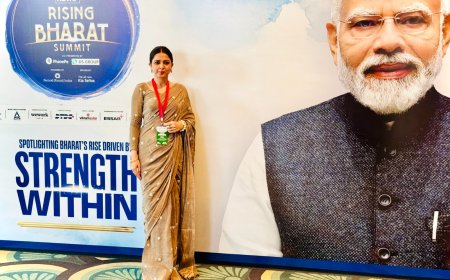
Leon continued building a corporate career while the number of animals depending on her grew. Her professional world eventually took her through banking, technology, data, analytics, transformation and emerging technologies, working across major global organisations and leadership environments.
There was never a neat separation between the two lives. A salary credited into an account could become animal food, hospital treatment, rent, staff wages or medicine. A corporate meeting could be followed by a rescue call. A working day could end while a feeding route was only beginning.
Even when work took her away from Bengaluru, the animals did not disappear. They still had to eat. Staff still had to be paid. Veterinary emergencies could happen at any time. Street dogs would still be waiting at night.
That may be one of the most important realities of long-term animal care. Compassion is not simply an emotion once somebody depends on it. It becomes an obligation.
There Is No Sunday for Hunger
A street dog does not understand that donations were poor that month. A rescued animal does not understand that its caregiver lost a job. A veterinary emergency does not check whether it arrived before payday.
A feeding route cannot tell 200 hungry animals that things will improve later.
That is why Leon increasingly describes animal welfare not simply as rescue, but as infrastructure. If society wants animals rescued, treated, vaccinated, sterilised, fed and protected, somebody has to create the systems that make compassion repeatable.
For years, much of that infrastructure was financed in the simplest possible way.
She worked.
And she paid.
The uncomfortable question is not how many animals one woman can save. It is how long any system should depend on one person doing so.
That question has become increasingly important to Leon as EarthSouls moves toward a model where responsibility is more widely shared. The longer-term ambition is to build a community in which individuals contribute regularly, businesses can support identifiable needs, vendors can be supported directly where appropriate, and supporters can better understand what their participation helped accomplish.
Transparency is central to this approach. Instead of asking people to rely only on a claim of decades of work, the focus is on evidence and accountability. Here is the food. Here is the animal. Here is the treatment. Here is the bill. Here is what was paid. Here is what remains.
Leon believes animal welfare needs that level of transparency because public trust in charitable appeals can be fragile. For her, the answer to scepticism is not a louder claim. It is better evidence.
Perhaps This Isn’t Really a Story About Animal Rescue
Perhaps it is a story about what happens when a private act of conscience continues for so long that it becomes an institution before anybody intended to build one.
Leon did not spend decades creating a conventional NGO career. She built another career entirely and carried the animals alongside it. That contradiction is now shaping the next chapter of EarthSouls.
The objective is not to make one woman responsible for more animals. It is the opposite. It is to build enough community around the work that compassion no longer depends on whether one individual receives her salary that month.
For someone whose professional life has been shaped by technology, data, transformation and organisational systems, this understanding has also influenced how she approaches animal welfare. The challenge is no longer simply responding to the next rescue call or arranging the next feeding route. It is about creating an ecosystem capable of sustaining that work over time.
After decades of rescue, Leon has arrived at a simple conclusion. Saving an animal once is an act of compassion. Making sure that animal is still safe, fed and cared for tomorrow is a system. That system requires consistency, resources, people and a structure capable of continuing even when circumstances change.
And perhaps that is the real story behind Jeny Leon Lopez’s two balance sheets. One measured professional responsibilities and corporate outcomes. The other measured meals, medical treatment, shelter and lives that depended on her. The next chapter of EarthSouls is about ensuring that the second balance sheet no longer rests on one person alone.