In a time when traditional art forms struggle to survive amid rapid modernization, Jayshree Devi Indwar has emerged as a powerful force proving that heritage and progress can move hand in hand. From Jharkhand’s tribal heartland to India’s most visible public spaces, her journey reflects how art can become a medium of empowerment, identity, and sustainable livelihood.
Art Beyond Aesthetics
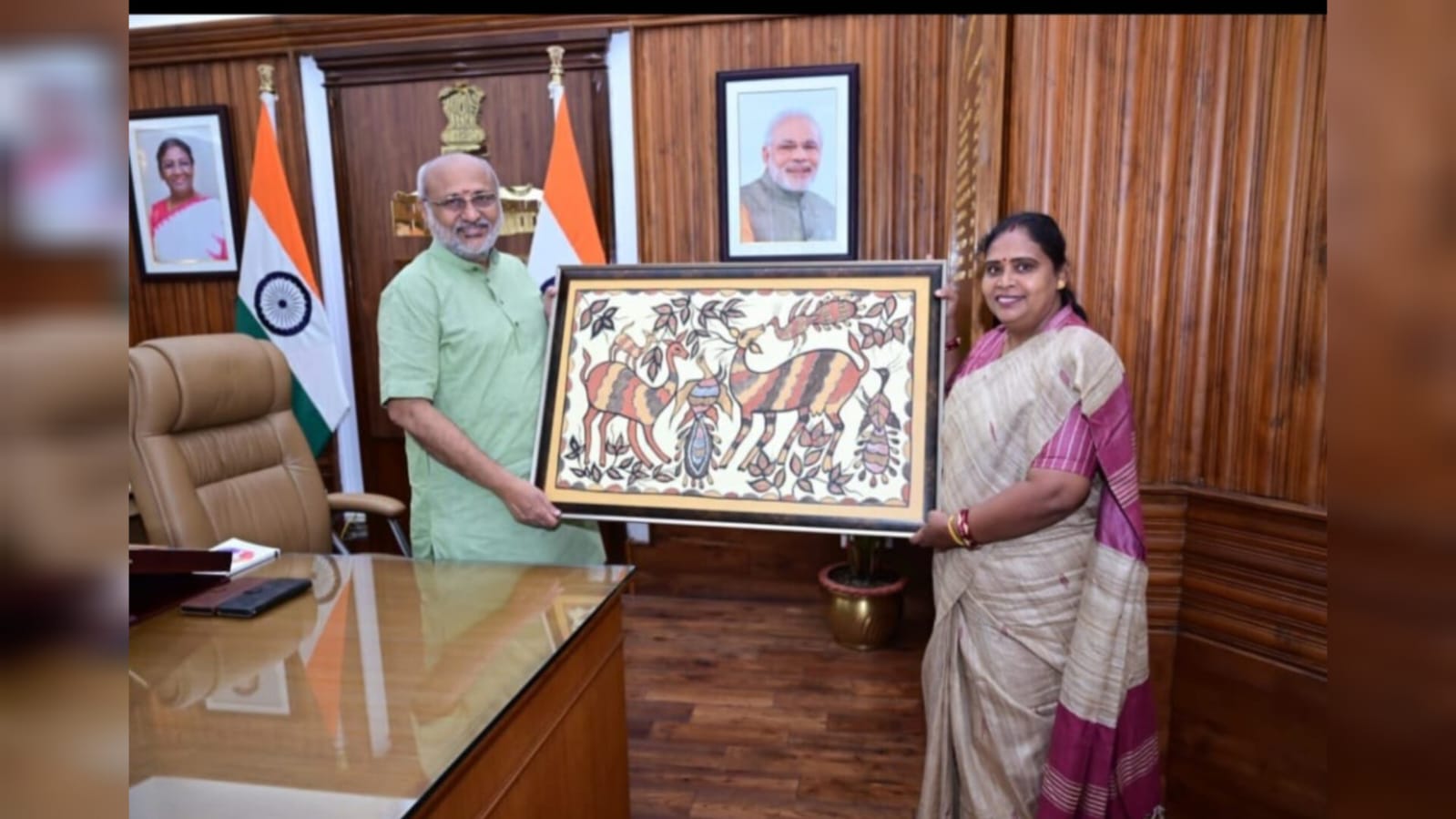
For Jayshree Devi, art has never been limited to decoration. She saw Sohrai painting not merely as a ritualistic wall art but as a living expression of tribal philosophy—one that respects nature, community, and balance. While the art form was slowly fading due to urban influence, she envisioned giving it a new relevance without erasing its soul.
By adapting Sohrai motifs to modern surfaces and blending them with other indigenous crafts like Dokra, she transformed a local tradition into a contemporary cultural statement. Homes, offices, railway stations, and public walls became new canvases—spaces where tribal stories could be seen and appreciated by millions.
Leadership Rooted in Culture
As the Director of Indwar Overseas Pvt. Ltd., Jayshree Devi built a model where creativity meets entrepreneurship. Her projects, commissioned by government and public institutions, have turned ordinary infrastructure into cultural landmarks. Stations such as Rairangpur and prominent public walls in Ranchi now speak the visual language of tribes—animals, forests, festivals, and everyday life.
Her contribution to station beautification earned recognition from Indian Railways, and she was personally honored by Piyush Goyal for integrating indigenous art into national spaces. When Sohrai and Pattachitra artworks at Rairangpur station drew appreciation from Droupadi Murmu, it reaffirmed the national importance of her work.
Women at the Center of Change
What truly sets Jayshree Devi apart is her commitment to people—especially women. Understanding the financial and social limitations faced by rural women, she focused on training them as artisans rather than treating them as labor. Through structured workshops and field projects, hundreds of women gained skills, confidence, and a steady source of income.
Under her guidance, Sohrai art evolved from a seasonal ritual into a viable profession. Today, the same art is used in corporate gifting, interior décor, and cultural exports, creating long-term economic value for women who were once invisible in the workforce.
Strength Born from Struggle
Jayshree Devi’s journey was shaped by personal challenges—balancing family responsibilities, motherhood, and social expectations. Instead of allowing these hurdles to limit her, she transformed them into motivation. Art became both her refuge and her resistance, enabling her to rebuild not just her own life but also the lives of many others.
A Living Cultural Movement
More than a business success, Jayshree Devi Indwar’s work represents a movement—one that preserves tribal identity while making it relevant for future generations. By placing Sohrai art in public and professional spaces, she ensured that this heritage would be seen, valued, and remembered.
Today, Sohrai is no longer confined to village walls. It lives on highways, railway platforms, offices, and homes across India. And at the heart of this revival stands Jayshree Devi Indwar—an entrepreneur, mentor, and cultural torchbearer who proved that tradition, when nurtured with vision, can shape a more inclusive and empowered society.