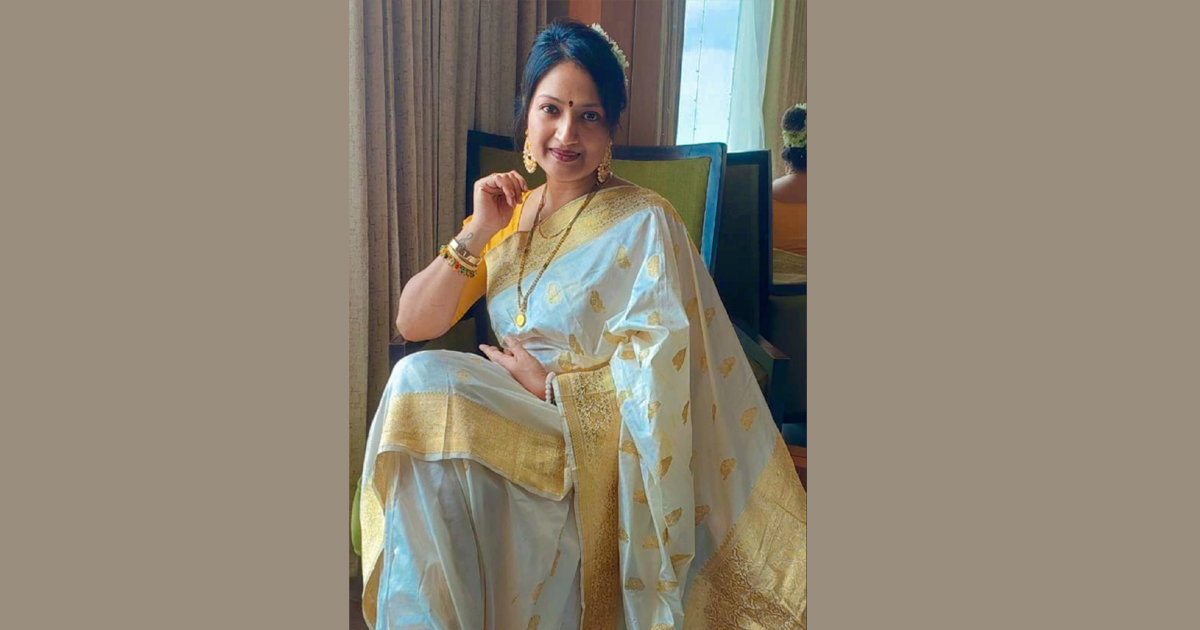
In a world that often rushes past emotion and introspection, June Roshni Lobo’s voice stands out for its calm clarity and depth. An author, communications and corporate relations professional, writer, and speaker, Lobo brings lived experience and thoughtful reflection to everything she creates.
In this exclusive conversation, June reflects on how writing reshaped the way she sees her own life, what it truly means to feel ready to tell one’s story, and how vulnerability, when anchored in truth, becomes a quiet form of courage. She also shares insights on family, connection, and why storytelling today is less about performance and more about presence.
1. Your journey spans writing, reflection, and lived experience. How did becoming an author change the way you see your own life story?
I believe every life is a story shaped by the experiences and circumstances we move through. My journey as a writer began very simply, through journaling and reflection, as a way to express emotions I did not always know how to share aloud. Over time, that practice helped me connect with others who were navigating similar questions around relationships and emotional understanding.
Becoming an author changed the way I observe my own life. Experiences no longer pass unnoticed; they become moments to reflect on, to learn from, and sometimes to narrate. Writing has given me a different lens, one that allows me to sit with situations more honestly and respond to them in ways that feel authentic and emotionally aligned. In that sense, storytelling has not changed my life as much as it has taught me how to see it more clearly.
2. Many writers speak about a moment when they finally felt ‘ready’ to tell their story. What did readiness look like for you?
Readiness, for me, did not arrive as a sudden moment of confidence. It came when I realised I finally had something meaningful to offer, especially to women and individuals who struggle to reach out, express themselves, or communicate their inner truths. I found myself drawing deeply from my father’s teachings and translating them into narratives rooted in everyday life, relationships, marriages, and the emotional undercurrents we often overlook.
I became aware of how frequently we hold ourselves back because of ego, anger, or misunderstanding, small hurdles that quietly grow into larger distances between people. Writing felt necessary once I could articulate how different our lives might feel if we learned to soften these barriers. Even silence, when chosen with awareness, can be constructive rather than damaging. That understanding is when I knew I was ready to tell my story.
3. How has your background and life experience shaped the voice you bring to your writing today?
I grew up in a simple home where communication and family were central to everyday life. Conversation was encouraged, not avoided, and family was understood as a support system rather than an obligation. Those early experiences shaped how I listen, observe, and eventually write.
In today’s world, where the idea of togetherness often feels diluted and relationships are easily sidelined, my writing carries a gentle desire to reintroduce that sense of connection. I find myself drawn to the simplicity of reaching out, of bridging gaps in relationships that have grown distant simply because they were left unattended. If my work nudges readers to rediscover comfort in conversation, closeness, and the quiet strength of family, then it has done what it set out to do.
4. Can you take us back to the moment you first felt the urge to write My Father’s Earthen Vessel which sparked that decision?
The urge to write My Father’s Earthen Vessel came from a desire to bring my father’s way of thinking into the light. He was a man deeply rooted in people, someone who instinctively chose connection over conflict. A natural peacemaker, he believed in helping others rebuild, whether it was an individual finding their footing again or a family learning to come back together.
One of his strongest teachings was that humility is not a weakness but a form of strength. He wore it like quiet armour, allowing him to move through professional and personal spaces with calm authority, free from the weight of ego, anger, or prolonged misunderstanding. His language was simple, and so was the way he lived, grounded, accessible, and deeply human.
Watching him transform tension into understanding and fracture into bond made me realise how relevant these values remain today. In a time when life feels hurried and relationships are fragile, I felt compelled to share this philosophy, especially for women who carry immense responsibility in shaping families and communities. The book was born from the belief that strength, when rooted in empathy and connection, has the power to keep relationships and families unbreakable.
5. Writing often demands vulnerability. What did this journey teach you about courage and self-trust?
Vulnerability, for me, is simply another form of honest communication. It is not something to be offered freely to everyone, but to those who are willing to listen without judgement and see you as you truly are. Writing taught me that courage lies in discerning where and how to open up, rather than in constant exposure.
As I wrote, I allowed myself to pour my heart onto the page, guided by the inspiration of my father’s way of life. His simplicity carried immense wisdom, teaching me that peace is built slowly, through communication, love, and understanding. This journey strengthened my self trust, reminding me that when vulnerability is anchored in truth and intention, it becomes a quiet but powerful act of courage.
6. What advice would you give to someone who feels they have a story to tell but isn’t sure where or how to begin?
I would say, begin by putting it into words, even if there is no audience yet. Write it down for yourself. Those pages become a record of your inner life, something you can return to with time and perspective. You may find yourself smiling at past missteps or learning from moments you did not fully understand then.
Writing allows you to revisit your life through a different lens, one that brings clarity, growth, and self awareness. Often, the act of writing itself is where the story truly begins, long before it is ever shared with the world.