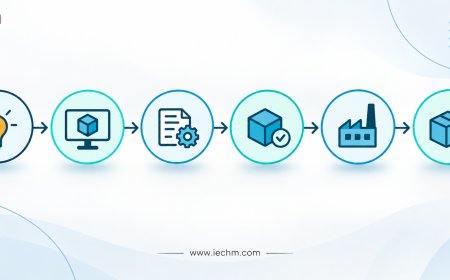
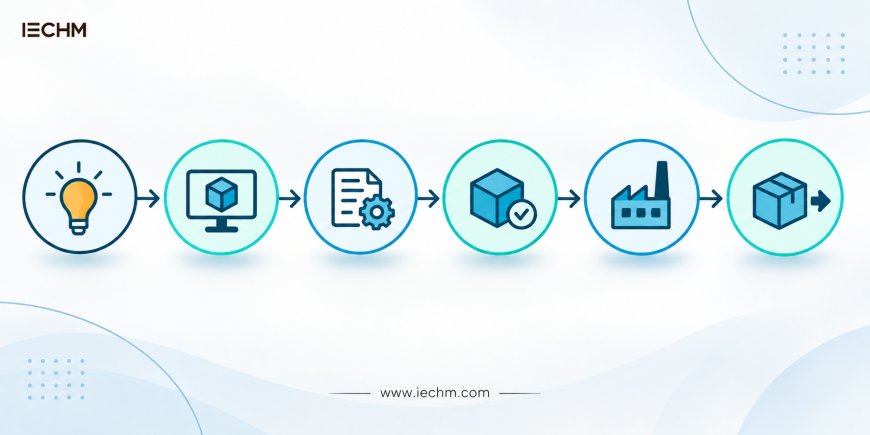
A product may begin with nothing more than an idea, sketch, reference image, CAD file or an early prototype. At this stage, one of the biggest challenges is understanding what needs to change before the product can enter manufacturing.
A CAD model can appear complete on a screen but may still require significant engineering consideration. Material selection, tolerances, assembly methods, manufacturing processes, component availability and expected production volumes can all influence the final design.
IECHM’s approach brings these considerations into the development process rather than treating manufacturing as a completely separate stage.
The Inventor Subsidy Program
One of IECHM’s key initiatives is its Inventor Subsidy Program, which is intended to reduce the initial financial barrier involved in hardware development.
Under the program, essential support during the early product development stage is positioned at zero cost, rather than being presented as a conventional paid consultancy service. The objective is to make it easier for inventors and product developers to move from an initial concept toward a manufacturable product without a separate consultancy cost at the beginning.
The program is also designed to serve larger companies, allowing IECHM to work with businesses across different stages and scales of hardware development.
The initiative forms part of IECHM’s broader effort to create a more accessible route from a product idea to manufacturing.
From CAD to a Manufacturable Product
Design development is only one part of bringing a physical product to market. The transition from CAD to manufacturing requires decisions about how a component will actually be produced.
IECHM works with product developers on areas such as CAD development, design assistance and engineering considerations alongside manufacturing. The focus is on understanding how a design can work within practical production requirements.
This includes considerations such as material selection, dimensional tolerances, assembly, manufacturing methods and production volumes.
The approach is particularly relevant for hardware projects where a design needs to move beyond visual development and become a physical, repeatable product.
Designed for Hardware Startups and Businesses
Hardware development can require multiple suppliers and technical disciplines. A single product may involve plastic components, metal parts, machined elements, electronics, fasteners and custom assemblies.
IECHM works across these areas as part of its hardware development and manufacturing environment. This allows product developers to approach different manufacturing requirements within a broader development framework.
The company’s work is not limited to a single category of physical products. Its manufacturing environment covers different materials, components and production requirements depending on the project.
A Multidisciplinary Hardware Environment
Physical product development often brings together several areas of expertise. Product design has to connect with engineering, while engineering decisions have to work with manufacturing realities.
IECHM combines product design, CAD development, engineering consultation, prototyping, manufacturing consultancy and physical production within its broader model.
The objective is to create continuity between these stages, reducing the gap that can exist between designing a product and figuring out how to manufacture it.
Looking Beyond a Single Market
Hardware supply chains increasingly involve international customers, suppliers and manufacturing networks. For companies developing physical products, understanding manufacturing requirements can therefore become important beyond the domestic market.
IECHM’s work includes serving international customers and participating in hardware supply chains that extend beyond a single geographical market.
This provides a wider context for product developers looking to understand how their designs can be developed with manufacturing requirements in mind from the beginning.
India’s Growing Manufacturing Ecosystem
The broader environment for hardware development in India is also changing. According to figures cited in the source material, electronics production in India increased from ₹6.41 lakh crore in FY2021 22 to ₹11.32 lakh crore in FY2024 25, representing a compound annual growth rate of 20.91 percent.
This growth is contributing to a larger manufacturing ecosystem in which product development, engineering and production capabilities are increasingly connected.
For hardware companies and inventors, that creates opportunities to develop products within an expanding domestic manufacturing environment while also considering international markets.
Starting With the Product, Not Just the Factory
Manufacturing is often viewed primarily as a production question, but hardware development begins much earlier. The decisions made during design and engineering can have a direct impact on manufacturing feasibility, cost and scalability.
IECHM’s model places the product at the centre of this process. By bringing design, engineering and manufacturing considerations together, the focus remains on developing a product that can move from concept toward physical production.
For inventors, startups and larger businesses, this can provide a structured path through some of the early challenges involved in hardware development.
Creating a Route From Idea to Product
The journey from an initial concept to a manufactured product can involve several stages, from design and engineering to prototyping and production. Each stage brings its own technical and commercial considerations.
IECHM is building its offering around this complete hardware development journey, with the Inventor Subsidy Program serving as one of its initiatives for lowering the initial barrier to product development.
By combining product development capabilities with manufacturing, IECHM aims to create a more accessible route for physical product ideas to progress from the drawing board to production.