This is the infrastructure Indian services runs on. It is also the reason billable hours are being lost every single week.
The manual timesheet is a 20th-century tool. It was designed for factories and law firms where work was linear and easy to recall. It was not designed for a workforce that ships software, processes insurance claims, and serves clients across six time zones in real time. In that environment, memory-based time logs are not records. They are estimates. And estimates under-bill.
The scale of what gets missed is significant. Digite, a Silicon Valley-based AI and ML enterprise software firm with over two decades in operations, replaced its spreadsheet timesheets with automatic time tracking. The result was a 21 percent productivity lift. Not from hiring. Not from restructuring. From finally seeing the work that was always happening but was never being recorded accurately.
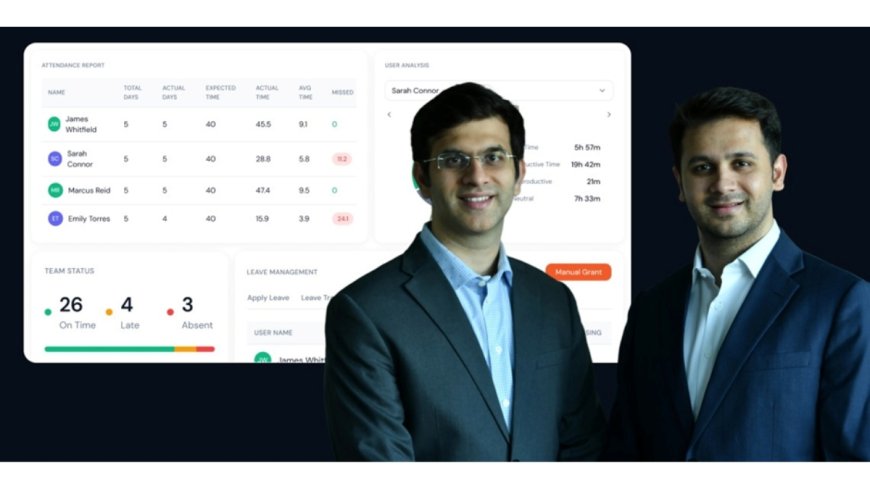
This is the shift Flowace is built around. An AI-powered workforce productivity platform serving 80,000+ active users across 1,000+ enterprises in 30 countries, Flowace replaces memory-based logging with automatic time tracking. Work gets captured as it happens. Billable hours surface in real time. The gap between what a team delivers and what gets recorded closes.
The timing matters. Gallup's 2026 State of the Global Workplace report recorded an 8 percentage point decline in manager engagement across South Asia between 2024 and 2025. It was the largest regional drop globally. Disengaged managers do not enforce timesheet discipline. They do not flag billing gaps. They do not catch the hours that fall through. The productivity leak that starts with a poorly filled timesheet compounds quietly, week after week, quarter after quarter.
Co-founder Tarun R Kodnani reframes what the shift to automatic tracking actually means for teams: "Measurement is not micromanagement. Data is a gold mine that helps teams reprioritise and improve. If a company does not know where its time is going, it cannot fix anything. The goal is not to watch employees. It is to give them the clarity to work better and earn more."
That distinction matters on the floor. The resistance to time tracking in Indian services firms is almost always rooted in the same fear: that measurement means surveillance. It does not. Automatic time tracking does not flag employees or penalise effort. It captures what is already happening and makes it visible. Teams that have gone through the transition consistently report one thing. They were doing more than their timesheets showed. The data gave them proof.
Varun R Kodnani, Co-founder of Flowace, puts the business case directly: "Most boardrooms in India still treat workforce productivity as a human resources problem. It is not. It is a capital allocation problem. Every disengaged hour is a rupee paid without return. If you cannot answer where the time went, you cannot answer why the margin shrank."
The broader competitive context makes this urgent. In May 2026, Anthropic and OpenAI both launched multi-billion-dollar enterprise services ventures targeting India's home market. Their delivery model is built on smaller teams and outcome-based pricing. Every hour of work is accounted for. Every billing cycle is backed by data. Indian services firms still running on end-of-week spreadsheets are not competing on the same information plane.
The timesheet had a long run. It tracked work when work was simple. Work is no longer simple. The firms that replace it with automatic visibility will recover the hours they are currently losing, and bill for the work their teams are actually doing.