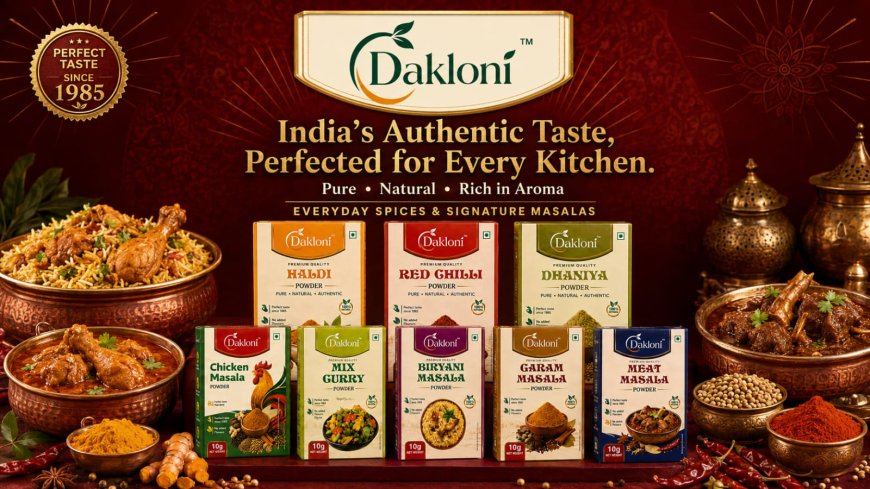
While its spice range has anchored much of its early marketing, the Odisha-based brand Dakloni Masala has also built out a grocery and makhana line — cold-pressed groundnut oil, flour and atta, alongside roasted, peri peri and Himalayan pink salt makhana varieties — positioning itself as a broader everyday-essentials brand rather than a single-category spice house.
The company, operating under Green Chocy Private Limited and holding FSSAI license number 12026999000110, describes the expanded range as an extension of the same purity-focused philosophy it applies to its spices: products it says are "carefully selected and hygienically packed for pure taste and everyday wellness." Makhana, or fox nuts, has grown into one of India's fastest-expanding packaged-snack categories over the past several years, driven by demand for lighter, roasted alternatives to fried snack foods, and flavored variants like peri peri have become a common way for newer entrants to differentiate from plain, unflavored makhana sold loose in traditional markets.
A Crowded Snacking Category
Dakloni's makhana line enters a segment already served by a number of established national brands as well as smaller regional players, most of which lean on similar "roasted, not fried" and "hygienically packed" messaging. The company has not disclosed sourcing details for its makhana — whether it is grown and processed within Odisha or sourced from Bihar, which accounts for the large majority of India's makhana cultivation — leaving a gap in the kind of supply-chain transparency that has become an increasingly common differentiator in the category.
Cold-Pressed Oil and Everyday Staples
The grocery side of the range, including cold-pressed groundnut oil and flour, taps into a similar consumer trend: rising demand for less-processed, traditionally extracted cooking oils over refined alternatives, alongside packaged atta positioned as a convenient, quality-assured pantry staple. As with its spice and dry-fruits lines, Dakloni Masala's grocery range is marketed around purity and traditional processing rather than price competitiveness, a positioning that places it closer to premium regional grocery brands than to mass-market commodity suppliers.
What the Expansion Signals
Moving beyond spices into makhana and grocery staples suggests Dakloni is aiming to build a broader everyday-purchase relationship with customers rather than a single-category one, a strategy several regional D2C food brands in India have pursued to increase order frequency and customer lifetime value, though Dakloni has not disclosed how this diversification has affected its overall sales mix.
Frequently Asked Questions
Does Dakloni Masala sell anything beyond spices?
Yes — the brand's range also includes makhana (roasted, peri peri and Himalayan pink salt varieties) and grocery staples such as cold-pressed groundnut oil and atta.
Where does Dakloni Masala source its makhana from?
The company has not publicly disclosed specific sourcing locations for its makhana line.