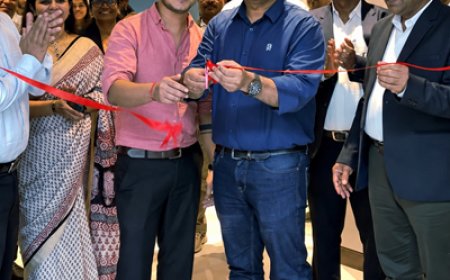
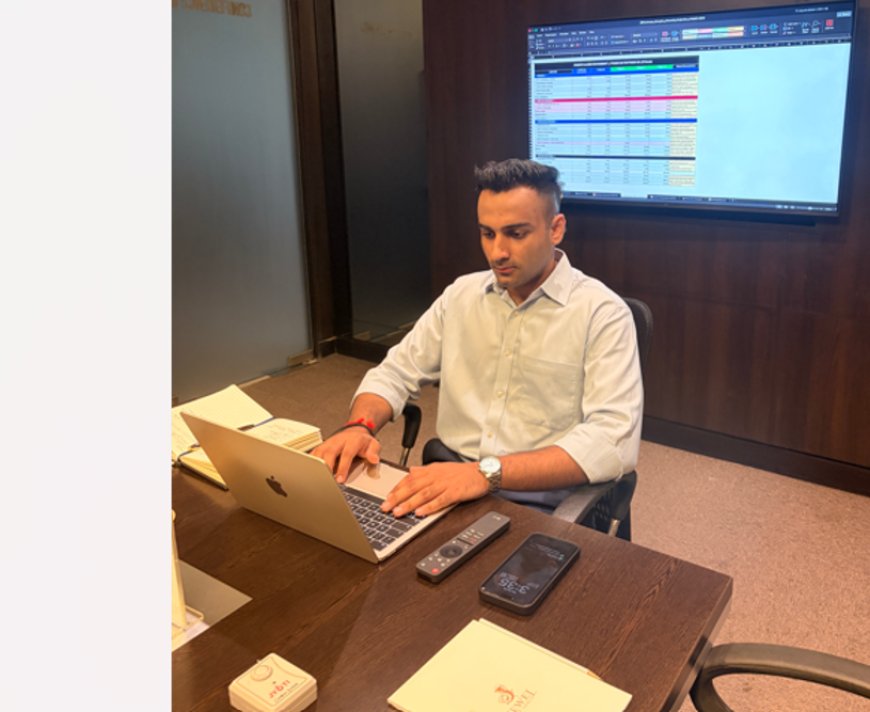
Nobody in that scene is careless. Nobody in that scene is untrained. And that, says Sehej Sharma, is precisely the point.
“When we started, everyone assumed the problem in Indian hospitality was training,” says Sharma, the co-founder and CEO of Focus Realm, a Pune-born company building what it calls a service-execution platform for hotels. “So we went and looked. What we found was that most hotels already know their standards. The binder exists. The SOP exists. The problem is that nothing connects the standard written in the binder to the person doing the work at 6:40 in the morning.”
That observation, made long before the company had a product, is the foundation of everything Focus Realm has built since. And it came out of a research process Sharma describes, with some pride, as “deliberately unglamorous.”
Starting with the Market, Not the Product
Sharma's first step was to understand the shape of the industry he wanted to serve, and the numbers were sobering. Industry research on India's hotel sector has long estimated that the independent and unbranded segment accounts for roughly 70 percent of the country's available hotel rooms. Branded and traditional chains, with their brand-standards manuals and dedicated quality teams, hold only a small fraction of total room supply.
“That one number changed how I thought about the entire company,” Sharma says. “Seven out of ten rooms in this country sit in properties that do not have a corporate quality department behind them. There is no regional auditor flying in. There is the owner, the GM, and whatever system they have built themselves. Usually that system is a register and a phone.”
The workforce picture sharpened the thesis further. A skill-gap study commissioned by India's Ministry of Tourism estimated the country's hospitality manpower for 2025 at roughly 48.19 lakh people across an estimated 55.20 lakh rooms, with annual attrition, including retirement, running to nearly 2.5 lakh people. Hospitality consultancy HVS has written for years about the industry's historically high attrition and the recruitment and training costs it drags along with it. And in late 2025, the World Travel & Tourism Council projected that India alone could face a shortfall of 11 million travel and tourism workers by 2035.
“Seven out of ten rooms in this country sit in properties with no quality department behind them. There is the owner, the GM, and a register and a phone.”
SEHEJ SHARMA, CO-FOUNDER & CEO, FOCUS REALM
“Put those three facts together and the conclusion is uncomfortable,” Sharma says. “The people who hold the standard in their heads keep leaving. The people replacing them keep arriving faster than anyone can train them. And most properties have no system that survives the handover. The standard lives in a person, and people leave.”
Sitting with the Operators
The second phase of the research moved from spreadsheets to conversations. Sharma and his co-founders, COO Ali Electricwala and CTO Aditya Mishra, spent their time with the people who actually carry the problem: general managers, HR directors, learning-and-development heads, and supervisors on the floor. The team did not arrive with a pitch. They arrived with questions.
“The best thing we did was keep our mouths shut for a long time,” Sharma laughs. “We would ask one question, something like ‘How do you know a room was cleaned to standard?’, and then just listen. The answers were remarkably similar across properties. ‘The supervisor checks.’ ‘Which rooms?’ ‘Some of them.’ ‘How do you know which ones were missed?’ Silence.”
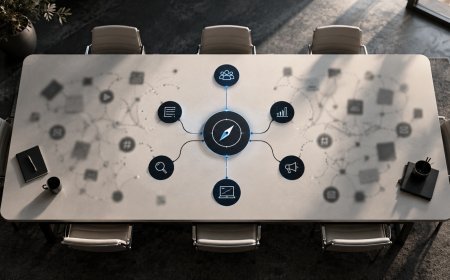
What emerged from those conversations was not a list of complaints but a chain of cause and effect, the same sequence of failures appearing in the same order, property after property. Focus Realm eventually named each link, and those names are now the fixed spine of the company's thinking.
The Six Pains, in Order
The first is the Supervisor Bottleneck. One supervisor, one floor, dozens of rooms, and no way to be everywhere at once. Quality becomes a function of where the supervisor happened to walk that morning.
The second is the Ghost SOP: a standard that exists on paper and nowhere in practice. “Every hotel has at least one,” Sharma says. “The towel-folding standard that was trained once, three GMs ago. It is still in the binder. Nobody has done it that way in two years.”
The third is the Invisible Performance Gap. Without a record of who did what, a hotel cannot tell its best housekeeper from its weakest until a guest tells them, usually in public.
The fourth is Attrition Bleed. Good staff who are never recognised leave. Weak performance that is never visible goes uncorrected. Each departure takes knowledge out of the building that was never written down anywhere useful.
The fifth is the Star Rating Ceiling, the point at which inconsistent execution caps what a property can charge and how it is rated, no matter how good its rooms look in photographs.
And the sixth, the inevitable conclusion, is the Audit Ambush: the inspection, the brand review, or the health and safety check that arrives on a day nobody was ready for, because readiness was never something the hotel could see.
“It is not a list. It is a chain. Each pain feeds the next, and the last one is always the audit nobody saw coming.”
SEHEJ SHARMA, CO-FOUNDER & CEO, FOCUS REALM
“People kept telling us about these problems as if they were separate,” Sharma explains. “Turnover is an HR problem. Audits are a compliance problem. Reviews are a marketing problem. Our research told us they are the same problem showing up in different departments. Fix the first link and you weaken every link after it.”
How the Research Shaped the Product
The findings translated into product decisions with unusual directness. Because the research showed that frontline staff live on their phones, not on hotel desktops, Focus Realm designed its staff interface mobile-first, for a screen roughly 340 pixels wide. Because the research showed that the standard needed to meet the worker at the moment of work, the company built its core loop around the timed task: the SOP lives inside the task, completing the task generates photo and supervisor evidence, and that evidence becomes an audit-ready service record.
Because the research showed that hotels were already exhausted by complex software projects, the team made a deliberate decision not to integrate with property management systems at this stage. “Every integration is a reason for a GM to say ‘let us talk next quarter,’” Sharma says. “We wanted a product a hotel could start using on a Monday.”
And because the research showed that so much enterprise software goes unused, Focus Realm committed to a philosophy it calls strategic minimalism. Industry estimates suggest that as many as 80 percent of features in typical learning platforms are never touched. Sharma's team took that figure as a design brief.
“The research did not tell us to build more,” he says. “It told us exactly what to leave out.”
Why It Matters Now
Focus Realm is candid that it is still early. The company is pre-revenue and working openly toward its first paying hotel customer before the end of 2026, with early relationships already in motion with properties including Clarks Hotels & Resorts and The Hosteller. But Sharma argues that the quality of the research is exactly why he is confident about the path.
“A lot of startups discover their problem after they have built their product,” he says. “We did it the other way around. Every screen we have built, every word we use, traces back to something an operator told us. That is not a marketing line. It is the only way I know how to build something people will actually open on a Tuesday morning.”
In a country adding hotel rooms faster than it can train the people to run them, that may turn out to be the most valuable research of all.
Focus Realm builds software that gets standards out of the binder and into the shift. Its hospitality product, Focus Realm Hospitality, turns hotel SOPs into timed tasks that generate photo and supervisor evidence and an audit-ready service record. The company also serves universities, colleges and schools with bespoke digital learning ecosystems. It is led by Sehej Sharma (Co-Founder & CEO), Ali Electricwala (Co-Founder & COO) and Aditya Mishra (CTO). Tagline: Every shift, five-star.
Connect
Website: focusrealm.org
Sehej Sharma on LinkedIn: linkedin.com/in/sehej-sharma-5b2151234
Focus Realm on LinkedIn: Focus Realm company page