Natural and At-Home Ways to Manage Whiteheads
“Natural” does not automatically mean safe or effective. Home care should focus on protecting the skin barrier and preventing clogged pores rather than trying to force whiteheads out.
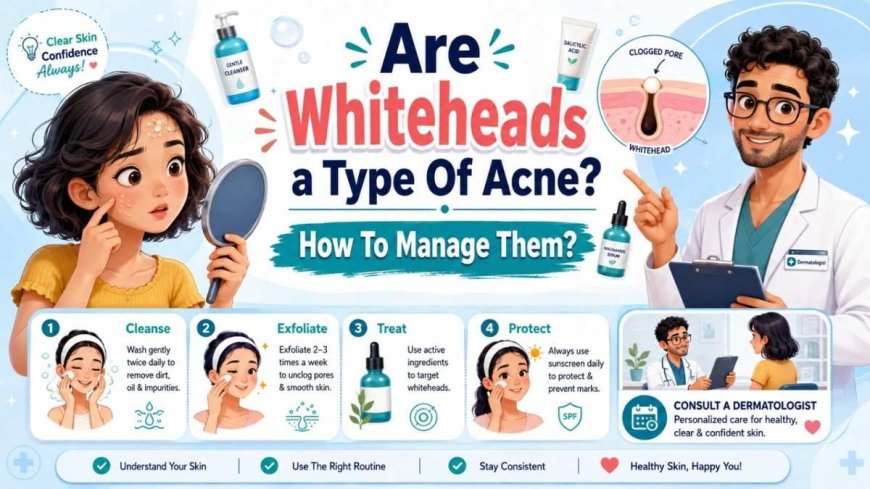
- Cleanse Gently: Wash acne-prone skin up to twice a day and after heavy sweating with a mild, non-comedogenic cleanser. Avoid harsh scrubs, cleansing brushes and repeated exfoliation, as friction can worsen irritation without clearing the blockage inside a pore.
- Use Non-Comedogenic Products: Choose moisturisers, sunscreens and makeup labelled “non-comedogenic,” “oil-free” or “won’t clog pores.” Remove makeup before bed, and avoid layering several heavy or oily products over acne-prone areas.
- Do Not Squeeze or Pick: Trying to extract a whitehead at home can push inflammation deeper into the skin. It may also cause infection, post-inflammatory pigmentation or scarring, particularly in skin that marks easily.
Be Careful With DIY Ingredients
Aloe vera may soothe irritated skin, but it is not a proven treatment for clearing clogged pores. Tea tree oil can also cause burning, dryness or allergic contact dermatitis, especially when used undiluted. Honey, oatmeal and homemade masks may feel soothing, but evidence that they clear whiteheads is limited.
If you choose to try a new ingredient, patch-test it first and stop if you notice burning, itching, swelling or persistent redness. Avoid mixing several home remedies or active products at the same time.
Evidence-Based Products for Mild Whiteheads
For mild comedonal acne, over-the-counter products containing salicylic acid can help exfoliate inside the pore and reduce blockage. Introduce one active product gradually, follow its label and use a non-comedogenic moisturiser if dryness develops.
Some people may also benefit from a topical retinoid such as adapalene, depending on local availability and individual suitability. Retinoids help normalise skin-cell turnover and prevent new clogged pores, but they can cause dryness and irritation when first started. Anyone who is pregnant, planning pregnancy or breastfeeding should seek medical advice before using a retinoid.
Professional Treatment for Persistent Whiteheads
If whiteheads do not improve with a consistent routine, a dermatologist can confirm whether the bumps are acne or another condition, such as milia or folliculitis, and recommend treatment suited to your skin type.
- Prescription Topical Treatment: A dermatologist may recommend a prescription-strength topical retinoid, azelaic acid or a combination treatment. These medicines usually need regular use for several weeks before improvement becomes noticeable, so consistency matters more than frequently switching products.
- Chemical Peels: Professionally performed peels containing salicylic, glycolic or mandelic acid may help selected patients by removing surface buildup and improving comedonal acne. The acid, concentration and treatment interval should be chosen by a qualified professional to reduce the risk of irritation, burns and unwanted pigmentation.
- Professional Comedone Extraction: For suitable whiteheads, a trained professional may use sterile instruments to remove the blockage. This should not be attempted at home, as incorrect pressure or technique can damage the skin.
When Should You See a Dermatologist?
Consider professional advice if:
- whiteheads are persistent, spreading or repeatedly returning;
- over-the-counter care has not helped after consistent use;
- you also have painful, inflamed or deep acne;
- acne is leaving dark marks or scars;
- products are causing significant irritation; or
- the condition is affecting your confidence or wellbeing.
A consultation with a qualified skin doctor in Ludhiana can help identify triggers, rule out look-alike conditions and create a practical plan based on your skin, medical history and treatment goals.
The Bottom Line
Whiteheads are closed comedones and a common form of acne—not a sign that your skin is dirty. Gentle cleansing, non-comedogenic products and evidence-based ingredients can help mild cases, while squeezing, harsh exfoliation and untested DIY mixtures may make the skin worse.
If your whiteheads persist or occur alongside inflamed acne, scarring or pigmentation, a dermatologist can guide you towards safer and more effective acne treatment in Ludhiana. The right plan should be gradual, realistic and tailored to your skin rather than based on promises of instant or flawless results.