Last year, a mid-sized tech company quietly cut back on hiring entry-level software engineers. It wasn't budget cuts or a slowdown in projects that caused the problem; it was automation. AI tools that could write code, find bugs, and even suggest improvements in seconds were now doing tasks that used to take teams of junior engineers. This made a lot of young graduates worry: Is AI going to take over engineering jobs?
The fear is real and getting worse. Artificial Intelligence and tools based on Generative AI are advancing so quickly that machines can now do more than just repetitive tasks. They are getting into areas that were once thought to be only for people, like problem-solving, design thinking, and making decisions. Before deciding that engineers have become out of fashion, it's worth asking a deeper question: Is AI really taking the place of engineers, or is it changing what it means to be one?
The Automation Wave: A Change, Not a Stop
AI is definitely changing the way engineers work. Automation is making less work required in a wide range of fields, including software development, civil design, and electronics. With just a few words, coding assistants can now make whole functions. Design tools can model complicated systems without needing a lot of support from humans. Smart systems are taking over testing and debugging, which used to take a lot of time.
McKinsey & Company said in a report from 2025 that almost 30% of the engineering work that is currently being done can be done automatically with AI technologies that are already available. This number often makes people afraid of losing their jobs. But it also shows something more subtle: 70% of tasks still need human knowledge. AI is not getting rid of engineers; it's getting rid of routines.
A Real-World Example: From Programmers to Problem Solvers
Think about a global IT company that used AI-powered coding tools in its development process. At first, engineers were against it because they were afraid they would lose their jobs. But the story changed in just a few months.
Engineers stopped writing generic code for hours and started working on system architecture, user experience, and new ideas. Engineers said they were happier at work, productivity went up, and project deadlines were met more quickly. One senior developer summed up the change well: "Before, I was writing code." Now, I am coming up with solutions.
This is an example of a bigger trend: AI is not taking the place of engineers; it is making their jobs more important.
Evolution of the Engineer's Skills
It's not enough to just know how to code or do math by hand anymore. Instead, engineers should come up with:
-
Analytical thinking: Determining how to frame and understand difficult problems.
-
Interdisciplinary knowledge: Putting together knowledge from different fields with data-driven insights.
-
Important review: Not just trusting AI-generated outputs, but checking them out first.
-
Creativity and innovation: Coming up with solutions that go beyond what algorithms suggest.
In a nutshell, the engineer of today is becoming more than just a technical worker; they are also becoming a decision-maker and strategist.
The Potential Risk of Relying Too Much on AI
Relying too much on automated tools can make basic skills weaker. If engineers only use AI-generated solutions, they might not be able to think for themselves or find mistakes that the system misses.
Such concern is especially important in school. Students are using AI tools more and more to do their homework, and they often don't fully understand the ideas behind them. If this trend keeps going, the industry might end up with a generation of engineers who can use tools but not make them.
So, the challenge is not only technological; it is also educational and moral.
New Possibilities in the Age of AI
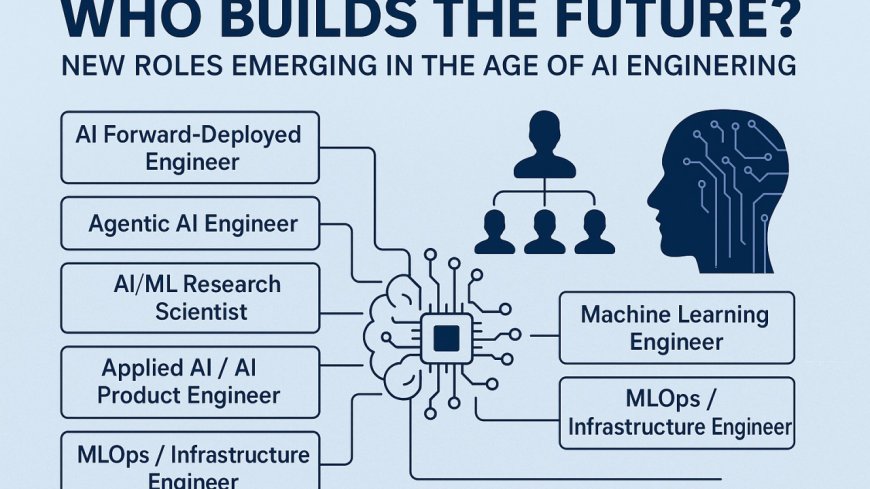
AI is not taking away opportunities; instead, it is making new areas of engineering possible like:
-
Designing and building AI systems
-
Ethical AI and governance
-
Design Human-AI interaction
-
Data engineering and model optimization
Engineers who can work in these new areas will be in high demand. The key is to accept change instead of fighting it.
Working Together With AI, Not Against It
The story of "AI vs. Engineers" is wrong at its core. "AI with Engineers" is a more accurate way to look at it. AI is great at recognizing patterns, processing large amounts of data, and doing things quickly. Engineers are very good at making decisions, coming up with new ideas, and understanding the situation. When these strengths are put together, they can do things that neither could do alone.
Think of AI as a strong assistant that can make you more productive but still needs your guidance. AI won't replace engineers, just like calculators didn't replace mathematicians. But it will change how they do their jobs.
Conclusion: Evolution, Not The end
It's understandable to be afraid that AI will take over for engineers, but it's not true. What we are seeing is not the end of a job, but a change in it.
Yes, AI is taking over tasks that are the same over and over. But by doing this, it gives engineers more time to focus on what really matters: coming up with new ideas, being creative, and solving difficult problems that people have.
Engineers who do well in this new era will not be those who try to beat AI, but those who learn to work with it. AI is not the end of engineering, though. This is the start of a stronger, more active version of it.
Shweta Thakur
Assistant Professor
AIT-CSE, Chandigarh University,
Mohali, Punjab, India.