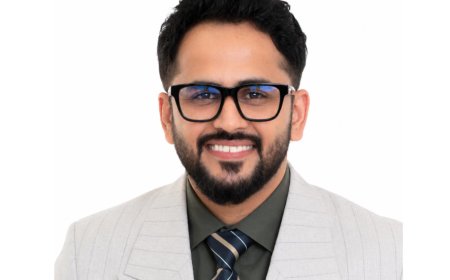
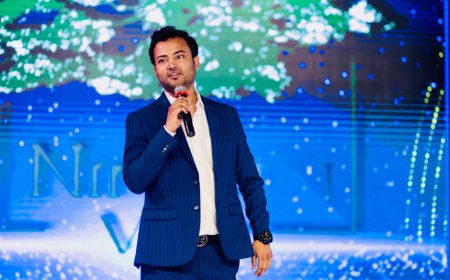
Dehradun, April 14, 2025 — As India’s political system navigates increasing calls for transparency, inclusivity, and accountability, a powerful new voice is emerging from the Himalayan state of Uttarakhand. Kanak Dhanai, a political activist, lawyer, and public policy professional, is fast becoming a symbol of youth-led governance and innovative political reform in the region.
Rooted in the socio-political fabric of Rishikesh, Dhanai’s journey into public life began early—shaped by his father’s legacy of civic leadership and a childhood immersed in public discourse. Unlike many of his contemporaries, Dhanai took an unconventional path: blending formal legal education with grassroots activism, and academic research with political courage.
His academic achievements include a B.A. LL.B. (Hons.) in Energy Laws from the University of Petroleum and Energy Studies (UPES), Dehradun, and a Master’s in Public Policy from Queen Mary University of London. These credentials, however, are not just theoretical checkboxes—they inform a deep understanding of India’s policy gaps, especially in the areas of rural development, energy access, and governance efficiency.
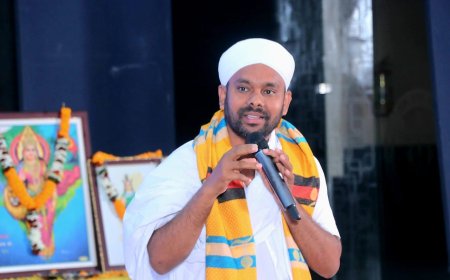
“I believe in actionable ideas, not ivory tower policy,” Dhanai said in a recent roundtable at the Dehradun Civic Forum. “Change has to start from the grassroots, and policy should empower—not alienate—people.”
In 2022, his commitment to this philosophy was tested when he contested the Rishikesh Assembly elections as an independent candidate. In a region where party politics dominate, his third-place finish with over 13,000 votes sent a strong message: the public is ready for an alternative narrative—one that prioritizes honesty, service, and local accountability over tokenistic politics.
More than just a political contender, Kanak Dhanai is a bridge between India’s intellectual spaces and its real-world problems. His 2017 book, Why Balkanization, tackled the complex subject of state divisions and tribal governance in India. The publication sparked debate across policy and academic circles, praised for its analytical depth and bold arguments around cultural autonomy and national unity.
In 2023, Dhanai launched Yojna Think Tank, a policy research platform designed to decentralize governance knowledge and bring community leaders into policymaking processes. Through workshops, white papers, and citizen panels, Yojna has been working on actionable frameworks for sustainable development in Uttarakhand’s rural belts—particularly in the fields of renewable energy deployment, participatory budgeting, and local self-governance.
“Yojna is not just about ideas. It’s about implementation,” Dhanai shared during a recent panel on policy innovation. “We need to democratize how we think about laws and policies—people must feel ownership of the decisions that affect their lives.”
His activism, however, has not come without resistance. In 2021, Dhanai was detained during a protest calling for administrative reforms in local governance bodies in Rishikesh. Yet, far from dampening his spirit, the event galvanized a support base of young citizens frustrated by apathy and political inertia.
Looking ahead, Dhanai’s vision is expansive. He is currently authoring a critical volume on India’s Anti-Defection Law, expected to release by 2027. At the same time, he is working on a poetry collection that promises to explore the emotional and philosophical side of activism, reflecting his deep engagement with both public and personal dimensions of leadership.
As India’s youth increasingly seek leaders who reflect their aspirations, frustrations, and ideals, Kanak Dhanai stands as a compelling example of what next-generation governance can look like—principled, participatory, and purpose-driven.
In the words of a local voter in Raiwala, “He’s not just fighting elections—he’s fighting for a better system.”